Vietnamese dishes among top 100 Asian stir-fry dishes

Five Vietnamese dishes have been named in the list of top 100 Asian stir-fry dishes of TasteAtlas, a reputable culinary website that specialises in food from around the world.

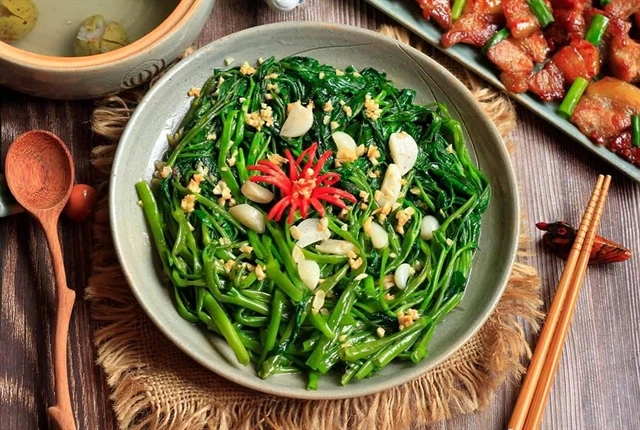
Rau muong xao toi (morning glory stir-fry) is included in top 100 Asian stir-fry dishes of TasteAtlas. (Photo: Com Nha Facebook)

Hanoi (VNS/VNA) - Five Vietnamese dishes have been named in the list of top 100 Asian stir-fry dishes of TasteAtlas, a reputable culinary website that specialises in food from around the world.

They include rau muong xao toi (morning glory stir-fry), pho xao (stir-fried pho), mien xao cua (crab meat and glass noodle stir-fry), qua su su xao toi (chayote squash and garlic stir-fry), and oc huong (sweet snails).

Morning glory stir-fry ranked 13th, the highest among the Vietnamese dishes on the list, with a rating of 4.3/5 stars. TasteAtlas describes it as a traditional Vietnamese dish that's suitable for vegetarians.

It's cooked with a combination of morning glory (water spinach), garlic, fish sauce, salt, sugar and oyster sauce. The water spinach is blanched, then stir-fried with garlic, salt and sugar, while the fish sauce is added near the end of cooking.

“This vegetable dish is served hot, usually as a part of a three-course meal, the first is a stir-fry, the second course is a boiled or steamed dish and the third course is a soup. Rau muong xao toi also makes for a great accompaniment to white rice,” according to the website.

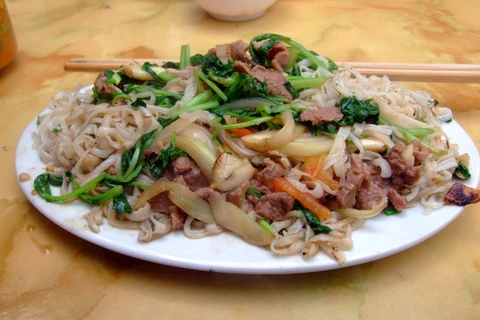
Stir-fried pho occupies the 27th position. Considered as a more convenient variation of the classic pho, this traditional Vietnamese dish employs similar ingredients, but they are stir-fried rather than cooked and the dish does not contain the broth. It is normally made with beef or chicken, flat rice noodles (pho) and various sliced vegetables.

Crab meat and glass noodle stir-fry is placed at 65th. The traditional Vietnamese dish is made from stir-fried glass noodles, crab meat, wood-ear mushrooms, shiitake mushrooms, carrots and bean sprouts. The ingredients are stir-fried in a big pan, then dressed with a combination of lime juice, minced garlic, sugar, water and fish sauce. Once done, the dish is decorated with chopped green onions and coriander before serving.

Chayote squash and garlic stir-fry, a traditional Vietnamese dish originating from Sapa, claimed the 68th position while sweet snails the 71st.

The ingredients to cook chayote squash and garlic stir-fry include chayote squash (su su), garlic, fish sauce, oil and dried shrimp. The chayote squash is usually sliced into matchsticks, then stir-fried with shrimps sautéed in olive oil, garlic and fish sauce.

Meanwhile, oc huong, a traditional Vietnamese snail dish, is cooked from large and sweet Babylonia snails with white and brown spotted shells. They're usually stir-fried in a large wok with a sweet and sticky sauce. When served, the snails are pulled out of their shells with a small two-pronged fork, then dipped into a combination of salt, pepper, lime juice, and chilli sauce.

Other top 100 Asian stir-fry dishes, according TasteAtlas, include Dak Galbi (stir-fried chicken with cabbage) from the Republic of Korea, phat kaphrao from Thailand, nasi goreng ayam (Indonesian fried rice), pad Thai, beef chow fun and stir-fry shrimps from China.

TasteAtlas, established in 2015, is an encyclopedia of flavours, a world atlas of traditional dishes, local ingredients and authentic restaurants.

TasteAtlas food rankings are based on the ratings of the TasteAtlas audience, with an algorithm that confirms real users and which ignores bots, nationalist or local patriotic ratings and gives additional value to the ratings of users that the system recognises as knowledgeable.

For the 'Top 100 Asian Stir-fry Dishes' list 3,652 ratings were recorded, of which 2,991 were recognised by the system as legitimate.

The rankings aim to promote excellent local foods, instill pride in traditional dishes and arouse curiosity about dishes you haven’t tried./.
VNA

See more

Foreign diplomats wear ao dai (Photo: VNA)

Foreign diplomats in Ho Chi Minh City join Tet celebrations

With the desire to share the beauty of Tet with international friends, HUFO organised the programme to create opportunities for diplomats working in the city and their families to engage in warm exchanges and build closer ties through Vietnamese traditional cultural activities, leaving them with lasting and memorable impressions of a traditional Vietnamese Tet in a civilised, modern and compassionate city, according to HUFO President Ha Thanh.

A performance at the Spring Concert 2026 (Photo: VNA)

Spring Concert 2026 celebrates Vietnam–China friendship

Featuring renowned artists from both countries, the programme comprised two parts with a well-structured and engaging artistic arrangement, guiding the audience from traditional Chinese music to melodies praising Vietnam–China friendship, as well as excerpts from classic world operas.

Farmers in Ninh Phuc flower village, Dong Hoa Lu ward, Ninh Binh province, are completing the final steps to bring beautiful and high-quality potted plants to market (Photo: VNA)

Spring colours fill Ninh Binh as farmers gear up for Tet market

As Tet approaches, traditional craft villages in the province are entering their busiest period. In kumquat and flower-growing villages, farmers are completing the final stages of care to ensure their products meet market demand in both quality and appearance.

International friends experience how a bowl of pho is prepared. (Photo: VNA)

Vietnamese Pho Day showcases culture, connectivity in Beijing

Vietnamese Ambassador to China Pham Thanh Binh described pho as a “national dish” and a cultural symbol of Vietnam. He said the event aimed to build bridges bringing international friends closer to Vietnam's culinary culture, thereby enhancing mutual understanding and people-to-people exchanges.

A performance staged at the political-artistic programme entitled “Duong len phia truoc” (The road ahead) held in Hanoi on February 4. (Photo: VNA)

Art programme marks Party’s 96th anniversary

The programme aimed to revisit the nation’s revolutionary traditions and reaffirm the Party’s comprehensive leadership throughout the revolutionary process, from the struggle for national independence to national construction and development during the renewal period and international integration.

The ritual to release of carp to bid farewell to the Kitchen Gods at the Thang Long Imperial Citadel. (Photo: baovanhoa.vn)

Traditional Tet rituals showcased at Thang Long Imperial Citadel

Running from February 1 to 25, the programme brings to life the festive atmosphere of Tet during the Le Trung Hung (Revival Le) Dynasty (1533–1789) alongside the folk Tet traditions of ancient Thang Long, helping to spread and honour Vietnam’s rich cultural heritage.

Tourists experience a cyclo ride around Hoan Kiem Lake (Photo: VNA)

Strategy to help enhance Vietnam’s prestige, appeal on international arena

The target is set out in the Government’s strategy to promote Vietnam’s global image for the 2026–2030 period, with a vision to 2045, approved by the Prime Minister on January 27. The strategy underlines that promoting Vietnam's image abroad is not merely information activities, but a strategic "soft" tool serving the country's development.

The opening ceremony of the first Spring Fair 2026. (Photo: VNA)

Spring Fair 2026 showcases Vietnam’s finest performing arts

According to the Organising Committee, the artistic programme of Spring Fair 2026 is designed to honour traditional cultural values, inspire national pride and promote confidence in Vietnam’s future. By bringing a wide range of art forms into an open, friendly public space, the fair allows audiences to experience high-quality performances in a festive setting.