Vietnamese enterprises must strive hard to tap Middle East market's potential: experts

Investment and trade cooperation between Vietnam and Middle Eastern countries have achieved many encouraging achievements. However, there is still a lot of work for Vietnamese enterprises to do to conquer this potential market besides capacity, prestige and understanding habits of consumers.
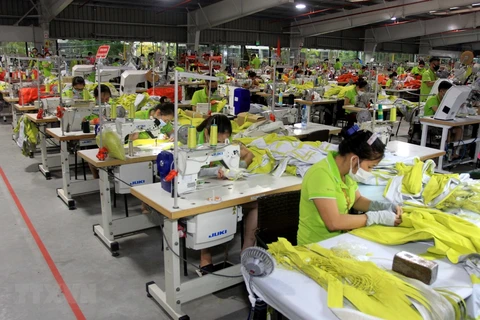
Vietnamese enterprises must strive hard to tap Middle East market's potential: experts ảnh 1 By the end of August, there were 173 valid FDI projects of Middle Eastern enterprises in Vietnam with a value of 1.38 billion USD, accounting for 0.34 percent of the total registered FDI in Vietnam. (Photo: baodautu.vn)

Hanoi (VNA) - Investment and trade cooperation between Vietnam and Middle Eastern countries have achieved many encouraging achievements. However, there is still a lot of work for Vietnamese enterprises to do to conquer this potential market besides capacity, prestige and understanding habits of consumers.

By the end of August 2021, Vietnam exported goods worth 5.22 billion USD to the Middle East and imported 5.49 billion USD worth of goods from the region, contributing 2.45 percent and 2.5 percent to the export and import turnover of the country, respectively.

Regarding investment cooperation, by the end of August, there are 173 valid foreign direct investment (FDI) projects of Middle Eastern enterprises in Vietnam with a total value of 1.38 billion USD, accounting for 0.34 percent of the total registered FDI in Vietnam.

Currently, 9 out of 15 countries in the Middle East, including all major economic partners of Vietnam in the region, have opened embassies in Hanoi.

According to economic expert Can Van Luc, the efficiency of cooperation between enterprises of the two sides is still modest, failing to match with the potential and needs of enterprises of the two countries.

The most significant difficulty of enterprises is limited information on the business environment, especially those related to legal regulations, market potential and cooperation opportunities. Differences in culture and consumption habits are also an obstacle.

In addition, Vietnamese enterprises also face difficulties in payment because the financial markets of some countries in the region have not yet developed.

Moreover, due to a lack of information about the Middle East market, to avoid risks, Vietnamese enterprises often export through international intermediary companies, resulting in an increase in goods prices and lower competitiveness.

Vietnamese enterprises must strive hard to tap Middle East market's potential: experts ảnh 2Cooperation between Vietnam and the Middle East spans many fields. (Photo: Gulf Times)

Concurring with Luc’s opinion, Nguyen Quoc Hung, Secretary General of the Vietnam Bankers Association, said Vietnamese enterprises have to face fierce competition in terms of goods with other countries such as rice and cereals from India; tea and spices from China and India; and agricultural products from Thailand, Kuwait and India.

To promote and create favourable conditions for economic, energy and trade cooperation between Vietnam and the Middle Eastern countries in the coming time, according to Luc, businesses need to be more proactive in updating information, carefully researching the market and creatively changing their trade promotion methods to make them more effective.

It is necessary to focus on training qualified human resources with good foreign languages and understanding Middle Eastern culture, he said.

Luc also highlighted the importance of enhancing connections and cooperation among Vietnamese businesses when participating in trade exchange events in the region.

Meanwhile, Hung said that Vietnam and countries in the Middle East need to continue to improve the legal framework, mechanisms and policies to create favourable conditions for trade and investment cooperation activities of their businesses.

It is essential to strengthen high-level exchanges to deepen economic, trade, investment and health cooperation and ensure maximum benefits of Vietnamese enterprises as well as the interests of those in the Middle East, he said/.
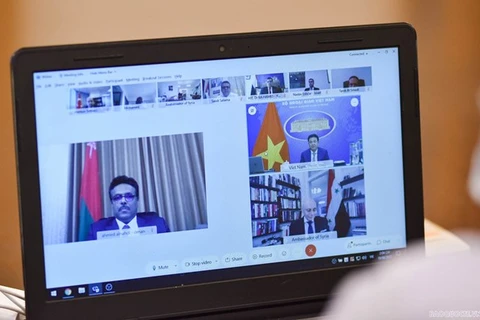
VNA

See more

The exchange of greenhouse gas emission quotas and carbon credits is conducted on the domestic carbon credit exchange through the carbon trading system, which is interconnected with the national registration system. (Photo congly.vn)

Ministry establishes monitoring framework for carbon market

Under a new circular, the exchange of greenhouse gas emission quotas and carbon credits is conducted on the domestic carbon credit exchange through the carbon trading system, which is interconnected with the national registration system.

Le Son Phong, Deputy Director of the Da Nang Department of Science and Technology, speaks at the press conference announcing the Da Nang Venture and Angel Summit 2026. (Photo: VNA)

Da Nang to host international venture capital forum later this month

Le Son Phong, Deputy Director of the Da Nang Department of Science and Technology, said DAVAS 2026 is not merely an investment-matching event for startups, but also demonstrates the city’s commitment to promoting innovation, developing the knowledge-based economy and creating a favourable environment for technology enterprises and startups.

Visitors explore southern Vietnam's products (Photo: vNA)

Vietnam, Cambodia boost supply chain connectivity

Total two-way trade neared 10.1 billion USD in 2024, up 17.5% year-on-year and jumping to more than 11 billion USD in 2025. Vietnam’s key exports to Cambodia include apparel, iron and steel, petroleum, machinery and equipment, chemicals, and processed food. Its main imports are cashew nuts, rubber, farm produce, and industrial raw materials.

Cao Thanh Dinh, founder and CEO of ANPz Co., Ltd (All Nippon Partners) in Japan (Photo: VNA)

Resolution 68 boosts investor confidence in Vietnam’s long-term outlook

Cao Thanh Dinh, Founder and CEO of ANPz Co., Ltd (All Nippon Partners) in Japan, said that after one year of implementation, Resolution No. 68-NQ/TW of the Politburo on private sector development has sent a positive signal to investors by affirming the private sector as a key driver of sustainable and long-term development.

To promote the local lychee brand, expand consumption markets and enhance the fruit's value, Bac Ninh province is organising various trade promotion activities and experiential tourism programmes during the 2026 lychee season. (Photo: VNA)

Bac Ninh promotes lychee tourism with 36 model orchards

According to the Bac Ninh Centre for Culture and Tourism Promotion, the orchards must comply with VietGAP, GlobalGAP or organic production standards while offering suitable conditions for experiential tourism activities. They are also required to connect with nearby tourist attractions, craft villages and historical sites to form integrated tour routes.

Ha Long-Mong Cai Expressway (Illustrative photo: VNA)

Quang Ninh takes lead in public investment disbursement

As of May 13, the northern province had disbursed more than 5.64 trillion VND (213.9 million USD) in public investment capital, fulfilling 24.2% of its annual target and 54% of its disbursement target of 10.56 trillion VND for the year's first half.

Can Tho, Belarus eye trade, investment opportunities

Can Tho, Belarus eye trade, investment opportunities

Belarusian Consul General in Ho Chi Minh City Alexander Sidoruk said his working visit to Can Tho city exposes ample untapped economic potential. The Belarus side brings strengths in exporting fertilisers, crop protection chemicals, agricultural equipment, and high-tech products, and is interested in importing Vietnamese rice, coffee, rubber, seafood, and dairy products.

Retail fuel prices are simultaneously reduced from 15:00 on May 14. (Photo: VNA)

Retail fuel prices cut from May 14 afternoon

Retail fuel prices were simultaneously reduced from 15:00 on May 14 following the latest adjustment by the Ministry of Industry and Trade (MoIT) and and the Ministry of Finance, with E5RON92 biofuel recording the sharpest decline.