Vietnamese exporters must defend against trade suits

As importing countries impose trade barriers to protect their goods and products, they often utilise trade remedies against exporting countries. There are short-term solutions for exporters, like Vietnam. But in the long run, enterprises still need strategic planning and specific steps to overcome trade barriers in order to increase exports and develop sustainably.
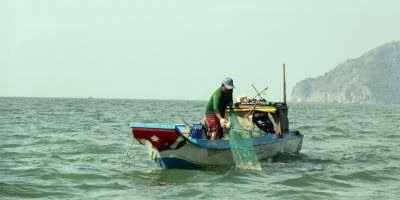
Vietnamese exporters must defend against trade suits ảnh 1Export companies should have a division specialising in trade defence to meet the requirements of the investigation agency in time​ (Photo bizlive.vn)

Hanoi (VNA)
- Asimporting countries impose trade barriers to protect their goods and products,they often utilise trade remedies against exporting countries. There areshort-term solutions for exporters, like Vietnam. But in the long run,enterprises still need strategic planning and specific steps to overcome tradebarriers in order to increase exports and develop sustainably.

When markets open tofulfill integration commitments, importing countries tend to increase scrutinyon goods from Vietnam, often applying trade remedies like anti-dumping andanti-subsidy policies. Despite continuously facing these trade remedies,Vietnamese businesses remain very passive in guarding against them. They lackedunderstanding of trade defence tools.

As importing countrieshave suffered strong competition, especially from the near markets such asChina, Malaysia and Indonesia, the significance of the trade defence ofbusinesses has also increased.

Nguyen Phuong Nam,deputy head of the Department of Trade Defence under the Ministry of Industryand Trade (MoIT), said that there have been more than 120 trade remedy lawsuitsrelated to Vietnamese exports initiated by importers such as the US, EU, Brazil,Turkey and Australia.

Statistics from thedepartment show that in the 2016-17 period, Vietnamese firms have been sued 23times by importing countries. Australia brought six anti-dumping andanti-subsidy cases against firms exporting aluminium and galvanised steel,coils and wind towers.

Tran Thanh Hai, DeputyDirector of the MoIT’s Import-Export Department, said that the ways in whichcountries can enact Technical Barriers to Trade (TBT) are very diversified andcomplicated, especially in big markets such as the US, EU and Japan. Forexample, for textiles and garments, the US and EU are two major markets for Vietnam’sgarment exports. However, these are also the most difficult markets with manyregulations that constitute Technical Barriers to Trade.

The US has over 60technical regulations for textiles and garments on labeling, symbol, clothinginstruction, and fire resistance standards for yarns, wool carpets fire andsleepwear; and regulations on children’s wear. In addition, the EU also hasover 80 technical regulations such as: EC label, regulations on labeling andregistration, evaluation, licensing and restriction of chemicals (REACH),regulations on ecolabel and OKO-Tex 100 label or origin regulations, Hai added.

In order to successfullyappeal in the export markets, experts advise Vietnamese businesses toscrutinise the plaintiffs’ allegations about the country’s subsidy programme.At the same time, ministries, sectors and associations should closelycoordinate in providing information and explanations on the alleged programmeto the investigating authority.

In addition, businessesshould carefully analyse the plaintiff’s question, allegations and facts todevelop an appropriate strategy before and during the preparation of theresponse and reporting of the data.

As predicted by theDepartment of Trade Defence, in the upcoming time, firms in importing countrieswill use more trade remedies. Trade remedies areconsidered the final barrier against the current trend of deepening and broadeninginternational integration.

As Vietnam faces othercountries’ implementation of trade remedies, it should acknowledge that theyare also a useful tool domestically. They are easier to use than otherinstruments that WTO commitments allow. In the near future, trade remedies willbe a very effective tool to protect domestic businesses from importcompetition.

Export companies shouldhave a division specialising in trade defence to meet the requirements of theinvestigation agency in time.

Currently, the MoIT isurgently working with related units to solve difficulties for businesses in atimely manner. Particularly, the ministry will abolish the specialisedinspection regulations and procedures which have caused difficulties forenterprises in the past. -VNA

VNA
See more

Officials of the Vietnamese Ministry of Finance and the Japan International Cooperation Agency (JICA) at the meeting in Hanoi (Photo: Ministry of Finance)

Finance Ministry, JICA to hasten major joint projects

JICA President Tanaka Akihiko said he is pleased to return to Vietnam and see landmark projects of bilateral ties now operational and delivering clear benefits to the public, including Nhat Tan Bridge and Ho Chi Minh City’s metro line No. 1.

Customers conduct transactions at an Agribank office in Hung Yen province. (Photo: VNA)

Outstanding green credit reaches 828 trillion VND

To date, loans subject to environmental and social risk assessments have exceeded 5.1 quadrillion VND (some 193.6 billion USD), representing an almost 25-fold increase compared with the end of 2017 and accounting for 27.7% of total outstanding credit in the economy.

Metfone Express's fleet at the launch ceremony. (Photo: VNA)

Vietnamese firm expands into logistics sector in Cambodia

Cambodian Minister of Post and Telecommunications Chea Vandeth praised Metfone’s contributions to socio-economic development, job creation, technology transfer and bilateral connectivity. He described the launch of Metfone Express as evidence of the long-term commitment and innovative spirit of Viettel.

Vietnamese products at the fair (Photo: VNA)

Vietnamese food products gain prominence at RoK's leading food fair

Vietnamese exhibitors are showcasing a wide range of products, including processed foods, tropical fruit products, functional foods, spices and beverages. Major exporters such as Vinamilk, WestFood, TSFood, Nafoods Group, Bich Chi Food and DH Foods are among the participants.

At the Vietnam–Canada Business Forum 2026 (Photo: VNA)

Green transition creates fresh opportunities for Vietnam–Canada partnership

Rahul Malhotra, owner of RM Venturex, said the forum provided businesses with valuable insights into opportunities for deeper Vietnam–Canada cooperation. He noted that support from diplomatic channels and the engagement of both public and private sectors are helping create favourable conditions for stronger economic ties among Canada, Vietnam and ASEAN.

At the working session between Can Tho leaders and representatives of Singaporean businesses. (Photo: VNA)

Can Tho invites Singaporean firms to invest in industry, energy, logistics

Singapore is currently the Mekong Delta city’s largest source of foreign direct investment (FDI), with 12 active projects totalling nearly 320 million USD in registered capital. A flagship project is the Vietnam-Singapore Industrial Park (VSIP) Can Tho, launched in 2022 with an investment of over 3.7 trillion VND (140 million USD) and covering nearly 294 hectares.

Workers process tra fish for exports. (Photo: VNA)

Sustainable transformation needed for Vietnam’s strategic pangasius sector

With continued policy support, technological innovation and close coordination among authorities, businesses and farmers, Vietnam’s pangasius industry is expected to make a strong and sustainable breakthrough during the 2026–2030 period, reinforcing its position as the world’s leading exporter of the fish.

Deputy Prime Minister Nguyen Van Thang speaks at the event. (Photo: baochinhphu.vn)

Deputy PM calls for integrated ASEAN fintech ecosystem

Deputy PM Nguyen Van Thang proposed a shared vision for an ASEAN fintech ecosystem that is open, secure, transparent, inclusive, and sustainable: “Open” to foster connectivity, “Secure” to enable growth, “Transparent” to build trust, “Inclusive” to ensure that no one is left behind, and “Sustainable” to strengthen resilience and support long-term progress.

Vice Chairperson of the National Committee of the Chinese People's Political Consultative Conference (CPPCC) Xian Hui (left) meets with Secretary of Phu Tho provincial Party Commitee Pham Dai Duong on comprehensive cooperation (Photo: VNA)

Phu Tho expands cooperation with Chinese localities

A high-level delegation of the National Committee of the Chinese People's Political Consultative Conference (CPPCC), led by its Vice Chairperson Xian Hui, visited the production facility of BYD Vietnam Co., Ltd. at Phu Ha Industrial Park and held a working session with leaders of Phu Tho province on June 9.

Financial buildings in downtown Ho Chi Minh City along the Saigon River. (Photo: VNA)

Robust dispute resolution framework key to Vietnam’s IFC ambitions

The development strategy for VIFC-HCMC envisions a comprehensive financial ecosystem encompassing green finance, carbon credits, financial technology (fintech), blockchain technology, digital assets, digital banking and other innovative business models. These highly internationalised sectors involve complex cross-border transactions and sophisticated legal structures.

A step in the semiconductor chip manufacturing process. (Photo: VNA)

LG to build first semiconductor substrate plant in Vietnam

LG Innotek, an affiliate of the Republic of Korea's LG Group, has announced a plan to build its first semiconductor substrate plant in Vietnam, marking a significant step in expanding its production capacity and strengthening its semiconductor packaging solutions business.