Vietnamese firms must target retail effort

Vietnam’s retail market is promising, but local businesses must strengthen operations in order to compete with international investors right in the home market.
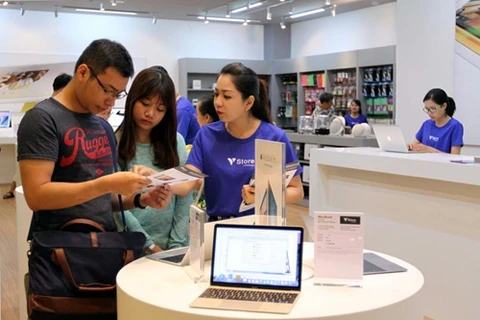
Vietnamese firms must target retail effort ảnh 1Illustrative image (Source: VNA)

HCM City (VNA) - Vietnam’s retail market is promising, but local businesses must strengthen operations in order to compete with international investors right in the home market, experts said during a workshop in HCM City on July 1.

Nguyen Anh Duc, Deputy General Director of Saigon Co-op, said the Vietnamese retail market has for long interested international investors, especially after the country joined the World Trade Organisation.

“The participation of international investors in the retail market has promoted the growth of Vietnamese enterprises,” he said.

However, Van Duc Muoi, General Director of the food processing company Vissan, said that for a long time many local businesses believed they only needed to make high-quality products for customers to buy.

But they should also realise that distribution is one of the most important aspects for every business. “Sales will decide output and business activities,” he said.

Truong Phu Chien, general director of the candy firm Bibica, said: “If a company wants to survive and develop, it must have its own retail channel.

“Besides supermarkets and convenience stores, Vietnamese enterprises should develop more retail channels like restaurants.”

Nguyen Phu Hoa, Deputy Director of the Ministry of Industry and Trade’s import-export department, said: “the business community should think about setting up a retail system for the whole world, not only Vietnam, with technology and new sale models.

“Vietnamese retail businesses like Saigon Co-op should have applications for smartphones because today the whole world is in your hand with smartphones,” Hòa said.

Ten years ago, Vietnam had 368 supermarket outlets, and now the number is 800.

The number is expected to reach 1,200–1,500 by 2020, along with 180 trade centres and 150 shopping malls, workshop participants were told.-VNA
VNA

See more

Visitors explore Vietnamese products at WorldFood Moscow 2026. (Photo: VNA)

Vietnamese goods step up market expansion in Russia

The Vietnamese participants are showcasing a wide range of products, including beverages, fresh and dried fruit, processed foods, instant foods and dipping sauces, while seeking distribution partners, expanding their market presence and increasing brand recognition in the country.

A Vietnamese manufacturer showcases a modern production line at VietnamPrintPack 2026. (Photo: VNA)

VietnamPrintPack 2026 kicks off in Ho Chi Minh City

VietnamPrintPack 2026 serves as a hub connecting the supply chain, showcasing breakthrough solutions in automation, digital printing, radio-frequency identification (RFID)-integrated smart packaging, and eco-friendly materials across Vietnam's industrial landscape.

Gemalink International Port in Ho Chi Minh City is one of the strategic seaports for industry, trade and global integration. (Photo: VNA)

Vietnam deepens global supply-chain integration

Deputy Minister of Industry and Trade Phan Thi Thang said Vietnam remains a top priority for international corporations and buyers seeking new sources of supply, thanks to its 17 FTAs, stable investment environment, improving production capacity and strategic location in Southeast Asia.

Illustrative image (Photo: VNA)

Vietravel Airlines resumes Hanoi – Da Lat route

Resuming the route is part of the carrier's year-end operating plan. It's a concrete step toward optimising the airline's domestic network, and a sign of its commitment to helping Lam Dong province revitalise tourism following the airport upgrades, its representative said.

Prof. Tan Jian Ping, Director of the Centre of Excellence for Sustainable Technologies for Agricultural Advancement and a Zero-Waste Economy (STARGAZE) at Xiamen University Malaysia (Photo published by VNA)

Vietnam, Malaysia see potential for smart agriculture cooperation

Prof. Tan Jian Ping, Director of the Centre of Excellence for Sustainable Technologies for Agricultural Advancement and a Zero-Waste Economy (STARGAZE) at Xiamen University Malaysia (XMUM), said NAP 2.0 focuses on applying Industry 4.0 technologies, including the Internet of Things (IoT), unmanned aerial vehicles, artificial intelligence (AI), automation and biotechnology.

The 30th Export Day draws representatives from various organisations and businesses in Argentina. (Photo: VNA)

Vietnam, Argentina eye broader Mercosur access amid free trade push

During the 30th Export Day, organised on September 15 in Buenos Aires by the Chamber of Exporters of the Argentine Republic (CERA) under the theme "New Export Frontier: The Transformation Underway," Vietnamese Ambassador to Argentina Ngo Minh Nguyet highlighted that Vietnam considers Argentina and Mercosur important partners in South America and sees broad potential to deepen trade and investment ties.

Drone is used in seeding, fertilising and pesticide spraying (Photo: VNA)

Greening agriculture through low-emission crop production

The scheme to sustainably develop 1 million ha of high-quality, low-emission rice in the Mekong Delta by 2030 is advancing, said Nguyen Quoc Manh, Deputy Director of the Department of Plant Production and Protection at the Ministry of Agriculture and Environment.

DACE launches organic spice processing, preservation and export plant in Cao Bang (Photo: VNA)

Cao Bang develops organic farming zones linked to European markets

Around 2,353ha of farmland in the province meets organic standards, including more than 2,332ha of spice-growing areas cultivating cinnamon, star anise and ginger that have obtained internationally recognised certifications such as USDA (US), EU and JAS (Japan).

Electronic components are produced at a factory in Hanoi. (Photo: VNA)

Hanoi's imports surge 41% in first eight months of 2026

Hanoi aims to achieve average annual export growth of at least 12% during 2026-30, with the city seeking to diversify export markets, boost high-tech and value-added products and reduce reliance on traditional markets.