Vietnamese goods entering EU not straightforward under EVFTA

Quality standards, rules of origin, and legal aspects are said to be among the barriers Vietnamese businesses will have to overcome to gain a foothold in the European market under the EU-Vietnam Free Trade Agreement (EVFTA).
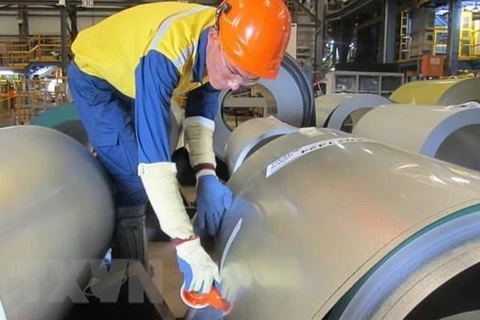
Vietnamese goods entering EU not straightforward under EVFTA ảnh 1In the EVFTA, the two sides commit to eliminating 99 percent of import tariffs on each other’s goods within seven years in the EU and 10 years in Vietnam (Photo: VNA)

Brussels (VNA) - Quality standards,rules of origin, and legal aspects are said to be among the barriers Vietnamesebusinesses will have to overcome to gain a foothold in the European marketunder the EU-Vietnam Free Trade Agreement (EVFTA).

The European Parliament ratified the EVFTA onFebruary 12 and Vietnam’s National Assembly did likewise on June 8. The pact isexpected to take effect in August.

Following the agreement being ratified inVietnam, EU Trade Commissioner Phil Hogan wrote on Twitter: “This deal willincrease opportunities & cooperation between us, create jobs, driveinvestment & improve standards. With the right rules, trade can benefiteveryone.”

The two sides commit to eliminating 99 percentof import tariffs on each other’s goods within seven years in the EU and 10 yearsin Vietnam.

The Southeast Asian country pledges to remove48.5 percent of tariff lines on EU goods immediately when the deal comes into force,58.7 percent within three years, 79.6 percent within five years, 91.8 percent withinseven years, and 98.3 percent within 10 years. It is also set to abolish themajority of tariffs on exports to the EU within 15 years.

Despite considerable opportunities, an array ofchallenges is also awaiting Vietnamese goods on the road to the EU.

Quality standards are among such challenges.

The EU will cut tariffs under the EVFTA but itstechnical standards remain unchanged, so Vietnamese products must meet these standardsbefore entering the market.

EU countries have recently been in dire need of medicalsupplies, including face masks, to cope with the COVID-19 pandemic. Many Vietnameseenterprises are capable of producing a large quantity but their products arestill unable to enter the EU since they only meet Vietnamese standards.

Talking about agricultural exports, Nguyen CanhCuong, former Trade Counsellor of Vietnam in Belgium, said Europe has strictand regularly-updated regulations on the use of pesticides, and the rules oftenoutpace research by chemical companies.

Whenever the EU revises its regulations,exporters must also change the pesticide types they use, thus raising productioncosts. If businesses do not comply with these regulations, their exports to theEU will be cancelled or returned if violations are detected, he noted.

Pierre Groning from the German Chemical IndustryAssociation said rules of origin may also be a challenge for small- andmedium-sized enterprises in Vietnam.

They should proactively learn about and adhereto EU regulations so as to have their products’ origin certified in line withthe EVFTA’s rules of origin, he recommended, noting that this could force themto make changes to both production processes and input materials.

Nonetheless, he went on, the agreement will alsobring them rare opportunities to enhance their competitiveness and be innovative.

According to the Belgium-Vietnam Chamber ofCommerce, companies will have to compete with one another not only in product qualityand price but also in their understanding of the European market, especiallytechnical and legal issues.

Chamber Chairman Huynh Trang Long pointed outthat there are major differences between Vietnam and European countries in theuse of commercial techniques.

He took payment methods as an example, sayingthat many Vietnamese businesses, both exporters and importers, make payments bytelegraphic transfer, as this method is quite simple. Risks from this method maybe negligible for Vietnamese enterprises in general but not for importers, as itmay lead to disputes. 

European enterprises often prioritise letters ofcredit for making payments, he said, suggesting Vietnamese companies consider doinglikewise.

Long also recommended that local enterprises equipthemselves with preventive measures, since international trade always features unpredictablerisks relating to geographical distance, transportation, and law.

Meanwhile, Cuong warned that companies that donot have sufficient risk assessment capacity could be coerced by partners,which may subsequently cause financial losses.

Without experts on EU law, he said, the risk ofloss is quite high./.
VNA

See more

Students practice microcontroller programming at the Vietnam-Korea College of Technology in Bac Ninh province (Photo: VNA)

Vietnam – one of most attractive destinations for leading US semiconductor companies: expert

Vietnam has built a solid semiconductor and electronics industry before joining ITSI, attracting major US semiconductor companies. Intel Products Vietnam is one of Intel's largest assembly and testing facilities worldwide, while chip design companies such as Synopsys, Cadence, Marvell and Qualcomm have established engineering and research centres in the Southeast Asian country.

Lawmakers on August 9 discuss a draft law amending and supplementing a number of articles of the Law on the State Bank of Vietnam, the Law on Anti-Money Laundering and the Law on Credit Institutions. (Photo: VNA)

Lawmakers discuss measures to ensure banking system safety, support digital economy

The draft law sets out provisions to control conflicts of interest when commercial banks act as agents managing collateral for corporate bonds. In this regard, Deputy Le Van The of Ninh Binh province said he supported the move, noting that it could provide a more professional approach to collateral management and help strengthen investor confidence if properly regulated.

A company in Da Nang operates a customer relationship management system supported by AI chatbots. (Photo: VNA)

AI drives rise of sleepless enterprises in Vietnam

The concept of a sleepless enterprise does not necessarily mean making employees stay on the job all the time. Instead, it's about building intelligent systems that can respond to customers, process transactions, monitor operations, analyse data and flag risks continuously.

Head of the Vietnam Trade Office in Australia Tran Thi Thanh My (Photo: VNA)

Vietnam, Australia eye 20 bln USD trade target

The head of the Vietnam Trade Office in Australia hoped that the visit by Party General Secretary and State President To Lam will mark a new milestone, opening the door for firms on both sides to forge stronger links and launch concrete cooperation agendas, helping hit that 20 billion USD trade goal sooner rather than later.

Phu Quoc pepper products, granted three stars under the OCOP programme in An Giang province, are displayed at an exhibition of outstanding OCOP products from the Mekong Delta. (Photo: VNA)

Phu Quoc leverages OCOP programme to take local specialities global

Better known as one of Vietnam’s premier island destinations, Phu Quoc is leveraging its “One Commune, One Product” (OCOP) programme to transform traditional specialities into internationally recognised products, integrating local agriculture, food processing and tourism to promote sustainable economic growth.

Production at an FDI enterprise in Tay Ninh province. (Photo: VNA)

FTA Index 2025 to be unveiled later this month

The index is designed to provide valuable information not only for State management agencies but also as an important reference for businesses, foreign investors, and industry associations in planning investment and business activities in Vietnam.

Air Premia, a carrier of the Republic of Korea, will resume flights between Incheon and Ho Chi Minh City from November 5. (Photo: The Courtesy of Air Premia)

Air Premia to resume Incheon–Ho Chi Minh City route from November

Flights will depart Incheon International Airport at 6:40 pm (RoK time) and arrive at Tan Son Nhat International Airport in Ho Chi Minh City at 11 pm (Vietnam time). Return flights will leave Ho Chi Minh City at 12:30 am on Mondays, Tuesdays, Thursdays, Fridays and Sundays, landing in Incheon at 7:40 am.

Production at Viet Hai High-Tech Structure Production Company Limited in Vung Ang Economic Zone. Ha Tinh province aims to develop Vung Ang Economic Zone into a regional centre for industry, energy, seaports and logistics (Photo: VNA)

Revised master plan of Vung Ang EZ approved

The adjustment aims to create a more rational development framework to maximise the zone’s potential and advantages while providing a legal foundation for construction management and ensuring sustainable development.

Illustrative image (Photo: VNA)

Vietnam looks to domestic market to sustain wood industry growth

Vietnam’s wood sector has long been a top foreign-currency earner. Exports of wood and wooden products neared 17.3 billion USD in 2025, reaching more than 160 countries and territories and clearing the high bars set by the US, the European Union and Japan.