Vietnamese, Indian pharmaceutical firms have great opportunities in Vietnam

Experts have pointed out lots of opportunities for Vietnamese and Indian enterprises in the pharmaceutical industry in Vietnam.
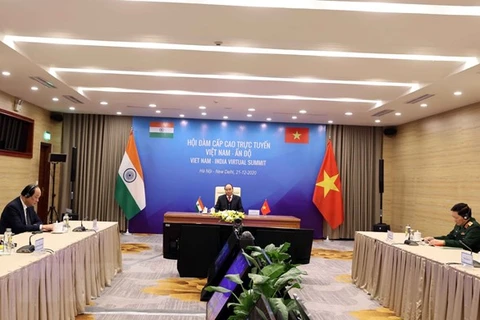
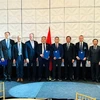
Vietnamese, Indian pharmaceutical firms have great opportunities in Vietnam ảnh 1Vietnamese and Indian experts discuss opportunities for Vietnamese and Indian enterprises in the pharmaceutical industry. (Photo: VNA)
Hanoi (VNS/VNA) - Experts have pointed out lots ofopportunities for Vietnamese and Indian enterprises in the pharmaceuticalindustry in Vietnam.

In an effort to promote trade and investment in the pharmaceuticalsector, the Embassy of India, the International Investment Promotion Alliance,the Association of Foreign Invested Enterprises and the Vietnam Chamber ofCommerce and Industry (VCCI) organised a seminar in Hanoi on January 21 toconnect experts and enterprises from the two countries.

According to the embassy, India was popularly known as the pharmacy ofthe world, earning its credibility as one of the largest manufacturers ofgeneric drugs. It also said the Indian pharmaceutical sector supplies over 50 percentof global demand for various vaccines, 40 percent of generic demand in the USand 25 percent of all medicine in the UK. Indian drugs are exported to morethan 200 countries in the world, with the US being the key market.

Indian pharmaceutical exports, including bulk drugs, intermediates, drugformulations, biologicals, Ayush & herbal products and surgical equipment,reached 16.28 billion USD in 2020.

Ambassador Pranay Verma told the seminar: “Vietnam is a key consumer ofIndian pharmaceuticals with an annual trade worth 225 million USD. Vietnam iscurrently the 19th among the top 25 destinations for Indian pharmaceuticalproducts.”

Indronil Sengupta, President of the India Chamber of Commerce in Hanoi,said: “India has a large pool of scientists and engineers with potential tosteer the industry ahead to greater heights,” measuring the market size of Vietnam, with nearly 100 million of people, had an estimated total value of 7billion USD in 2019 and would be growing at 8 percent till 2024.

At the same time, local drug manufacturers were able to meet half of thetotal medicine market demand, approximately 60 percent of pharmaceuticalend products, 90 percent of active pharmaceutical ingredients while most of theraw materials for the production were currently imported from India, China andother places.

According to Indian experts, new regulations from various FTAs in Vietnam broughtopportunities and challenges to Indian pharmaceutical companies which couldenjoy lower taxes in the industry compared with companies in Europeancountries.

Nguyen Tuan Anh, factory director of Sao Kim Pharmaceutical JointStock Company, which produces and exports anti-malarial drugmaterials to Africa and some Southeast Asian countries, said his companyexpected to partner more with the Indian firms for more projects in Vietnam to serve thepotential pharmaceutical market with a growth rate of more than 15 percent eachyear.

Anh told Vietnam News: “With the advantages in pharmaceutical materials and natural activeingredients that can meet domestic and export demand, we aim to develop hightechnology factories for pharmaceutical products to better compete in themarket.”

Anh said more FTAs, especially ones with India, brought both chancesand challenges to local companies like his as multinational pharmaceuticalcorporations could invest in and acquire the private enterprises,increasing competition.

As most of the local pharmaceutical companies mainly produce inexpensiveand common drugs, while drugs of high value still have to be imported, Anh saidhe was looking for Indian partners who can incorporate, transfer technology orparticipate in part of the pharmaceutical active ingredient semi-syntheticchain in Vietnam.

Anh also expected to own the technology from good co-operation withIndian partners so that his company could soon proactively own the source rawmaterials in pharmaceutical production, helping Vietnam avoid themanipulation of raw materials from foreign producers to local production.

Also at the seminar, Pham Thi Thu, owner of the drug chain GreenPharma 24 in Thanh Hoa, Hanoi and HCM City, said 50 percent of turnover wasfrom Indian products which were at much lower prices compared to otherimported drugs.

Thu told Vietnam News: “Vietnamese consumers love foreign brands and it is easier toadvise them to buy Indian products with a price of as much as local productsinstead of paying for a price of two or three times higher for Europeanimported drugs.”  

Economist Nguyen Mai quoted the BMI Research in 2018 saying that Vietnam's pharmaceuticalmarket size reached 5.9 billion USD, up 11.5 percent over the previous year,becoming the second largest pharmaceutical market in Southeast Asia, staying inthe group of 17 countries with the highest pharmaceutical industry growth ratein the world.

The current 180 local pharmaceutical manufacturing enterprises and 224factories meeting GMP (good manufacturing practice) standards, met only 52.5 percentof the demand while the rest must be imported.

According to the market report, the import turnover of pharmaceuticalproducts reached 2.7 billion USD, up 6.7 percent, and the import ofpharmaceutical materials reached 338 million USD, up 4.1 percent over the sameperiod last year.

As the report forecast local pharmaceutical industry to increase 11 percentper year as one of the most stable in the world, reaching 7.7 billion USD in2021 and 16.1 billion USD in 2026, Mai said there was great potentialfor both sides.

He said: “Vietnamese and Indian pharmaceutical enterprises can establishlong-term relationships, proceeding to sign and implement import-exportcontracts, make a "win-win" investment, contributing positively tothe expansion of economic, scientific and technological cooperation relationsbetween the two countries."/.
VNA

See more

Cai Mep - Thi Vai Port complex in Ho Chi Minh City (Photo: VNA)

Ho Chi Minh City seeks to make seaports new growth driver

To maximise its seaport advantages, Ho Chi Minh City is developing smart and green ports while promoting clean energy, lower emissions and sustainable supply chains. It aims to establish an integrated ecosystem linking seaports with industrial parks, logistics centres, free trade zones, multimodal transport networks and an international financial centre.

Farmers visit the off-season durian orchard of Cao Chi Dai in Vinh Hanh commune, An Giang province (Photo: VNA)

Vietnam promotes finance for green agriculture

Over the past five years, Vietnam has developed and gradually implemented a green finance system to support low-emission and environmentally friendly production, including agriculture. Based on the State Bank of Vietnam's Directive No. 03/CT-NHNN dated March 24, 2015, banks including BIDV, VCB, HDBank and Agribank have introduced green credit packages for waste treatment, high-tech agriculture, digital transformation, regional linkages and emission reduction across production chains.

An overview of the meeting between representatives from Polish businesses and the Agency for Domestic Market Surveillance and Development. (Photo: Agency for Domestic Market Surveillance and Development)

Polish businesses seek suppliers, partners in Vietnam

MAJAMI, a confectionery manufacturer and trader under Sweet House, is seeking distributors for Polish confectionery products in the Vietnamese market. Meanwhile, GABONA, a distributor and wholesaler of professional cosmetics, hair care and make-up products and beauty accessories, is looking for Vietnamese manufacturers of vegan and natural cosmetics.

Kendra Rinas, Chief of Mission for IOM Vietnam speaks at the event. (Photo: VNA)

Vietnam advances in building, using migrant labour data system: workshop

Data presented in the report reflects effective migration governance in recent years. The average recruitment cost paid by migrant workers dropped by 23.8%, from 164.9 million VND (6,400 USD) in 2021 to 125.7 million VND in 2025. Conversely, average first-month earnings abroad rose by 25.4%, increasing from 22.4 million VND to 28.1 million VND.

Workers produce leather shoes for export at Lefaso Tra Vinh Investment and Production Joint Stock Company in Tra Cu commune, Vinh Long province. (Photo: VNA)

Vietnamese exporters pivot to ease pressure from US tariffs

Pressure from the new US tariff policy is prompting Vietnamese exporters to reassess their strategies. Rather than pursuing volume-driven growth, many are shifting towards higher-value orders, tighter cost control, greater productivity and a more balanced allocation of markets to reduce reliance on a single destination.

A worker handles and stacks goods. Nearly 138,100 businesses were newly founded from January to August, up 7.7% over the same period last year, while more than 40,800 businesses completed dissolution procedures, a jump of 125.5%. (Photo: VNA)

Firm entry and exits point to continued restructuring pressure

Updates from the National Statistics Office last week showed that nearly 138,100 businesses were newly founded from January to August, up 7.7% over the same period last year, while more than 40,800 businesses completed dissolution procedures, a jump of 125.5%.

A Vietnamese business introduces durian cakes to Chinese visitors at the 22nd China-ASEAN Expo (CAEXPO) in 2025. (Photo: VNA)

Vietnam steps up trade, investment promotion at China-ASEAN Expo

According to the CAEXPO Secretariat, Vietnam will once again lease an entire exhibition area of about 3,000sq.m, featuring 170 booths, making it one of the ASEAN countries with the largest exhibition spaces at this year’s event. Nearly 100 Vietnamese businesses have confirmed their participation, including major brands such as Trung Nguyen Group, TH Group, Saigon Coffee and Biti’s.

An overview of the VIFC's Executive Council meeting on September 7 (Photo: VNA)

Six groups of products, services proposed at Vietnam International Financial Centre

Deputy Minister of Finance Nguyen Thi Bich Ngoc said the products and services include investment funds and asset management, asset-backed digital assets, international carbon credits, commodity trading and derivatives infrastructure linked to trade and supply-chain financing, financial technology, and bonds issued at the centre. As these groups are at different stages of readiness, they will be rolled out in phases rather than simultaneously.

The meeting between the Quang Ninh delegation and Siemens Mobility (Photo published by VNA)

Quang Ninh seeks cooperation, investment opportunities in Germany

A Quang Ninh official praised the collaboration between Siemens Mobility and VinSpeed in developing the Hanoi–Quang Ninh high-speed railway and expressed his hope that the project will pave the way for future cooperation between Siemens Mobility and Quang Ninh in modern railway development and workforce training.

At the 10th intersessional meeting of UNCITRAL Working Group III in Ninh Binh province on September 7, 2026. (Photo: VNA)

Vietnam hosts UNCITRAL Working Group III intersessional meeting for first time

By hosting the 10th UNCITRAL Working Group III intersessional meeting, Vietnam wishes to continue playing an active and proactive role in UNCITRAL in general and Working Group III in particular, working alongside the international community to strengthen cooperation, share experience and contribute to the development of the international legal framework.