Vietnamese, Japanese firms shake hands in affordable housing project in Long An

The Vietnamese real estate developer Nam Long Group has partnered with Japan's Nishi Nippon Railroad Co. Ltd in the EHome Southgate housing project in the Mekong Delta province of Long An.
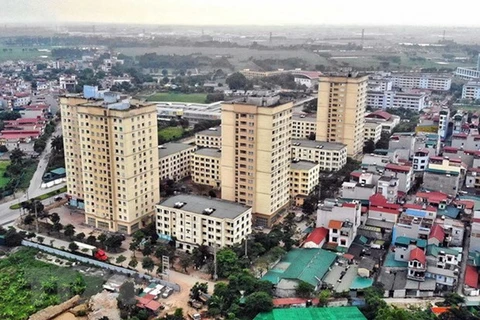
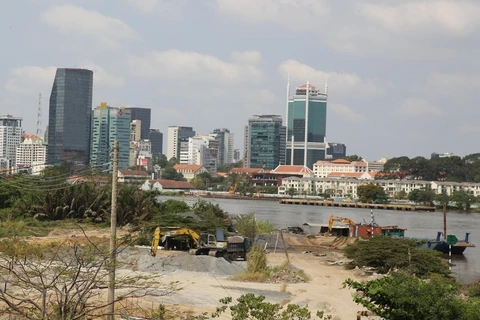
Vietnamese, Japanese firms shake hands in affordable housing project in Long An ảnh 1The EHome Southgate project in the Southgate subdivision of Waterpoint is opposite the shopping service complex and the Bus Interchange transport center in the new urban area. (Photo: Nam Long)
HCM City (VNA) – The Vietnamese real estate developer Nam Long Group has partnered with Japan's NishiNippon Railroad Co. Ltd in the EHome Southgate housing project in the Mekong Deltaprovince of Long An.

In its announcementon July 29, Nam Long Group said that this is the first time the Japanese firmhas teamed up with the company in developing an affordable housing project withthe price of an apartment at about 1 billion VND (43,565 USD).

Tran Xuan Ngoc, General Director of the Nam Long Group, said thatalthough the EHome products do not bring Nam Long as much profit as thosebelonging to other segments. The firm is delighted to share with Nishi NipponRailroad a common mission and vision in creating the valuable living environment and products for the community.

Meanwhile, Fukumori, chief representative of Nishi NipponRailroad, said that Nam Long and Nishi Nippon Railroad have jointly developedsix projects from small to large scales.

EHome is a highly appreciated affordable apartment productline of Nam Long. This product line has an average price of about 1 billion VND with three core values: Economy (affordable), Ecology (green livingenvironment), Efficiency (effective design).

Nam Long introduced the product line for the first time in2007. Since then, EHome has realized the dream of having a house for 5,000households with income of 10-15 million VND per month.

The EHome Southgate, which covers 4.5 hectares of land inthe area, was designed to have seven apartment blocks, equivalent to more than1,400 apartments. The project is expected to have a synchronous utilityinfrastructure system and easily connect to the infrastructure of the competed WaterpointRiver area.

Online sales of the project will start in the thirdquarter this year./.
VNA
See more

Toy production at a Hong Kong-invested factory (Photo: VNA)

Vietnam targets deeper market penetration in Hong Kong in 2026

Vietnam-Hong Kong trade hit 62.3 billion USD in the first 11 months of 2025, soaring 73.1% annually. Vietnamese exports to Hong Kong amounted to 36.8 billion USD, a 90.6% hike, ranking fourth among Hong Kong’s import sources, while imports from Hong Kong stood at 25.5 billion USD, up 52.9% and ranking third.

Vietnam’s start-up market enters restructuring phase

Vietnam’s start-up market enters restructuring phase

In 2026, venture capital inflows into Vietnam’s start-up ecosystem are expected to recover gradually, though in a more selective manner. VinVentures forecasts that capital will focus on start-ups that have survived the rigorous screening of 2024–2025, possess clear business models, strong commercialisation capacity, and the ability to generate real cash flows.

Workers process tra (pangasius) for export (Photo: VNA)

Vietnam–Singapore trade continues to thrive

For the year as a whole, Vietnam retained its position as Singapore’s 10th largest trading partner. Bilateral trade reached a record high of nearly 40 billion SGD, up 26.2% from the previous peak of 31.67 billion SGD recorded in 2024.

Eric Van Vaerenbergh, an energy expert and lecturer at the Brussels Engineering School (ECAM) (Photo: VNA)

Belgian expert optimistic about Vietnam’s economic outlook

Vietnam should move from a growth model based mainly on expanding capital and labour to one driven by productivity improvements. He said that this requires enhancing the quality of the workforce, particularly engineers, technicians, and managers in industrial sectors.

Workers at the VSIP Hai Phong industrial and urban complex, which specialises in producing electronic components for office equipment. (Photo: VNA)

Roadmap aims to improve business climate and boost competitiveness

By the end of 2026, Vietnam aims to rank among the world’s top 50 performers in the United Nations Sustainable Development Goals, advance at least three places in the International Property Rights Index, and climb at least one position in the Global Innovation Index.

Vietnam is strengthening its position in the technology value chain, becoming a major manufacturing hub for complete consumer electronics products. (Photo: VNA)

ESG standards offer opportunities to reposition Vietnam’s electronics firms

The 2025-2027 period will be a critical turning point, as exporters to the European market will be required to strictly comply with ESG standards, including net-zero emissions roadmaps, labour standards, corporate governance and transparency requirements. As a key export sector, the electronics industry is being directly and strongly affected by this shift.