Vietnamese, Lao provinces seek to boost cross-border trade

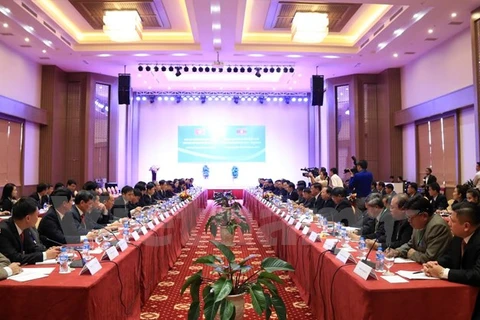
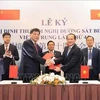
Optimal measures to facilitate cross-border trading of agricultural products and materials through Lao Bao-Densavan international border gate between Vietnam’s central Quang Tri province and Savannakhet provinces of Laos were discussed at a workshop held in Dong Ha city of Quang Tri on March 13.
Vietnamese, Lao provinces seek to boost cross-border trade ảnh 1At the Lao Bao International Border Gate in Quang Tri province. (Photo: VNA)

Quang Tri (VNA) – Optimal measures to facilitate cross-border tradingof agricultural products and materials through Lao Bao-Densavan internationalborder gate between Vietnam’s central Quang Tri province and Savannakhetprovince of Laos were discussed at a workshop held in Dong Ha city of QuangTri on March 13.

Building common standards to ensure transparence of procedures and costs at theborder gates along the East-West Economic Corridor and guide books on taxationin agricultural production and cross-border investment and business were on thetable at the event, which was jointly held by Quang Tri and Savannakhetprovinces, and the Mekong Institute.

Also, the participants pointed out factors that affect the circulation ofagricultural products through the border gate, including the volume of goods,non-tax measures, cross-border cooperation, customs clearance procedures andtransport infrastructure.

Nguyen Quan Chinh, Vice Chairman of the People’s Committee of Quang Triprovince, spoke highly of the Mekong Institute’s study to promote cross-bordertrade and recommendations made by the participants at the workshop.

He said the study and recommendations will help the two governments buildproper mechanisms and policies to boost economic activities along the East-WestEconomic Corridor.-VNA
VNA

See more

Chili peppers are on the list of essential goods in Indonesia (Photo: VNA)

Indonesia reduces imports of strategic food commodities

In 2026, Indonesia is expected to have approximately 12 million tonnes of rice carried over from the previous year, supported by annual production of around 34.7 million tonnes. With projected consumption of 31.1 million tonnes, national rice reserves could reach approximately 16 million tonnes by the end of the year.

Hanoi’s roadmap to implement low-emission zones from July is providing a strong boost to the electric two-wheeler market (Photo: VNA)

Low-emission zone roadmap drives electric two-wheeler boom in Hanoi

From July 1, Hanoi will introduce time-based or area-based restrictions on petrol-powered motorcycles within Ring Road 1, with plans to expand coverage across the entire zone by 2028 and extend to areas within Ring Road 3 by 2030. The policy is expected to reshape travel habits for millions of urban residents.

Delegates at the opening ceremony of the Made in Da Nang Expo 2026 (Photo: VNA)

Nearly 300 firms join Made in Da Nang Expo 2026

Speaking at the opening ceremony, Vice Chairman of the Da Nang People’s Committee Tran Chi Cuong said the exhibition is a large-scale trade promotion event aimed at showcasing products, connecting markets, and helping businesses enhance competitiveness while expanding domestic and export markets.

 Green production, standardised value chains key to fruit, vegetable sector growth

Green production, standardised value chains key to fruit, vegetable sector growth

Facing mounting pressure from increasingly stringent domestic and international standards, Vietnam’s fruit and vegetable sector is accelerating its shift toward green, safe, and sustainable production models. Beyond changing farming practices, localities and businesses are stepping up efforts to standardise value chains and build brands to achieve growth targets for 2026.

Hiep Phuoc Industrial Park in Ho Chi Minh City. (Photo: VNA)

Southern industrial real estate enters strategic growth phase

Key industrial hubs in the south, including Ho Chi Minh City, Dong Nai and Tay Ninh, are transitioning from a period driven largely by supply expansion and rising land prices to a more refined growth model. This new phase is shaped by infrastructure upgrades, supply chain restructuring, product improvement and greater emphasis on operational performance.