Vietnamese shares down after France tragedy

Vietnamese shares declined slightly on November 16 on both local exchanges, reversing after a two-day winning streak, as the financial sector slumped after the terror attacks in Paris last week.
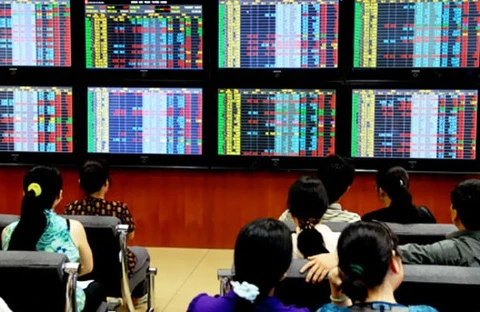
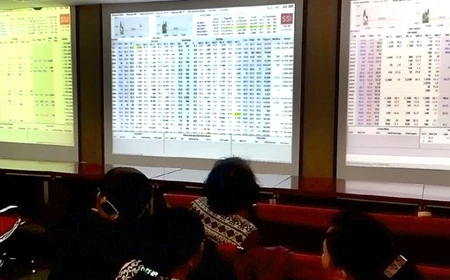
Vietnamese shares down after France tragedy ảnh 1Illustrative photo (Source: VNA)

Hanoi (VNA) - Vietnamese shares declined slightly on November 16 on both local exchanges, reversing after a two-day winning streak, as the financial sector slumped after the terror attacks in Paris last week.

The benchmark VN Index on the HCM Stock Exchange inched down 0.3 percent to finish at 609.32 points and the HNX Index on the Hanoi Stock Exchange edged down 0.6 percent to end at 81.05 points.

"The attacks could temporarily destabilise the world's financial markets and lower global economic growth potential," said Nguyen Xuan Binh, Deputy Head of Bao Viet Securities Corporation's Market Analysis.

Binh said that the unstable conditions in the world's financial markets caused by the terror attacks could encouraged foreign investors to sell their assets in riskier investments such as emerging markets and move into the safety of the dollar-dominated investments.

In fact, the attacks in Paris was the major reason that drove Asian stocks down to six-week lows on November 16, for example, the Japanese Nikkei 225 was down 1 percent.

Vietnam's banking sector index dropped 1 percent following the attacks with none of nine listed banks making gains, including Vietcombank (VCB) and the Bank for Investment and Development of Vietnam (BID) which each lost 0.8 percent, Vietinbank (CTG) dropped 1.5 percent and Eximbank (EIB) fell 1.7 percent.

These banks declined after they all reported lower quarterly profits than expected last week due to increasing their financial risk provisions.

For example, Eximbank earned a quarterly net profit of 83 billion VND (3.7 million USD), a decrease of 62 percent from a year ago, as the bank increased its credit risk provision four times to 332 billion VND (14.8 million USD) over a year.

In addition, local energy stocks suffered losses after global oil prices, including the US benchmark crude West Texas Intermediate (WTI) and Brent crude, fell 8 percent last week.

The biggest energy firms such as PetroVietnam Gas Corporation (GAS) dropped 1.2 percent, PetroVietnam Drilling & Well Services Corporation (PVD) lost 2.1 percent and PetroVietnam Technical Services Corporation (PVS) was down 1 percent.

The insurance sector index fell 1.5 percent on November 16 as the leading insurer Bao Viet Holdings (BVH) slumped 1.7 percent after the company recorded a third-quarter net profit of 218 billion VND (9.7 million USD), a decrease of one-third from last year's number.

On the positive side, plastics producers remained the major force that prevented the stock market from declining further as they benefited from lower prices for importing crude as production inputs.

The leading plastic producers, Binh Minh Plastics JSC (BMP) jumped 3.8 percent and Tien Phong Plastics JSC (NTP) surged 4.3 percent.

Both local exchanges traded more than 189 million shares, worth 3.23 trillion VND (143.7 million USD), an increase of 19.3 percent from last week's daily trading value.-VNA

VNA

See more

Average economic growth of 6.3% per year, together with an estimated 8.02% expansion in 2025, has placed Vietnam among the world’s most dynamic economies. (Photo: VNA)

Indonesian scholar praises Vietnam as model of sustainable, inclusive growth

These achievements so far stem from the consistent leadership of the Communist Party of Vietnam, the spirit of self-reliance and resilience, and strong national solidarity, laying a solid foundation for the country’s strategic development goals towards 2030 and the vision to 2045, according to a senior researcher at the Centre for Southeast Asian Studies.

Vietnam – India trade hit historic high of nearly 16.46 billion USD in 2025. (Illustrative photo: VNA)

Vietnam – India trade sets new record at nearly 16.5 billion USD

India supplies key inputs such as iron and steel, chemicals, pharmaceuticals, textiles and garments, animal feed and aquatic products, while Vietnam exports technology-intensive goods, electronics, textiles and garments, chemicals, wood products, footwear, spices, coffee and pepper.

Experts discuss at the event (Photo courtesy of the organiser)

Venture capital falls for fifth straight year in 2025

This downturn continues the trend of decline that began in 2021 amid tighter global liquidity and a structural reset in investor risk appetite, according to the 'Vietnam Tech & Venture Capital Outlook 2025' report published by VinVentures.

With many advantages, Vietnam has opportunities to integrate more deeply into the global technology value chain. (Photo: VNA)

Vietnam emerges as typical case of Asia’s FDI success

Vietnam stands out as a representative example. The article cites US technology group Intel as a case in point. Since establishing its testing and assembly facility at the Saigon Hi-Tech Park in 2010, Intel has expanded operations through total investments of 1.5 billion USD.

Vietnamese, Chinese enterprises exchange experience at the networking and exchange programme in Da Nang city on January 13, 2026 (Photo: VNA)

Da Nang promotes logistics cooperation with Chinese businesses

With the goodwill and active engagement of partners, particularly the Chinese business community, the cooperation is expected to generate concrete and long-term opportunities, contributing to the development, deeper integration and sustainability of Da Nang’s startup and innovation ecosystem, said Le Son Phong, Deputy Director of the municipal Department of Science and Technology.

SCAVI Hue Co., Ltd. (100% invested by Financière B’Lao Group, France), specialising in garment manufacturing at Phong Dien Industrial Park in Hue. (Photo: VNA)

Business Confidence Index reaches seven-year high: EuroCham Vietnam

After several years affected by global volatility and disruptions, the Q4/2025 BCI indicates that European business sentiment in Vietnam has returned firmly to positive growth territory, surpassing levels seen prior to US tariff announcements and even before the COVID-19 pandemic. Specifically, 65% of surveyed companies assessed their current business conditions as positive in Q4/2025, with the figure rising to 69% when looking ahead to Q1/2026, suggesting that optimism is set to strengthen further as the new year begins.

Prime Minister Pham Minh Chinh chairs the 5th meeting of the Central Steering Committee on Housing Policy and the Real Estate Market in Hanoi on January 13, 2026. Photo: VNA

PM chairs meeting on housing policy, real estate market

The right to housing is a fundamental right of citizens, and housing is an essential need of every person. Housing development is an important pillar of social welfare policy, while also serving as a driving force for economic growth, labor market stability, and sustainable socio-economic development, said Prime Minister Pham Minh Chinh.