Vietnam’s digital economy to reach 14 billion USD this year

Vietnam’s digital economy is expected to reach 14 billion USD in 2020, a year-on-year increase of 16 percent, and will likely reach 52 billion USD in 2025, re-accelerating to nearly 29 percent in compound annual growth rate, according to a report from Google, Temasek and Bain & Company.
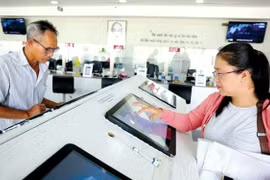
Vietnam’s digital economy to reach 14 billion USD this year ảnh 1Illustrative image (Source: Internet)

HCMCity (VNA) - Vietnam’s digital economy is expected to reach 14 billionUSD in 2020, a year-on-year increase of 16 percent, and will likely reach 52billion USD in 2025, re-accelerating to nearly 29 percent in compound annualgrowth rate, according to a report fromGoogle, Temasek and Bain & Company.

According to thereport, In Vietnam, with its various stages of social distancing, users turnedto the internet for solutions to their sudden challenges. A significantnumber tried new digital services: 41 percent of all digital service consumerswere new (higher than the SEA average), with 94 percent of these new consumersintending to continue their behaviour post-pandemic.

E-commerce has driven significant growth in the country, at 46 percent,alongside strong growth across most sectors, except for travel, it said.

The report also said that SoutheastAsia’s digital economy remains resilient at 100 billion USD in grossmerchandise value (GMV) despite headwinds and is on track to cross 300billion USD in GMV by 2025.

Indonesia and Vietnamcontinued to grow at double-digit rates, and Singapore remains a regionalenabler for growth, despite short term GMV decline due to the online travelsector.

The report, which covered Indonesia, Malaysia, Vietnam, Singapore, Thailand andthe Philippines, showed that Internet usage in the region continues tomultiply, with 40 million new users this year alone. That pushed the totalnumber of internet users in these Southeast Asian countries to 400million or nearly 70 percent of the population.

The coronavirus brought about a permanent and massive digital adoptionspurt, with more than one in three digital service consumers (36 percentof total) new to the service. Of the number, 90 percent intend tocontinue their newfound habits post-pandemic, it said.

Many of the new users came from non-metropolitan areas in Malaysia, Indonesiaand the Philippines.

The report looked at seven internet economy sectors in SoutheastAsia, including e-commerce, transport and food delivery, online travel,online media, financial services, health technology and education technology,with health and education technology added to the 2020 version.

E-commerce is expected to grow by 63 percent to 62 billion USD in 2020 andis poised to hit 172 billion USD in 2025.

Digital financial services are also gaining momentum as moresmall-and-medium-sized businesses have become receptive to accepting onlinepayments. Digital payments are set to grow from 600 billion USD in 2019 to 620billion USD in 2020 and could reach 1.2 trillion USD by 2025.

The health technology and education technology sectors received a boostfrom the pandemic as many people turned to online health consultations whileschools shifted to remote learning. Investments in those sectors aregrowing.

Online travel andtransport sectors were hit the hardest as the pandemic ground internationaltravel to a halt while many people began to work from home or became concernedabout sharing transport. Still, the report predicted online travel torebound to 60 billion USD by 2025./.
VNA
See more

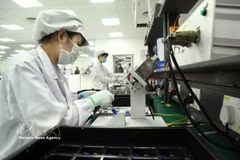
Electronic component production at Star Engineers Vietnam Co., Ltd. in Binh Xuyen Industrial Park, Phu Tho province. (Photo: VNA)

Vietnam turns AI ambitions into tangible business results

AI has become a high or top priority for 69% of surveyed Vietnamese businesses, while 84% expect their use of AI to increase over the next year. Although 61% of adopters remain at the experimentation stage, 71% said their AI investments have already broken even or generated returns.

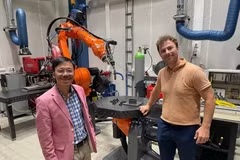
Assoc. Prof. Vu Viet Hung (left) visits a robotic 3D printing facility. (Photo published by VNA)

Vietnam, Canada look to turn strategic partnership into tech projects

Canada's research strength paired with Vietnam's manpower, market size and speed of adoption could address national-level challenges and help small- and medium-sized enterprises modernise production and tap into the international innovation ecosystem, said Assoc. Prof. Vu Viet Hung.

Associate Professor Dang Duc Huy (left) poses for a photo with Canadian Governor General Louise Arbour. (Photo: VNA)

Overseas Vietnamese intellectuals drive innovation

Overseas Vietnamese scientists do not have to return to Vietnam for long-term work to make an impact. They can contribute by joining collaborative research teams, sharing analytical techniques, facilitating access to modern equipment, and linking Vietnam with international labs and universities.

The Better Choice Awards 2026 Gala is a key activity in response to the National Innovation Day 2026 (Photo: qdnd.vn)

Better Choice Awards 2026 honours innovative Vietnamese businesses, tech products

The fourth edition of the awards featured a complete restructuring into four award tracks: Innovative Choice Awards, Smart Choice Awards, Car Choice Awards and the newly introduced Nation Builders Awards. The latter honours businesses contributing to national development by building infrastructure, energy systems and technological capacity for the national economy.

A resident scans a QR code to get a queue number at the public administrative service centre in Hoa Xuan ward, Da Nang city (Photo: VNA)

Localities apply AI, data to drive practical digital transformation

In the central province of Quang Tri, an AI-powered “People’s Assistant” is being piloted from October 1 to 31 at the provincial Public Administration Service Centre and the centres of this kind in Dong Thuan and Dong Ha wards. The system provides information on procedures, required documents, forms and fees, while also supporting declaration and preliminary checks.

Science, technology and innovation products on display. (Photo: VNA)

Businesses must be at heart of innovation: Deputy PM

“Businesses must be placed at the centre of this process,” he said, noting that enterprises understand market demand, formulate practical requirements, invest resources, adopt and master technologies, organise production and bring products to consumers.

The Vietnamese Ministry of Public Security's delegation holds a discussion with representatives of the WIPO's Advisory Committee on Enforcement. (Photo: VNA)

WIPO innovation report viewed through Resolution 57 perspective

He said the GII 2026 results should be viewed in the broader context of Vietnam’s implementation of Resolution No. 57-NQ/TW, which identifies science and technology, innovation and national digital transformation as key breakthroughs and major drivers for developing modern productive forces and enhancing economic competitiveness.

Minister of Science and Technology Vu Hai Quan (left) meets with Japanese Minister of Internal Affairs and Communications Fujii Hisayuki (Photo: VNA)

Vietnam, Japan expand cooperation in strategic technology fields

Meeting with Japanese Minister of Education, Culture, Sports, Science and Technology Seki Yoshihiro on October 2, Minister of Science and Technology Vu Hai Quan proposed the Japanese side continue providing postgraduate scholarships, particularly at master's and doctoral levels in strategic technological sectors, facilitate exchanges among students and researchers, and maintain support for the Vietnam Japan University (VJU).

Minister of Science and Technology Vu Hai Quan (second, right) witnesses Director of the Posts and Telecommunications Institute of Technology Dang Hoai Bac presenting the Vietnamese-learning app to representatives of the Vietnamese Embassy in the Republic of Korea. (Photo: VNA)

Vietnamese-learning app presented to community in RoK

The initiative aims to support language learning among children growing up in more than 100,000 Vietnamese-Korean multicultural families, while helping preserve Vietnamese cultural identity and strengthen their ties with their homeland.

Prof. Dr. Nguyen Ngoc Diep (R), Director of the Australia-Vietnam Strategic Technologies Centre, introduces strategic technology products to delegates at the forum. (Photo: VNA)

Strategic technologies expand space for Vietnam - Australia cooperation

Vietnamese Deputy Minister of Science and Technology Tran Trung Tinh said that amid global uncertainties, strategic technologies are becoming a decisive driver of national competitiveness and sustainable development. Vietnam has identified science, technology, innovation and digital transformation as key strategic breakthroughs.