Vietnam’s economy to grow at 6.7 percent: report

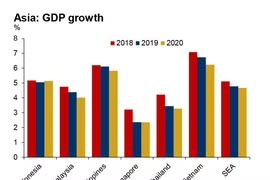
The Vietnamese economy is expected to grow at around 6.7 percent this year, the fastest rate in South East Asia, according to the Institute of Chartered Accountants in England and Wales’ recent Economic Insight: South East Asia report.
Vietnam’s economy to grow at 6.7 percent: report ảnh 1Vietnam’s economy is expected to grow by 6.7 percent this year. (Photo: VNA)

HCM City (VNS/VNA) - The Vietnamese economy is expected to grow at around 6.7 percentthis year, the fastest rate in South East Asia, according to the Institute ofChartered Accountants in England and Wales’ recent Economic Insight: South EastAsia report.

According to the report, Southeast Asian economiesexcept Vietnam have seen export drop in the second quarter of this yearcompared to the same period last year while Vietnam’s exports grew albeitslower than in 2018.

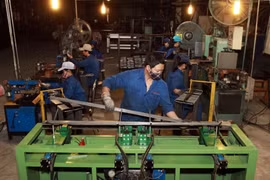
Its economy grew at 6.8 percent year-on-year in thefirst quarter driven by strong manufacturing, steady services and higheragricultural output.

However, its economic momentum is expected to trendlower due to reduced Chinese demand for goods and rising trade protectionism.

While the escalating US-China trade war could benefit Vietnamin the short term due to trade diversion, Vietnam still heavily relies onChina, with its exports to that country accounting for around 10 percent of GDPin 2017.

Foreign direct investment (FDI) and manufacturing areexpected to remain big drivers of economic growth. According to the ForeignInvestment Agency, FDI disbursed in the first two months of 2019 increased by9.8 percent year-on-year to around 2.6 billion USD. The manufacturing industryreceived the most attention from foreign investors.

Vietnam’s close proximity to China and favourablelabour conditions, including affordable wages, would ensure that FDI remainsstrong in the medium term, with Vietnam’s improving infrastructure, itsaccession to trade agreements and FDI attraction policies are also favourablefactors.

Domestic demand will remain strong in 2019-2020 withsteady household spending and inflation and rising incomes. Tourism is alsoexpected to remain strong.

Mark Billington, ICAEW's regional director, GreaterChina and South East Asia, said while Vietnam’s economy would grow despite thetrade war and other external factors that challenge export growth in theregion, measures are needed to ensure FDI inflows remain steady.

Structural reforms to improve firms’ ability to dobusiness and adequate education and training to boost production are vital, headded.

The report said Southeast Asian economic growth isexpected to be 4.8 percent this year, down from 5.3 percent in 2018.

In the first five months of this year, exportsincreased by 19.8 percent while imports increased by 23.6 percent, Dang VanThanh, Chairman of the Vietnam Association of Accountants and Auditors, said.

Vietnam faces several problems such as slowinstitutional transformation, low value addition in processing, low labourproductivity, and limitations in education.-VNS/VNA
VNA
See more

Vietnam’s diverse terrain, favorable climate and investment in high-quality golf courses have helped the country secure the title of “Asia’s Best Golf Destination” for the 10th consecutive year. (Photo: Sun Group)

Phu Quoc emerges as one of Asia’s leading golf destinations

Phu Quoc is emerging as a magnet for premium golf travelers, particularly during winter, when golfers from Northeast Asia seek warmer coastal destinations. Beyond its luxury resort infrastructure, the island’s distinctive natural terrain provides an ideal setting for exceptional golf courses.

Can Tho's officials and the Chinese Consulate General in Ho Chi Minh City explore rice products at the event (Photo: VNA)

Can Tho seeks Chinese investment in hi-tech agriculture, logistics

Can Tho currently hosts 124 foreign direct investment (FDI) projects with total registered capital exceeding 7.4 billion USD, including 33 Chinese-invested projects worth nearly 1 billion USD. The city is calling on Chinese businesses to invest in high-tech agriculture and deep processing, logistics and socio-economic infrastructure, and advanced supporting industries, clean and renewable energy and high-quality services.

Tan Thanh border customs officers check the cargo (Photo: nhandan.vn)

Border trade becomes Lang Son's major budget driver in 10 months

Total state budget revenue in Lang Son province reached nearly 25 trillion VND (960 million USD) after 10 months, or 185.3% of the local target. Domestic revenue surpassed 5 trillion VND while export-import turnover exceeded 19.8 trillion VND. The province already beat its full-year 2026 revenue target in the first half.

Illustrative photo: VNA)

Ho Chi Minh City reshapes real estate strategy

In the first 10 months of 2026, revenue from real estate services in Ho Chi Minh City reached about 373 trillion VND (14.5 billion USD), up 10.8% year on year, while state budget revenue from land rose 20%.

Foxconn factory in Bac Ninh province (Photo: baodautu.vn)

APEC capital powering Vietnam’s next growth leap

Opportunities for investment cooperation between Vietnam and APEC members are expanding. Deeper investment cooperation matters as Vietnam targets double-digit growth and overhauls its growth model.

Illustrative photo (Photo: VNA)

Vietnam Airlines launches direct Da Nang-Singapore route

The route operates daily using Airbus A321 aircraft, with a flight time of nearly three hours. Previously, Vietnam Airlines operated 14 round-trip flights per week between Hanoi and Singapore and 21 between Ho Chi Minh City and Singapore.

Samsung Electronics Vietnam Thai Nguyen Co. Ltd. (Photo: baochinhphu.vn)

Vietnam’s 500 largest enterprises announced

The combined revenue of the 500 largest enterprises has increased nearly nine-fold, from 1.2 quadrillion VND (46.67 billion USD) in 2007 to 10.4 quadrillion VND in 2026. This growth has accompanied Vietnam’s deeper international economic integration, with total trade turnover rising from 111 billion USD to more than 1 trillion USD in the first 10 months of this year, alongside rising foreign direct investment (FDI) inflows.

Russia increases banana imports from Vietnam

Russia increases banana imports from Vietnam

Despite the strong growth, Vietnam still accounts for only a small share of Russia’s total banana imports, which amounted to 1.3 million tonnes in the first months of 2026. Ecuador remains the dominant supplier, with more than 92% of the market, or 1.2 million tonnes, up 8.3% year on year. Ecuadorian bananas also made up over 95% of supplies to major Russian retail chains.

Vietnamese Commercial Counsellor in Israel Le Thai Hoa speaks at a business-matching workshop with Israeli importers. (Photo: VNA published)

Israeli businesses seek Vietnamese suppliers

two-way trade between Vietnam and Israel reached nearly 3.5 billion USD in the first 10 months of 2026, up 12.7% year on year. Vietnam's exports to Israel totalled 997.1 million USD, surging 41.4%. If market conditions remain stable, bilateral trade is projected to reach around 4.4 billion USD for the whole year, with Vietnam's exports estimated at about 1.3 billion USD.

Ambassador Pham Hung Tam (second from right) and Australian Minister for Trade and Tourism Don Farrell (centre). (Photo: VNA)

Vietnam urges Australia to resume imports of fresh pomelos soon

The Ambassador noted that two-way trade turnover in the first 10 months of 2026 had expanded by around 20% year on year. During the same period, Vietnam's tourism sector welcomed around 543,000 visitors from Australia, according to figures from the Ministry of Culture, Sports and Tourism.

Participants in the working session between the State Audit Office of Vietnam and the State Control Committee of Belarus (Photo: VNA)

Vietnam step up state audit cooperation with Russia, Belarus

The State Audit Office of Vietnam and the Accounts Chamber of Russia signed an MoU on cooperation and expressed their wish to further expand collaboration at both bilateral and multilateral levels, focusing on the role and impact of supreme audit institutions on macroeconomic policies, digital transformation and the application of information technology to public auditing.

Prof. Tran Dang Xuan from Hiroshima University speaks at the event (Photo: VNA)

Vietnam's Japan-based academic network pitches research-to-market links

The Vietnamese Academic Network in Japan (VANJ)’s recent 7th annual conference linked more than 200 Vietnamese, Japanese and international scientists, experts, businesses and research students to push research cooperation, technology transfer and quality workforce development.

VietinBank’s LDR is around 92.8%, according to estimates by the ACB Securities Company based on data as of June 30. (Photo: VNA)

Banks with sufficient funding base to benefit from new safety ratio policy

The new policy, which will take effect early next month, raises the loan-to-deposit ratio (LDR) cap to 95% from the current 85%, while starting a phased transition towards Basel III liquidity standards, including by introducing a liquidity coverage ratio (LCR) and net stable funding ratio (NSFR).