Vietnam’s real estate sector continues record run: Forbes

Vietnam’s real estate market recommenced its record run, with the industrial sector viewed as the star of the industry thanks to the country's success in combating COVID-19, said a story by Philip Heller published on Forbes earlier this week.
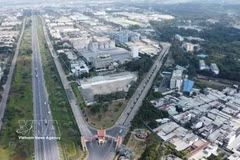
Vietnam’s real estate sector continues record run: Forbes ảnh 1A corner of the Vietnam-Singapore Industrial Park (VSIP) in Bac Ninh. (Photo: VNA)

Hanoi (VNA) - Vietnam’s real estate market recommenced its record run, with the industrial sector viewed as the star of the industry thanks to the country's success in combating COVID-19, said a story by Philip Heller published on Forbes earlier this week.

“Office rents rising in 2020? Positive GDP growth during a global health crisis? Seems unimaginable, unless you live in Vietnam,” the story started.

The country’s list of feats this past year has been remarkable given the current health and economic hardships across the world, it said, adding Vietnam had gained incredible success containing COVID-19, with the country of 96 million people registering only 2,631 cases and 35 deaths at the time of publishing.

During the same period, Vietnam eclipsed all of its Asian rivals economically by posting GDP growth of 2.9 percent, a noteworthy feat considering the GDPs of neighboring Thailand and Malaysia contracting by 6.1 percent and 5.6 percent, respectively, in 2020. Consequently, Vietnam’s real estate market has flourished in recent years, with continued economic growth leading to a surge in property prices.

The country’s real estate market proved resilient during the pandemic, with both the industrial and residential sectors leading the pack.

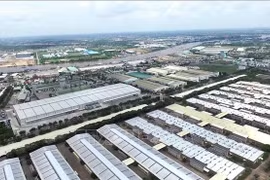
The star of the local real estate market is the industrial sector, which has been a beneficiary of a manufacturing boom. In recent years, companies such as Nike, Adidas, and Samsung have moved their operation into Vietnam.

The market has also responded to the increased manufacturing demand, as the Ho Chi Minh City industrial rents grew by 9.0 percent in 2019 and then 10.6 percent in the pandemic year of 2020, according to Cushman & Wakefield.

Vietnam’s housing market has also seen unprecedented growth in recent years. As local Vietnamese have limited investment options outside of the housing market, rampant demand for apartments has exceeded the supply of units, with many new developments selling out shortly after sales launch like hot cakes.

According to Cushman & Wakefield, apartment prices in the country's biggest metropolis have risen in response and grew by a staggering 90 percent in the three years from 2017 to 2020, especially by 12.8 percent in 2020 alone.

While demand from foreign investors is one of the factors pushing the market, the majority of the growth comes from Vietnamese citizens (in any new apartment development, foreigners are only allowed to own up to 30 percent of the total units).

As such, the country’s economic progress coupled with a rapidly expanding middle class is the primary demand driver for the expansion of the housing market, with few signs pointing to a slowdown anytime soon.

In the office segment, Forbes quoted Cushman & Wakefield as saying that Vietnam’s economic growth spurred Ho Chi Minh City’s office rents to rise by 1.7 percent in 2020 despite the difficult headwinds, while nearby cities such as Bangkok, Singapore, and Hong Kong (China) all saw office rents decline in 2020.

As the future of the segment remains uncertain across the world, working habits in Vietnam appear less likely to change given the country’s short lockdown period as well as limited technological infrastructure.

For the hotel market, 2020 saw losses in the segment, like the rest of the world, with occupancy hovering between 20-30 percent for most of the year. While the recovery is expected to be gradual, the outlook remains strong given the country’s travel industry was taking off pre-pandemic.

Economic progress led to increased business travel while Vietnam simultaneously became a sought-after vacation destination for foreigners. The Vietnamese government is encouraging this growth by heavily investing in travel infrastructure.

Vietnam is expected to be a favourable destination for investment going forward, and interest from institutional investors has propelled the country’s foreign direct investment to grow by 75 percent from 2014 to 2019.

Though the country remains a developing market, this has not dissuaded investors who are confident in the country’s long-term prospects. With the government targeting 6.5 percent GDP growth in 2021, Vietnam’s real estate market is poised to ride the economy’s tailwinds into the future./.
VNA

See more

The automatic ticketing system that uses electronic identification, authentication, biometric recognition and cashless payment for passengers on the Cat Linh-Ha Dong railway line in Hanoi. (Photo: VNA)

Cashless payments open gateway to financial inclusion

Cashless payments continued to grow rapidly in the first eight months of 2026. The number and value of cashless transactions rose 34.56% and 13.26% year-on-year, respectively, while online transactions increased 46.57% in number and 21.77% in value.

Ho Chi Minh City attracts more than 17.8 billion USD in FDI in the first nine months of 2026 (Illustrative image. Photo: VNA)

Ho Chi Minh City offers new destinations for FDI flows

The merger of Ho Chi Minh City with Binh Duong and Ba Ria-Vung Tau has opened up a larger development space, enabling the city to reshape its approach to attracting foreign investment. In particular, Resolution No. 10-NQ/TW of the Politburo sets out clear orientations for developing the foreign-invested economic sector, providing a basis for shifting the focus from the amount of investment capital to the quality of investment.

Vietnam exports about 1.4 million tonnes of coffee worth 6.54 billion USD in the first nine months of 2026. (Photo: VNA)

Vietnam seeks to boost value, expand markets for coffee sector

Acording to VICOFA, Vietnam needs to focus on exporting green coffee beans that meet EUDR criteria, particularly as compliance levels among some other producing countries remain low. At the same time, it should develop specialty and organic coffee lines as well as deeply processed products to serve the premium segment in Europe.

Part of Khanh Hoa province in central Vietnam (Photo: VNA)

Malaysian economist upbeat about Vietnam’s growth outlook

Among ASEAN’s “Fabulous Five”, namely Vietnam, Malaysia, Indonesia, Thailand and the Philippines, Vietnam demonstrates how industrial depth and effective investment can underpin rapid growth, Shan Saeed said, noting strong investment momentum.

Automobile production at the Honda Vietnam factory in Vinh Phuc ward, Phu Tho (Photo: VNA)

Vietnam’s auto market accelerates amid growing electrification trend

According to data released by PwC in late September, total vehicle sales across the six ASEAN-6 markets, namely Vietnam, Indonesia, Thailand, Malaysia, the Philippines and Singapore, reached about 1.755 million units in the first half of 2026, up 11% year on year. Vietnam recorded the highest sales growth in the group at 31.1%, followed by Indonesia at 15.9% and Thailand at 15.1%.

The headquarters of the Vietnam International Financial Centre in Da Nang (Photo: VNA))

VIFC-DN gradually establishes position on global financial centre map

According to Dang Dinh Duc, Standing Vice Chairman of the VIFC-DN Executive Agency, the ranking marks an important milestone, reflecting the foundations that VIFC-DN and Da Nang authorities are gradually building to connect with international capital flows, institutions and markets.

Quy Nhon Port, located in Quy Nhon Bay of Gia Lai province, offers highly favourable conditions for vessel anchoring and cargo handling throughout the year. (Photo: VNA)

Vietnam Logistics Forum 2026 to be held in early November

The Vietnam Logistics Forum 2026 will take place on November 6-7 in Gia Lai province, bringing together management agencies, local authorities, associations, experts and businesses to identify opportunities and challenges and discuss logistics development solutions suited to the new period.

VCCI Chairman Ho Sy Hung speaks at the Vietnam Corporate Sustainability Forum (VCSF) 2026 in Hanoi on October 5, 2026. (Photo: VNA)

Vietnam’s corporate sustainability forum calls for new growth paradigm

Breakthrough growth and sustainable development should be pursued as a shared journey in which the State creates an enabling environment, localities support businesses, enterprises take the pioneering role, science and technology provide momentum, and society as a whole participates.

Khanh Hoa province is rolling out infrastructure projects for the Van Phong Economic Zone. (Photo: VNA)

Khanh Hoa targets green, smart marine economy

The province aims for average annual GRDP growth of 11-12% during 2026-2030, with the digital economy accounting for 35% of GRDP and total factor productivity contributing more than 55% to growth. Labour productivity is expected to rise by an average of 11% annually.