Vietnam’s software exports rise: VINASA

Vietnamese exports of software have risen dramatically but sales in the domestic market fell during the 2011-2015 economic downturn, according to the Vietnam Software Association (VINASA).
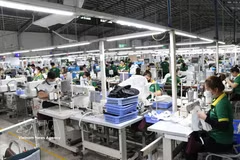
Vietnam’s software exports rise: VINASA ảnh 1 Vietnam is Japan's No1 software partner (Source:VNA)

HCM City (VNA) - Vietnamese exports of software have risen dramatically but sales in the domestic market fell during the 2011-2015 economic downturn, according to the Vietnam Software Association (VINASA).

During the period, many State offices and enterprises cut expenditures for software, and policies related to purchasing and hiring restricted development of the industry.

Software exports and the IT service market reached an annual growth of 30-40 percent, especially in the Japanese market.

Vietnam is Japan’s No 1 software partner, with a high number of orders and increased value.

In addition, the US and the EU market maintained growth at 20-30 percent each year.

In the past five years, the country’s IT industry managed to maintain a growth rate of 10-15 percent each year, despite the recession.

Revenue from the software sector increased from 1 billion USD to 1.6 billion USD in 2015.

The revenue of the IT industry in general increased from 2 billion USD to 3 billion USD in 2015. The proportion of Vietnamese value content of turnover was high, at 90-95 percent.

Human resources within the industry also grew steadily at 10 percent each year, reaching about 200,000 people at present.

“For the time ahead, VINASA aims to become a pioneer in connecting industries and regions, and applying and developing technologies and start-ups,” chairman of VINASA Truong Gia Binh was quoted as saying in the Thoi bao Kinh Te Viet Nam (Vietnam Economic Times) newspaper.

“The association will try to support small- and medium-sized firms in their development, while big firms can become global ones, thus contributing to the country’s development,” he added.

Over the last five years, the international competitive capability of Vietnamese software and IT services was firmly established.

According to a report from Gartner - an IT research and advisory company, in 2014 Vietnam was listed as one of the world’s top 10 nations for software processing.

During the 2010-15 period, Hanoi and HCM City were listed in the top 100 cities in the world for software processing.

Since 2013, Vietnam has been Japan’s second-largest partner in software processing, followed by China.

This year’s Sao Khue Awards saw strong development trends at software and IT service enterprises.

Many software and IT products reached growth of 100 percent in turnover, while others saw 300-400 percent, and several small companies 500 percent.

The top 10 enterprises at this year’s Sao Khue Awards recorded turnover of 240 million USD, 17 percent of the industry’s total turnover.

According to a VINASA report, software and IT service enterprises developed in number, size, professional skill and corporate governance.

More enterprises employ 200-500 and even up to 1,000 or more software programmers.

Enterprises doing business with Japanese partners have seen strong growth, some up to 100 percent.

However, VINASA’s report also revealed that most Vietnamese enterprises were small- and medium-sized. Therefore, research and development was limited and they could not make creative products and services.

Human resources are also seriously lacking. From now to 2020, the market is expected to need 400,000 software programmers, but the education system can only provide 250,000 trained graduates.

Many of them have poor professional skills and limited foreign language ability.-VNA

VNA

See more

The sidewalks on Hung Vuong street in Quang Tri province are under renovation. (Photo: VNA)

Quang Tri approves 103 priority projects for investment during 2026–2030

The 103 projects are categorised into seven fields, comprising energy; logistics; tourism, services, and trade; green and high-tech agriculture; industry, industrial zones, and production infrastructure; urban development and commercial housing; and healthcare, wellness, and resort services.

Workers make clothes for export to the Japanese market at Hung Viet Garment Company in Hung Yen province (Photo: VNA)

Vietnam’s textile-garment firms striving to achieve export targets, sustain employment

To achieve the annual target, textile and garment businesses are jointly implementing several core tasks, including diversifying export markets and partners, developing the supporting industries for raw materials and accessories to establish integrated supply chains, investing in technological innovation linked to AI, stepping up high-quality workforce training, promoting green transformation based on circular economy models, and building brands in both domestic and international markets.

Minister of Public Security General Luong Tam Quang (R) receives Choo Hyeong Wook, President and CEO of the Republic of Korea’s SK Innovation in Hanoi on November 16. (Photo: VNA)

Vietnam promotes international cooperation in energy, high technology

Minister of Public Security General Luong Tam Quang called on the RoK's SK Innovation to share experience and work with Vietnamese partners in developing clean and renewable energy, hydrogen, liquefied natural gas, energy storage technologies and carbon emission reduction solutions.

Delegates pose for a photo at the Chile-Vietnam Business Forum in Hanoi on November 16 (Photo: VNA)

Vietnam, Chile seek to expand trade ties

Chilean President José Antonio Kast pointed to potential for cooperation in agriculture and food, and called for stronger technical cooperation, better market access and closer links in innovation, technology, services and sustainable development.

Production of footwear for export at Lefaso Tra Vinh Industrial Investment and Production Joint Stock Company, Tra Cu commune, Vinh Long province (Illustrative image. Source: VNA)

VEFTA implementation requires exporters to restructure supply chains: Experts

Under VEFTA, tariff reductions to zero will be meaningless for Vietnam’s key export sectors, including textiles and garments, footwear, and agricultural and aquatic products, if goods are found to contain banned chemicals, violate rules of origin or lack transparency regarding their carbon footprints.

Deputy Prime Minister Nguyen Van Thang meets with Martin Sommer, head of the IMF’s Article IV consultation mission team to Vietnam, in Hanoi on November 13, 2026. (Photo: VNA)

IMF sees positive growth prospects for Vietnam, urges cautious monetary policy

Martin Sommer, head of the IMF’s Article IV consultation mission team to Vietnam, noted that inflation risks in Vietnam remain under control, but several factors could add to price pressures. He therefore called for cautious monetary policy management and readiness to respond promptly if inflationary pressures increased.

Representatives of the three first-prize-winning startups receive their awards at the event. (Photo: SGGP)

Seven green-tech startups secure 770,000 USD at Net Zero Challenge 2026

In its fourth year, the competition attracted more than 1,100 applications from 80 countries and territories, making it the most competitive edition since its launch in 2023. Nine finalists presented solutions in three categories, namely renewable energy and carbon removal; food systems and sustainable agriculture; and circular economy and waste management.