Seaport industry remains a 'gold mine' of Vinalines (Source: vinalineslogistics.com.vn)
 Hanoi (VNA) – The revival of the Vietnam National Shipping Lines (Vinalines) along with its efforts to cut losses and infrastructure will be a basis to help the country’s maritime giant to continue its ‘sailing’, with a hope of taking up more shares at home and abroad in the near future.
Nguyen Canh Tinh, Acting Director General of Vinalines believed in the bright future of the company thanks to the implementation of solutions in implementing financial restructuring, handling property and tightly controlling its business activities, cutting cost and developing its customers network and diverse services.
Loss cut down by 80 percent
At a conference on the implementation of Vinalines’ tasks for 2019 on January 15, Tinh said in 2018, the sea transport output reached 26.7 million tonnes, up 24.5 percent against the set target; the volume of goods through ports reached 96.6 million tonnes, a year-on-year increase 9.4 percent. Total revenue hit close to 14 trillion VND, up 2.6 percent compared to the yearly plan, and total profits were 365 billion VND, including 1.02 trillion VND contributed by seaports and 83 billion VND by maritime services. Loss by maritime transport was cut down by 80 percent.
[Vinalines revived and setting sail]
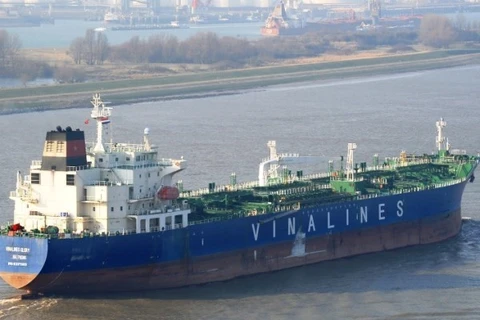
Tinh attributed the positive results to growth in the dry cargo market, the sale of ineffective assets, contributing to reducing loss; effective hire of ships, organisation of shared buying activities for it ship fleet to cut cost, and the issuance of fuel quotas and control of material fuel use.
He admitted difficulties of the global maritime transport due to economic downturn, and assessed that Vinalines’ fleet will face disadvantages like investment, depreciation cost and major assets, old ships, limited competitiveness, and a shortage of quality crewmembers along with exchange differences due to interest adjustments and fuel price hike.
In particular, the container shipping market faced many difficulties in 2018. Container shipping firms have continuously invested in and put into operation new vessels, making supply in excess, and transport costs down.
“Competition in the domestic container transport market in 2018 was fierce, particularly the most was seen on the Ho Chi Minh City-Hai Phong transport route as about 40 specialised vessels and semi-specialised participated in the market,” Tinh said.
In 2019, Vinalines set targets of 17.6 million tonnes of goods transported by sea, 107 million tonnes of goods handled at its ports, 12.7 trillion VND in revenue and over 711 billion VND of pre-tax profit,
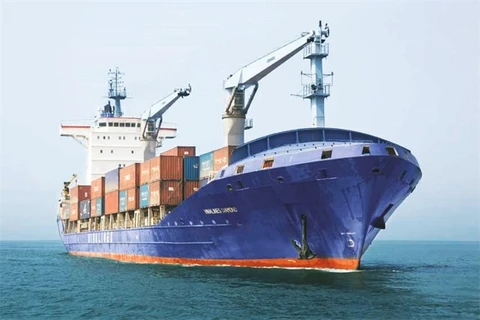
Vinalines will also focus on expanding markets; continuing financial restructuring, handling bad debts and assets to cut loss at shipping enterprises and joint venture ports; maximising integrated services of ports, sea transport, warehouses, yards and distribution centres via strengthening and enhancing the competitiveness of its warehouse and yard systems, fleets and deep-water ports to provide package logistics services to customers .
‘Ace’ and ‘gold mine’ of seaports
2018 was assessed a year with many achievements for the maritime industry, in which Vinalines made important contributions, Deputy Minister of Transport Nguyen Van Cong said, adding the sea port sector cut loss by 80 percent to 209 billion VND.
According to the Deputy Minister, in 2018, Vinalines transported 153 million tonnes of goods, accounting for 55.6 percent of the total commodities transferred by all types of transportation in the country. This highlighted the important role of the maritime sector in the country’s trading
"This figure [of Vinalines] will help reduce the traffic pressure on roads, and an increase in the volume of goods transported by waterway will cut down transport costs, and improves the competitiveness of goods," Cong said.
 The Government's emulation flags are presented to outstanding affiliates of Vinalines (Photo: VietnamPlus)
 Emphasising the seaport plays a role as a "gold mine" of Vinalines, the Deputy Minister asked the company to take measures to increase revenue and profit, which is absolutely reasonable. After equitisation, Vinalines has to promote its strength to garner high profits, and fully tap advantages of a joint stock company.
“In the past years, seaport service prices were low, beneficiaries were not Vietnamese people but foreign businesses. The Ministry of Transport issued Circular No. 54/2018/TT-BGTVT which took effect on January 1, 2019. Under the circular, seaport service prices only increases by 10-15 percent but will certainly affect to revenue and profit. In the coming years, the seaport price will continue to be increased to that of Cambodia at least (60-70 USD while Vietnam is only 30 USD),” emphasise the Deputy Minister.
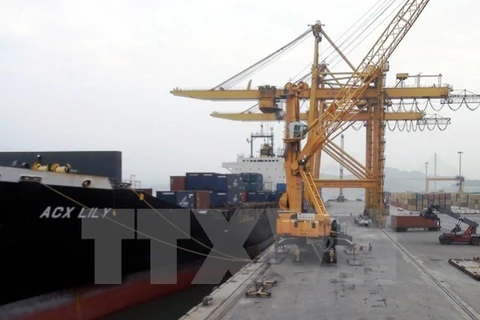
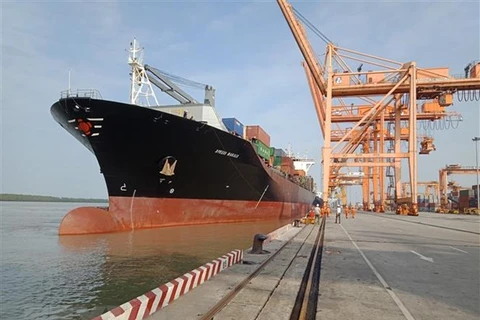
In addition to the ports in operation, Vinalines needs to promptly complete procedures to invest in habours 3 and 4 of the Lach Huyen port to improve goods transport and handling capacity. In Da Nang, the Prime Minister has a policy to invest in public infrastructure in Lien Chieu to build new wharves and quays, and change the functions of Tien Sa 1 and Tien Sa 2.
Recognising and praising efforts Vinalines has made to overcome difficulties over the past year, Nguyen Thi Phu Ha, Vice Chairman of the Committee for Management of State Capital at Enterprise, asked Vinalines to apply policies and mechanisms to devise a better business and production plan, and then submit it to the committee for consideration before presenting at the upcoming shareholders' meeting.-VNA