Vinh Long working hard to attract investment

The Mekong Delta province of Vinh Long is applying itself to attracting investment this year, especially in urban development, trade, high-quality agriculture, the processing industry, and tourism services.
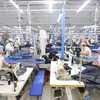
Vinh Long working hard to attract investment ảnh 1A garment factory invested by the Republic of Korea in Hoa Phu Industrial Park of Vinh Long province (Photo: VNA)
Vinh Long (VNA) - The Mekong Deltaprovince of Vinh Long is applying itself to attracting investment this year,especially in urban development, trade, high-quality agriculture, the processingindustry, and tourism services.

Le Minh Tan, Director of the province’sinvestment promotion and enterprise support centre, said Vinh Long is invitinginvestment in 10 key projects in different fields, including the Binh TanIndustrial Park project worth some 2.9 trillion VND (125.8 million USD), anurban area development project worth 7.5 trillion VND, and an agriculturalproduction and processing project worth 400 billion VND in Binh Minh town.

To improve the quality and effectiveness offoreign investment, it is working to attract strategic investors from potentialmarkets like Japan, the Republic of Korea, Taiwan (China), Singapore, andthe EU.

The RoK now has 18 investment projects worthnearly 90 million USD in Vinh Long, Japan eight worth 102.5 million USD, andTaiwan (China) 11 worth some 239.2 million USD.

The province also targets major projects andthose that have high added value and use advanced and environmentally-friendlytechnology, he added, especially agriculture-based industrial development,high-quality human resources training, and agricultural tourism.

Local authorities will constantly create optimalconditions for investors to access key projects and learn about incentiveswhile helping them address obstacles to project implementation, he added.

Vinh Long granted in principle approval andinvestment certificates to 26 projects with total registered capital of nearly4.35 trillion VND and over 104 million USD, including six FDI projects, lastyear./.
VNA

See more

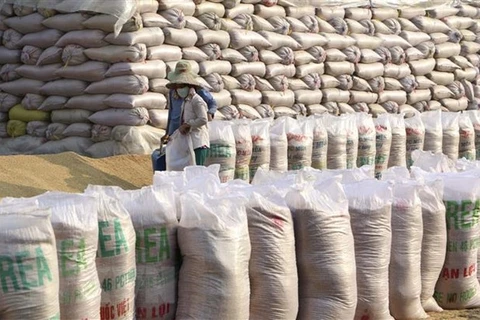
Workers load rice bags onto a vessel for delivery. (Photo: VNA)

PM directs tasks to accelerate 2026 export growth

During January – February, Vietnam’s total export-import value hit 155.7 billion USD, up 22.3% year-on-year. Of the total, exports were estimated at 76.4 billion USD, up 18.3%, while imports totaled 79.3 billion USD, up 26.3%.

A quick report from data analytics platform Metric shows the number of active sellers across Shopee, TikTok Shop, Lazada and Tiki has dropped to just over 602,000, marking a year-on-year decline of more than 7%. (Illustrative photo: VNA)

Higher marketplace fees weigh on online sellers

Analysts identify rising operational costs as the key factor behind the exodus. In 2025, platforms simultaneously rolled out fee hikes ranging from 10–15%, significantly increasing the financial burden on merchants.

The latest approvals underscore the growing presence of Vietnamese rice in one of the world’s most demanding markets. (Photo: VNA)

Fragrant rice deepens EU market presence

Although the volume of individual shipments remains relatively modest, industry experts say the steady flow of exports reflects stable demand in the EU for high-quality rice.

Promoting stronger foreign direct investment (FDI) inflows is considered an important solution to help drive economic growth. (Photo: VNA)

Vietnam emerges as hub for high-quality FDI

Vietnam is gradually becoming a strategic destination for high-quality global FDI. Investment flows are increasingly directed toward sectors such as high-tech manufacturing, electronics, digital infrastructure, modern logistics, and industries that are closely linked to global supply chains.

Shrimp processing for export at Huy Nam company, An Giang province. (Photo: VNA)

Fisheries sector proactively adjusts to emerging challenges

In addition to food safety regulations, the US continues to closely monitor the origin of imported seafood through the Seafood Import Monitoring Programme (SIMP) administered by the National Oceanic and Atmospheric Administration (NOAA). Requirements linked to the Marine Mammal Protection Act (MMPA) are also a major concern for businesses.