WB official optimistic about Vietnam's 2022 GDP growth prospect

Vietnam's target of bringing its GDP growth to 6-6.5 percent in 2022 as set in the recent session of the National Assembly is entirely possible if it can effectively control the COVID-19, and improve the supply – demand balance, an official of the World Bank (WB) has said.
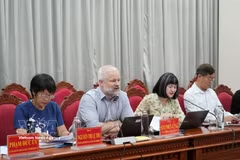
WB official optimistic about Vietnam's 2022 GDP growth prospect ảnh 1Jacques Morisset, WB Lead Economist and Programme Leader for Vietnam (Photo: VNA)

Hanoi (VNA) - Vietnam's target of bringing its GDP growth to 6-6.5 percent in 2022 as set in the recent session of the National Assembly is entirely possible if it can effectively control the COVID-19, and improve the supply – demand balance, an official of the World Bank (WB) has said.

According to Jacques Morisset, WB Lead Economist and Programme Leader for Vietnam, the biggest risk to Vietnam’s economy in 2022 can be the complicated developments of the pandemic with the emergence of new variants.

He also mentioned internal economic risks, saying that Vietnam is an open economy which will depend on the situation in other countries in the world.

Another risk is related to inflation, he said, noting that Vietnam’s economy is currently facing import inflation, while domestic commodity prices have not yet increased because demand remains lower than supply.

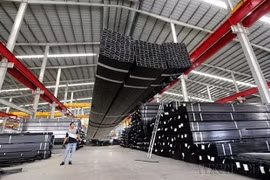
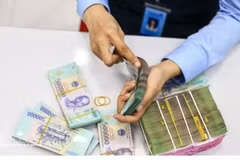
WB official optimistic about Vietnam's 2022 GDP growth prospect ảnh 2Illustrative image (Photo: VNA)

Regarding Vietnam's economic prospects in the coming time, Morisset pointed out three new motivations for growth.

The emergence of the COVID-19 pandemic has indirectly made Vietnam one of the reliable destinations for many large foreign enterprises, which have the goal of diversifying their supply chains, he said.

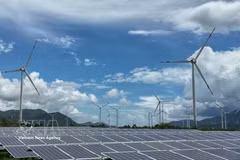
The country can also take advantage of opportunities from green economy, he noted, saying that Vietnam is one of the most affected by climate change, but it can also take advantage of this.

The third growth driver is domestic demand. As Vietnam becomes a higher income country with a growing number of middle class people, the domestic demand will be stronger, he said.

Morisset affirmed that the WB will continue to support Vietnam in achieving its ambitious goal of becoming a high-income and prosperous country by 2045.

The bank is working closely with the Vietnamese Government to promote sustainable development and effectively respond to climate change in the Mekong Delta region, and reduce air pollution in big cities, he said.

In addition, the two sides are joining hands in areas of inclusive development and gender-related issues in order to ensure people's participation in the economy, minimise the impact of the pandemic, and fully tap future opportunities, the economist said./.
VNA

See more

National Brand products are on display at the Vietnam National Brand International Forum. (Photo: VNA)

Vietnam's national brand value jumps 45% to over 462 bln USD

Deputy Minister of Industry and Trade Luong Hoang Thai outlined Vietnam's National Brand Programme 's achievements, the role of business community and plans for brand development in a press interview ahead of the 10th Vietnam National Brand Product recognition ceremony on October 16.

Khanh Hoa province possesses significant advantages for renewable energy projects and new energy sectors. (Photo: VNA)

New value chains from two industrial – renewable energy centres

To implement the revised Power Development Plan VIII, the Ministry of Industry and Trade has proposed establishing two inter-regional renewable energy industrial and service centres in the northern and southern regions to develop the renewable energy sector and a complete value chain.

WB Senior Environmental Specialist and Task Team Leader Stephen Ling speaks at the working session (Photo; VNA)

Ca Mau, WB cooperate in sustainable fisheries development

Scheduled to run from 2026 to 2029, the project aims to develop the local fisheries sector and deepen global integration, while adapting to climate change and protecting the environment through infrastructure upgrades, technological innovation, and better management and production capacity.

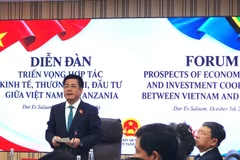
Vice President of the Vietnamese National Assembly Nguyen Hong Dien speaks at the forum. (Photo: Vietnam Trade Promotion Agency)

Tanzanian businesses seek greater cooperation, investment opportunities with Vietnam

Attending the forum during his working visit to Tanzania, Vice President of the National Assembly Nguyen Hong Dien said the two economies were highly complementary. Tanzania has strengths in natural resources, agriculture, energy, its domestic market and its strategic position in East Africa, while Vietnam has advantages in manufacturing and processing, high-tech agriculture, electronics, telecommunications and international trade.

The automatic ticketing system that uses electronic identification, authentication, biometric recognition and cashless payment for passengers on the Cat Linh-Ha Dong railway line in Hanoi. (Photo: VNA)

Cashless payments open gateway to financial inclusion

Cashless payments continued to grow rapidly in the first eight months of 2026. The number and value of cashless transactions rose 34.56% and 13.26% year-on-year, respectively, while online transactions increased 46.57% in number and 21.77% in value.

Ho Chi Minh City attracts more than 17.8 billion USD in FDI in the first nine months of 2026 (Illustrative image. Photo: VNA)

Ho Chi Minh City offers new destinations for FDI flows

The merger of Ho Chi Minh City with Binh Duong and Ba Ria-Vung Tau has opened up a larger development space, enabling the city to reshape its approach to attracting foreign investment. In particular, Resolution No. 10-NQ/TW of the Politburo sets out clear orientations for developing the foreign-invested economic sector, providing a basis for shifting the focus from the amount of investment capital to the quality of investment.

Vietnam exports about 1.4 million tonnes of coffee worth 6.54 billion USD in the first nine months of 2026. (Photo: VNA)

Vietnam seeks to boost value, expand markets for coffee sector

Acording to VICOFA, Vietnam needs to focus on exporting green coffee beans that meet EUDR criteria, particularly as compliance levels among some other producing countries remain low. At the same time, it should develop specialty and organic coffee lines as well as deeply processed products to serve the premium segment in Europe.