
Weekly Highlights: Vietnam strives to accelerate digital economy
Data economy and artificial intelligence will serve as a new, smarter and more sustainable pillars of growth for Vietnam in the digital economy.
Vietnamese airlines have been instructed not to operate flights through areas and airspace deemed to pose potential safety risks in the Middle East, amid ongoing military tensions in the region.
Speed1x
Data economy and artificial intelligence will serve as a new, smarter and more sustainable pillars of growth for Vietnam in the digital economy.

People across the country and overseas Vietnamese communities around the world have joyfully welcomed the Lunar New Year 2026 – the Year of the Horse – in a vibrant atmosphere filled with hope for a happy and prosperous year.

Vietnam has officially submitted its application to UNESCO to recognise "pho" (Vietnamese noodle soup) and water puppetry as Intangible Cultural Heritage elements, while several new local intangible cultural heritage properties have been added to the national list.
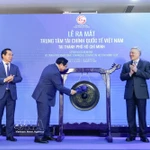
The official launch of the Vietnam International Financial Centre in Ho Chi Minh City on February 11 is expected to mobilise and channel capital into priority areas such as strategic infrastructure, core industries, logistics, green growth and digital transformation.

The first Vietnam Glorious Spring Fair 2026 is underway in Hanoi from February 2 to 13, transforming the capital into a lively hub of trade, culture and festive experiences.
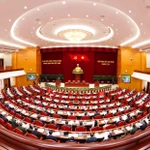
The 14th National Congress of the Communist Party of Vietnam has concluded successfully, leaving deep impressions not only at home but also drawing wide attention from the international community. In today’s episode, we’ll look back at notable international assessments of the significance and outcomes of this major political event of Vietnam.

Nipah virus infection is designated a Group A infectious disease, with reported fatality rates of between 40 and 75%. At present, no vaccine or specific antiviral treatment is available. The virus is mainly transmitted from animals to humans or through contact with contaminated food and objects, and can also spread between people via direct contact with bodily fluids and secretions of infected patients.

In a special discussion with the Vietnam News Agency on the occasion of the 14th National Party Congress, three international experts – Professor Carl Thayer, a renowned Vietnam scholar at the Australian Defence Force Academy, University of New South Wales; Dr Valeria Vershinina, Deputy Director of the ASEAN Centre at MGIMO University in Moscow and a leading Russian expert on Southeast Asia and ASEAN affairs; and journalist Amiad Horowitz, a regular contributor to People’s World who closely follows communist parties worldwide and pathways towards socialism – shared in-depth perspectives on the Congress's overarching vision, its assessment of past achievements, and the strategic breakthroughs expected to shape Vietnam’s future trajectory.
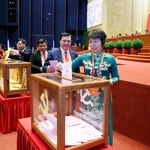
The 14th National Congress of the Communist Party of Vietnam on January 22 announced the list of the 200 members of the new 14th-tenure Central Committee, including 180 official members and 20 alternate ones.

Vietnam’s diplomacy in 2025 has provided a solid foundation for national development, fostering equal, cooperative, and mutually beneficial partnerships with countries around the world, while helping safeguard national interests amid an increasingly complex and volatile regional and global landscape.
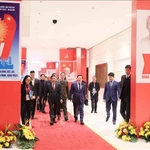
Vietnam has completed preparations for the 14th National Congress of the Communist Party of Vietnam, scheduled to take place in Hanoi from January 19 to 25, with the participation of 1,586 delegates representing more than 5.6 million Party members nationwide.
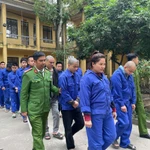
Police in the northern province of Hung Yen have dismantled a large-scale fraud and online gambling network that investigators say processed transactions totaling 9.3 trillion VND (equivalent to 354 million USD).
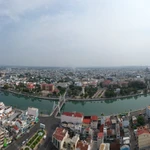
As 2025 draws to a close, it leaves behind a series of notable milestones in the leadership and governance of Vietnam. From economic growth and macroeconomic stability to institutional reform, digital transformation and social welfare, the year’s achievements reflect a spirit of decisive, flexible and practical governance. Notably, 2025 has been identified as a pivotal year, laying important foundations for the country to move into a new phase of development that is stronger and more sustainable.
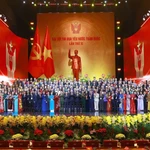
The 11th National Patriotic Emulation Congress took place in Hanoi on December 26-27, following the theme “Emulation for innovation, acceleration, and breakthrough to usher the nation into an era of strength, civilisation, and prosperity.”

Semiconductors are no longer the exclusive domain of technological powerhouses; instead, every country is racing to research and produce them to secure their place in the global value chain. For Vietnam, this journey is inextricably linked to the goal of building an independent and self-reliant economy in the context of international integration.
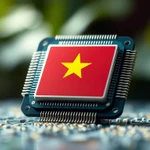
In today’s modern world, countless major technological breakthroughs begin with silicon fragments smaller than a grain of rice called semiconductor. As these chips have become strategic assets, intense geopolitical competition among major powers has triggered an unprecedented shift in global semiconductor supply chains. Against this backdrop, domestic and international analysts see Vietnam as a strong contender in global semiconductor companies’ de-risking strategy.
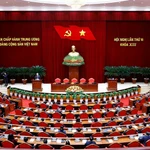
The 15th plenum of the 13th Central Committee of the Communist Party of Vietnam was held in Hanoi this week, focusing on preparations for the Party’s 14th National Congress. Key discussions covered personnel plans for the 14th Central Committee, draft documents to be submitted to the Congress, and organisational and logistical arrangements.
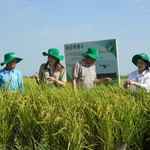
Two years after the Prime Minister approved Decision 150 on the Sustainable Agriculture and Rural Development Strategy for the 2021–2030 period, in 2023, Vietnam issued a National Action Plan to transform food systems in a transparent, responsible and sustainable manner through 2030. This marked a breakthrough step, demonstrating Vietnam’s responsibility to the international community following the United Nations Food Systems Summit in 2021.

A nationwide ceremony marking the simultaneous inauguration or ground-breaking of large-scale, strategically significant projects will take place at 79 locations across the country on December 19, coinciding with the 79th anniversary of the National Resistance Day (December 19, 1946 - 2025) and in celebration of the upcoming 14th National Party Congress.

In the context of intense competition and shifts in global supply chains, semiconductor chips in particular, and the semiconductor industry in general, are likened to “rice grains,” as they sustain all other sectors in the technology era, and serve as a key enabler of future digital technologies. Following the Government’s issuance of the Strategy for the Development of Vietnam’s Semiconductor Industry to 2030, with a Vision to 2050, Vietnam is gradually emerging as a new bright spot on the global semiconductor map.