Workshop discusses sustainable irrigation development

The Ministry of Agriculture and Rural Development (MARD) and the World Bank jointly organised a workshop on irrigation development strategy to 2030 with a vision towards 2050.
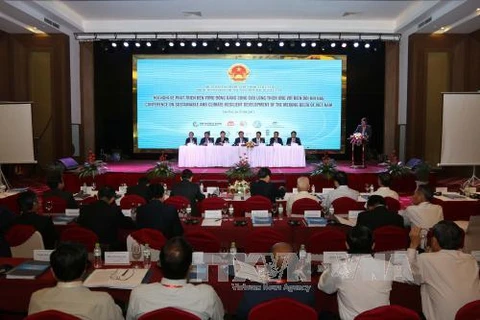
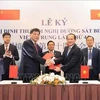
Workshop discusses sustainable irrigation development ảnh 1At the workshop (Source: VNA)

Hanoi(VNA)
– The Ministry of Agriculture and Rural Development (MARD) and the WorldBank jointly organised a workshop on irrigation developmentstrategy to 2030 with a vision towards 2050.

MARD Deputy MinisterHoang Van Thang hailed the irrigation sector’s achievements over the pastyears, saying that the sector has served well the economy, particularly theagricultural sector.

Thang alsohighlighted the shortcomings in the sector as well as challenges facing it amidclimate change.

According to Thang,the sector needs to develop a multi-dimensional vision in line with the agriculturereform while mobilising resources and seeking a new impetus for irrigationdevelopment.

Pham Hung Cuong, asenior expert from the World Bank Vietnam said in order to ensure sustainableirrigation development in terms of socio-economic and environmental aspects, thesector needs to focus on enhancing agricultural added values.

He suggested the sectorencourage the participation of beneficiaries and different economic sectors inbuilding, managing, exploiting and protecting irrigation works.

The irrigationsector should also adapt to climate change, contributing to preventing naturaldisasters, and protecting the environment and water resource management, Cuongsaid.

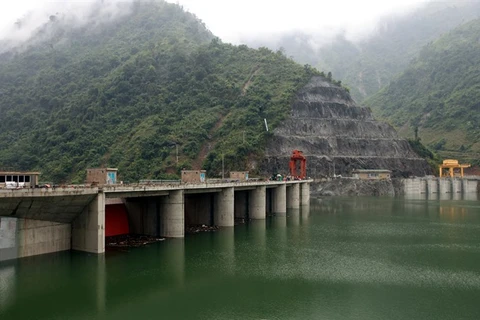
As part ofactivities to implement the national irrigation development strategy, from2009 to 2016, a number of large irrigational works had been built, includingCua Dat, Ngan Truoi – Cam Trang, Ban Mong, Ta Trach, and Van Phong.

Over 65,000kilometres of canals had been reinforced, accounting for 25.7 percent of the nation’stotal 235,000-kilometre canal network, hundreds of reservoirs and thousands ofkilometres of dike upgraded, and storm-and flood-proof shelters built.-VNA
VNA
See more

Tran Ngoc Quan, Trade Counsellor and head of the Vietnam Trade Office in Belgium and the EU (Photo: VNA)

Belgian firms suggested to expand presence in Vietnamese market

Entering 2026 – the first year of implementing the Vietnam – EU Comprehensive Strategic Partnership, the Vietnam Trade Office in Belgium and the EU views this as a pivotal time to inject new momentum into trade ties, said Trade Counsellor Tran Ngoc Quan.

Saigon Marina IFC, an emerging landmark, reflects Ho Chi Minh City’s pioneering spirit.

Saigon Marina IFC – The light of Ho Chi Minh City’s new icon

Saigon Marina IFC, an emerging landmark, reflects Ho Chi Minh City’s pioneering spirit. Designed to become an International Financial Centre, this new architectural icon along the Saigon River is envisioned not only as a premium commercial complex, but as a central platform supporting financial institutions, international investors and cross-border capital flows in the years ahead.

Shoppers at a supermarket in Hung Yen (Photo: VNA)

Retailers see tax compliance, AI as key to survival in 2026 survey

The annual survey, conducted at the end of 2025 among retail and food and beverage (F&B) sellers nationwide, found that businesses are shifting their focus from rapid growth to operational efficiency, cost control and legal compliance amid increasingly stringent regulatory standards.

Visitors shop at Glorious Spring Fair 2026 (Photo: VNA)

Spring Fair 2026 opens broader prospects for Vietnam–UAE trade cooperation

For Vietnam, the UAE serves not only as a consumer market but also as a gateway to the Middle East and North Africa. Vietnamese agricultural products such as cashew nuts, pepper, cinnamon and rice have steadily gained market share, while aquatic products, including tra fish and tuna, are increasingly present in the UAE’s hospitality sector.

Bao Viet Bank's employee counts Vietnamese banknotes at a transaction counter in Hanoi. (Photo: VNA)

Credit quota reform, tighter capital rules may widen gap among banks

Yuanta Vietnam Securities estimates that to achieve GDP growth above 10%, credit growth would need to exceed 16%. This suggests bank credit is no longer expected to be the main growth driver, with greater reliance on fiscal policy, public investment and capital markets.

Commercial Counsellor Do Viet Phuong, Head of the Vietnam Trade Office in Cambodia. (Photo: VNA)

Spring Fair 2026 offers ample room to deepen Vietnam–Cambodia trade ties

Cambodia holds substantial potential for cooperation in agro-processing and exports, especially in key products such as rice, cashew nuts and rubber. In recent years, the country’s cultivation area and agricultural output have grown steadily, providing a stable raw material base for processing industries.

Vietnam is projected to have approximately 2.4 million SMEs, accounting for over 98% of the country’s total enterprises. (Photo: cafef.vn)

Banks offer diverse solutions to support SMEs

With an increasingly significant role in the economy, the small and medium-sized enterprise (SME) sector is becoming a key segment in the credit growth strategies of many banks and the banks have been taking diverse solutions to support the enterprises.