Workshop enhances midwifery services

The role of midwives in reproductive health care was the focus of discussion of a workshop in the central city of Hue on July 21.
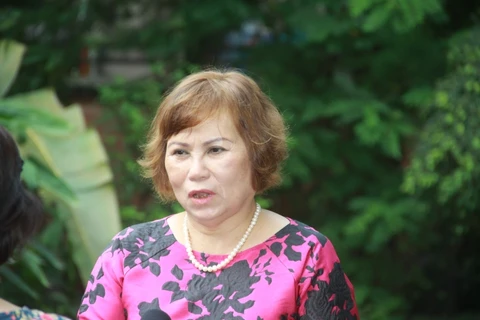
Workshop enhances midwifery services ảnh 1Illustrative photo (Source: VNA)


Thua Thien – Hue (VNA)
– The role of midwives in reproductive health care was the focus of discussion of a workshop in the central city of Hue on July 21.

The event, organised by the Vietnamese Association of Midwives (VAM), saw the participation of 300 domestic and foreign delegates.

VAM President Phan Thi Hanh attached significance to the role of midwives in the medical system, saying that they are the key staff in caring for maternal and infant health, particularly in remote areas.

Deputy Director of the Department of Maternal and Children’s Health under the Health Ministry stressed the need for enhancing clinical skills for midwives in a bid to minimise the rate of infant and maternal mortality.

It is necessary to have special support policies for midwives, especially those working in areas inhabited by ethnic minorities, he noted.

Some 70 percent of Vietnamese women living in rural areas so they often face complications during their pregnancy or baby delivery due to a poor understanding of reproductive health care

Figures show that since 1990, the global rate of infant and maternal mortality has halved. Currently, some 800 women die of pregnancy or delivery-related causes everyday around the world; and nearly three million newborns die in the first week of their life for lack of adequate daily medical care, particularly in developing nations.-VNA


VNA

See more

A doctor provides dental checkup for a student. (Photo: VNA)

Free health checkups for children ahead of new school year

According to the Hanoi Department of Health, the city has 4,776 educational institutions with more than 2.2 million preschool and school students. The health campaign will run from August 18 to September 4, targeting 100% coverage before the new school year begins.

Spraying insecticide to prevent dengue fever in Dan Hoa commune, Hanoi. (Photo: VNA)

Hanoi steps up dengue prevention as cases rise

According to the Hanoi Centre for Disease Control (CDC), 316 dengue cases were recorded across 74 communes and wards in the city from August 7-14, up 81 from the previous week. Eleven new outbreaks were also reported, bringing the total number since the beginning of 2026 to 63, with 24 still active.

Screening and early cancer detection using advanced medical equipment at a healthcare facility (Photo: VNA)

Vietnam targets Southeast Asia’s leading medical tourism position by 2030

Medical tourists to Vietnam currently mainly comprise overseas Vietnamese and visitors from Cambodia, Laos, the Republic of Korea, Japan, Australia and several European countries. Popular services include cosmetic dentistry, assisted reproduction, aesthetic medicine, general health check-ups and some advanced medical specialties.

An ambulance from the pre-hospital emergency care service in Phu Quoc special zone in An Giang province. (Photo: VNA)

Pre-hospital emergency care system to be launched nationwide

From 2027, the national pre-hospital emergency management platform will be put into operation, connecting data with the 113, 114 and 115 emergency call systems to facilitate rapid emergency dispatch and improve public access to emergency services.

Foreign patients travel to Vietnam for robotic cancer surgery at one-tenth of US costs

Foreign patients travel to Vietnam for robotic cancer surgery at one-tenth of US costs

With robot-assisted surgery costing tens of thousands of dollars in the US and Singapore, a growing number of international patients are traveling to Vietnam for robotic cancer surgery, including procedures for prostate, gynecological and gastrointestinal cancers, using the US made da Vinci Xi system at costs starting from just 3,000 USD.

Under a phased rollout beginning in 2026, every resident in Ho Chi Minh City will receive at least one annual health check-up or health screening. (Photo: VNA)

Ho Chi Minh City develops integrated multi-tier healthcare system

Under the new model, healthcare is organised into interconnected levels based on people's needs rather than administrative boundaries. Patients can move seamlessly between levels while their electronic health records and treatment information remain connected through digital platforms, referral systems, telemedicine, electronic medical records, and integrated health databases.