VNA





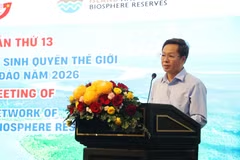
A highlight of the declaration is the commitment to contribute to the Hangzhou Strategic Action Plan, particularly Action Target 18, under which the network will develop guidelines by 2028 to address challenges specific to coastal and marine biosphere reserves, supporting their nomination, management and monitoring.
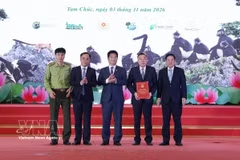
The establishment of the Kim Bang Delacour's Langur Species and Habitat Conservation Area in Ninh Binh province provides a solid legal and scientific foundation for completing the dossier to seek UNESCO recognition of the Van Long–Kim Bang–Tam Chuc Cultural and Ecological Landscape Complex as a World Heritage Site.
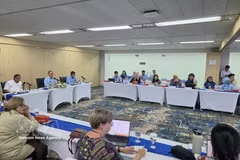
Vietnam has considerable experience in solar power development that Indonesia could draw on as it implements its 100-GW solar power programme.
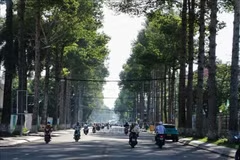
The Forestry and Forest Protection Department (FFPD) will lead the component on identifying crop and planting structures that help reduce air pollution, while also participating in the design of urban public-space landscapes.
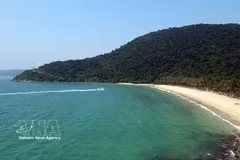
The city’s master plan prioritises development that respects natural ecosystems, preserves ecological corridors, protects flood-storage areas and limits urban expansion in environmentally sensitive and disaster-prone zones.

Law should provide the foundation for translating climate goals into concrete, implementable, monitorable and assessable actions, said Dr. Le Truong Son, Rector of the Ho Chi Minh City University of Law (ULAW).
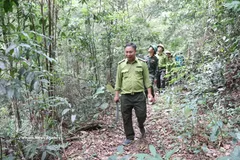
Instead of relying mainly on authorities, residents have taken a more active role in patrolling forests, monitoring changes and reporting violations.

An Giang province is implementing a green-transition plan for the Phu Quoc special zone for the 2026–2035 period, with a vision to 2050, including an emphasis on plastic-free tourism and cleaner beaches.
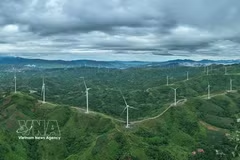
ietnam has introduced various policies and guidelines on climate change response, energy security and marine economic development, identifying CCS/CCUS as a solution for reducing greenhouse gas emissions.

In an interview with the Vietnam News Agency’s correspondents in Hong Kong (China), Lin, an expert specialising in sea-level change and climate risk assessment, said Vietnam shared global drivers of sea-level rise with China’s coastal regions, but local conditions could lead to significant differences in the overall risks.
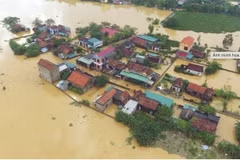
If global average temperatures rise by two degrees Celsius, Vietnam could experience such a super typhoon once every 13 years on average. The frequency would increase to once every nine years under the three-degree warming scenario and once every seven years if temperatures rise by four degrees.
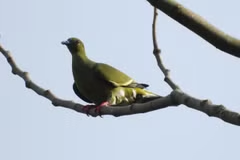
Dakrong Nature Reserve in the central province of Quang Tri has recorded 35 bird species not previously documented, including several endangered and rare species listed on the International Union for Conservation of Nature (IUCN) Red List.

The reserve, covering 8,408 hectares, aims to protect and maintain the area and quality of natural forests, conserve biodiversity, endangered and rare species, and natural habitats typical of the region.

Hanoi aims to ensure that all industrial solid waste from its hi-tech parks, industrial parks and industrial clusters is collected and treated in line with regulations under a new plan to strengthen waste management and tighten control on scrap collection, storage and recycling facilities across the capital.

Rapidly shifting climate conditions and increasingly overlapping hazards mean disaster risk reduction can no longer stand alone; it must sit at the heart of sustainable development, tightly integrated with climate response, water security, social welfare and economic growth.

Monitoring results from the first nine months of this year show that Hanoi’s air quality has improved significantly compared with the same period last year.

General Secretary of the Communist Party of Vietnam Central Committee and President To Lam stressed that the development of Bac Hung Hai must be integrated into broader efforts to ensure water security, protect the environment and promote sustainable development in the Red River Delta.

Previously rescued and cared for by the park’s Centre for Rescue, Conservation and Development of Organisms, all the animals underwent health checks and assessments of their ability to adapt to the wild before the reintroduction.

The cold air is forecast to reach northeastern Vietnam from the evening and night of October 4 before spreading to other parts of the north and the area from Thanh Hoa to Hue. Winds will shift to the northeast at levels 2-3 inland and levels 3-4 along coastal areas.
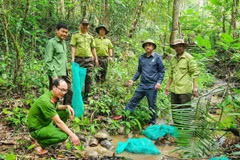
Through professional rescue procedures, including veterinary treatment, appropriate nutrition and rehabilitation of wild behaviours, the centre has gradually helped the animals recover their health and survival skills.