HCM City (VNA) – Sorting, collecting, and recycling packaging is one of the solutions that not only helps regenerate products but also effectively reduces environmental pollution, heard a conference on circular economy held within the framework of the Green Economy Forum and Exhibition (GEFE) 2024 in Ho Chi Minh City on October 22.
The GEFE is being jointly held by the European Chamber of Commerce (EuroCham) and the Ministry of Industry and Trade (MoIT)’s Vietnam Trade Promotion Agency (Vietrade) on October 21-23.
For a long time, Vietnam has followed a linear economic model characterised by a “take, make, dispose” approach. However, this model no longer has much room for resource-based development; and markets, trade partners, and investors are increasingly demanding adherence to more sustainable standards. Therefore, the Vietnamese Government is gradually putting forward policies to promote green economy and circular economy.
One notable regulation is the Extended Producer Responsibility (EPR) under the 2020 Law on Environmental Protection, which came into force on January 1, 2024. Specifically, producers and importers have two additional responsibilities: recycling products and packaging, and collecting and treating waste. Accordingly, businesses carry out their recycling responsibilities according to a specified roadmap, while producers and importers choose to organise recycling themselves or contribute to the Vietnam Environmental Protection Fund to support recycling efforts.
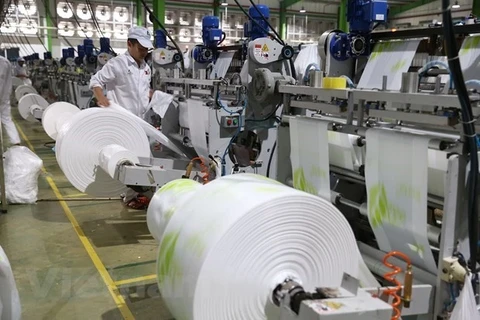
After nearly one year of implementation, the EPR mechanism has generated certain positive impacts. Le Anh, Sustainability Director at Duy Tan Plastic Recycling JSC, shared that the company has invested in building a factory and organising the collection and recycling of plastic bottles for many years, but finding a market for their products has not been an easy task.
With production costs being 20-25% higher than those of primary plastic products, Duy Tan's recycled plastic bottles mainly serve export markets. However, since the EPR mechanism came into effect, the demand for recycled plastic bottles from domestic enterprises has increased significantly. The capacity of the recycling plastic factory has quadrupled, and the share of domestic consumption now accounts for 50% of production, Anh stated.
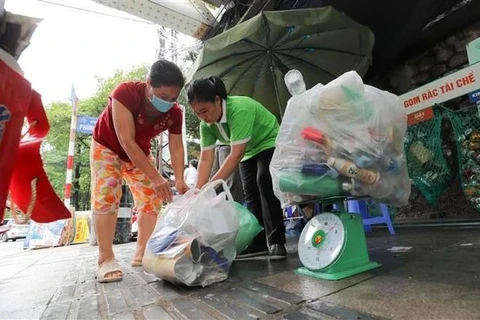
However, he noted that the collection and recycling activities in Vietnam face several challenges due to poor waste segregation at the source. When collecting 100 tonnes of plastic bottles, domestic factories with similar technology can only recycle 60-65%, while this rate can exceed 80% in European countries. The low recycling rate results in higher costs for recycled products, making it harder to reach customers.
Karin Greve, Trade Counsellor at the Norwegian Embassy in Vietnam, said that Vietnam's implementation of the EPR mechanism is a positive step that helps promote the collection and recycling of packaging and waste. However, to enhance its effectiveness, it is essential to prioritise raising awareness of and educating citizens on proper waste segregation at the source.
As the recycling industry in Vietnam is still relatively new, the Government should implement support policies and incentives to encourage more businesses to participate in this sector.
In the long term, Vietnam needs a roadmap to increase the recycling rates of packaging and waste applicable to enterprises, with a goal of recycling as much as possible. Additionally, it should promote investments aimed at improving the quality of recycled products to enhance economic efficiency and minimise environmental waste, she stated./.

See more
14th National Party Congress: Environmental protection – driver of sustainable development
A notable new feature in the draft documents of the 14th National Party Congress is that environmental protection is no longer treated as an auxiliary task, but increasingly regarded as a foundation for the country’s sustainable development in the coming period.
PM chairs sixth meeting of COP26 National Steering Committee
Prime Minister Pham Minh Chinh stressed that climate action remains a global movement and trend, in which Vietnam is actively engaged.
Eight rare animals released into the wild in Dong Nai province
The species include three Macaca fascicularis (long-tailed macaques), three Nycticebus pygmaeus (pygmy slow lorises), one Python reticulatus (reticulated python) and one Manis javanica (Javan pangolin).
Tree planting programme spreads green momentum in islands
The Ho Chi Minh City Association for Conservation of Nature and Environment (HANE) on January 11 announced 10 outstanding green programmes and activities carried out in 2025, including a programme to plant 1 million trees in Vietnam’s island areas.
Wildlife conservation creates green livelihoods at Ben En National Park
Ben En National Park in the central province of Thanh Hoa has implemented a wide range of scientific studies and conservation projects aimed at safeguarding biodiversity, particularly rare and endangered wildlife species.
Ca Mau strives to put coastal, riverbank erosion under control by 2030
Solutions have been designed to suit local geological and hydrological conditions, combining traditional hard engineering works such as dykes and revetments with soft, nature-based and ecological solutions, including mangrove restoration.
Lam Dong releases hundreds of wild animals back into the wild
According to the Ta Dung National Park Management Board, the park has for years served as a trusted destination for authorities and residents to hand over and release wildlife. Such actions not only contribute to biodiversity conservation but also help reduce illegal hunting and captivity of wild animals.
Hanoi pilots early air quality forecasting system
The system can forecast air quality trends over time and across locations, helping authorities guide and implement pollution control measures.
Recycling fly ash into valuable resource: sustainable path towards circular economy
The rate of fly ash utilisation has steadily increased over the years, to 84% in 2021 from 37.5% in 2018. During 2022–2023, many plants managed to consume 100% of the daily fly ash produced while also processing a significant portion of long-stored stockpiles.
Hanoi targets 20% reduction in PM2.5 levels
Hanoi has affirmed its commitment not to trade environmental protection for economic growth. The city is moving to establish low-emission zones (LEZs) as a core measure to control emissions and promote green, sustainable urban development.
Forest protection, development stepped up from start of 2026
Localities are requested to encourage the participation of mass organisations, schools, businesses, armed forces and communities, while enhancing public responsibility for caring for and protecting trees after planting.
Vietnam takes actions to combat desertification, ensure sustainable land, resource management
Preventing and combating desertification is identified as a key task, helping with nature and biodiversity conservation, sustainable management of forests, water and land resources, and improvement of people's incomes and life quality.
Ca Mau approves investment policy for waste-to-energy plant
The waste-to-energy plant is planned for construction in Dat Moi commune, covering a total area of about 20 hectares. It will have a waste treatment capacity of approximately 600 tonnes of household waste per day and a power generation capacity of 6MW.
Hanoi to require household waste sorting, allow collectors to refuse unsorted trash
Under the new rules, household waste must be separated at source into recyclable materials, food waste and hazardous waste.
HCM City curbs pollution through transition to green transport
Together with metro expansion, HCM City will continue to enlarge its electric and green bus network, targeting a public transport share of 15–20% of travel demand.
Plastic waste piles up as Vietnam struggles to curb culture of convenience
Vietnam produces nearly two million tonnes of plastic waste each year, most of it unrecycled. Interviews with young consumers and environmental experts reveal why regulation alone has struggled to curb a problem rooted in daily habits and low-cost plastic.
Peak Fansipan blanketed in ice on Christmas Day
With temperatures hovering between 1 and 3 degrees Celsius, frost and ice covered the summit area, creating an ideal condition for tourists eager to admire icy scenery, clouds and experience a Christmas atmosphere amid a sea of cold mist.
Vietnam targets vehicle emissions with stricter standards, digital enforcement
A substantial share of vehicles currently in use, especially motorcycles in use for years without routine checks or upkeep, are aging fleets that rank among the biggest emitters.
First public electric bus route in Con Dao Special Zone starts December 25
Electric bus Route No. 173 runs through 39 passenger pick-up and drop-off points, directly linking two locations with high travel demand — Con Dao Airport and Con Dao Market.
Nationwide mandatory management of emission quotas to be launched from 2028
Representatives of energy, coal – mineral, cement, and building materials enterprises said that the implementation of emission quota allocation must strike a balance between emission reduction targets and the maintenance of growth momentum.