Vietnam promotes circular economy in waste recycling

Many businesses in Vietnam have developed circular economy models, focusing on waste-to-energy and producing building materials from the ash and slag of thermal power plants.

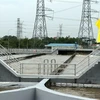
Workers at the Soc Son waste-to-energy plant, located in the Nam Son Waste Treatment Complex in Hanoi’ Soc Son district, operate the waste treatment process to generate electricity (Photo: VNA)

Hanoi (VNA) - Like many countries around the world, Vietnam is transitioning from a linear to a circular economy associated with environmental protection, with the emergence of numerous business models based on science and technology, contributing to sustainable economic development.

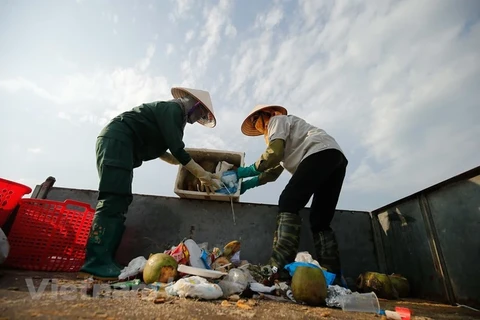
According to the Ministry of Natural Resources and Environment, about 38,000 tonnes of household waste is generated daily in urban areas while it is around 32,000 tonnes a day in rural areas. The amount of solid waste in urban areas is estimated to increase by an average of 10-16% annually. The industrial sector produces about 25 million tonnes of solid waste per year, with approximately 8.1 million tonnes coming from industrial zones.

The Party and State have issued several resolutions on developing a circular economy associated with environmental protection. Notably, Resolution No. 55-NQ/TW dated February 11, 2020, on the orientation of Vietnam’s national energy development strategy until 2030, with a vision to 2045, highlighted the need to prioritise expanding renewable energy and the establishment of waste-to-energy plants to protect the environment.

The Prime Minister has approved a project that aims to reduce the intensity of greenhouse gas emissions by at least 15% by 2030 and reach net-zero emissions by 2050.

Many businesses in Vietnam have developed circular economy models, focusing on waste-to-energy and producing building materials from the ash and slag of thermal power plants. The country now has around 20 waste-to-energy projects, including the Nam Son plant with a total investment of 7 trillion VND (6.2 billion USD).

Located in the Nam Son Waste Treatment Complex in the Soc Son District of Hanoi, the plant is the largest plant in Vietnam and the second largest in the world.

Ly Ai Quan, Director General of Thien Y Environmental Energy JSC, the project’s main investor said the plant is currently operating three out of five incinerators, processing about 3,000 tonnes of waste per day. It will handle about 4,000-5,000 tonnes of waste a day when operating at full capacity and generate up to 90 MW of electricity per hour.

According to Nguyen Tuan Viet, a consultant of green projects at Will-Will Vietnam, waste-to-energy plants must comply with strict environmental protection standards and implement effective pollution control measures to minimise smoke, emissions, and fly ash that pollute the environment.

Vietnam's thermal power plants consume about 30 million tonnes of coal and produce around 10 million tonnes of ash and slag per year, thus, thousands of hectares are needed for this type of waste to be put in a landfill.

Thanh Tuyen Construction Investment Co. Ltd, which has invested in a non-fired brick production line with ash and slag from Dong Trieu Thermal Power Plant, is a typical example. In operation since 2017, the company has provided 10 types of non-fired products to the market, with an output of over 60 million standard bricks per year.

Regarding difficulty in the development of a circular economy, experts said Vietnam is confronted with many challenges relating to institutional capacity and infrastructure. While thermal power plants release large amounts of ash and slag, non-fired brick plants face difficulties in purchasing these materials in the long-term, they noted.

Ho Chi Minh City aims for 80% of household waste to be processed using modern technology by 2025, and 100% by 2030. Three waste-to-energy projects in Cu Chi, each with a capacity of 1,000 tonnes of waste per day and a power generation capacity of 50 MW, started construction at the end of 2019, but have yet to be completed.

Shortcomings in waste collection, transportation, and processing make it difficult to gather materials for waste-to-energy. Securing investment in advanced technology is also a challenge.

Nguyen Song Tung, Director of the Institute of Human Geography under the Vietnam Academy of Social Sciences, challenges must be settled related to resource exhaustion and environmental degradation that threaten sustainable development. To resolve obstacles in integrating renewable energy into the national grid, a competitive electricity market should be carried out soon, he said.

Other experts suggested that there should be a unified legal regulation and include the circular economy in planning and business implementation plans. A favorable mechanism should be issued to attract and utilise investment, and develop human resources, facilitating the production of non-fired bricks from thermal power plant residue, they said./.
VNA

See more

A rare turtle is transported to Cuc Phuong National Park for care and rehabilitation ahead of its eventual release back into the wild. (Photo published by VNA)

Rare turtles returned to Vietnam under CITES

The shipment includes several endangered Vietnamese species such as the Indochinese box turtle (Cuora galbinifrons), Bourret’s box turtle (Cuora bourreti), keeled box turtle (Cuora mouhotii), and black-breasted leaf turtle (Geoemyda spengleri), all considered highly endangered and increasingly threatened in the wild by habitat destruction, poaching, and illegal trade.

Representatives of the Ngoc Lam Border Guard Station under the Nghe An Border Guard Command and Son Lam commune's police hand over a pangolin voluntarily surrendered by a local resident to the wildlife conservation centre at Pu Mat National Park. (Photo: VNA)

Nghe An residents voluntarily hand over rare pangolins for conservation

On May 11, the Quy Chau Forest Protection Department, along with local police and authorities, took in a critically endangered pangolin, handed over by a resident. The animal was discovered a day earlier by Thai Doan Tuan, from Viet Huong village in Quy Chau commune, after it wandered into his garden. Recognising it as a protected Sunda pangolin, he contacted authorities for assistance.

A 2kg pangolin is released back into the wild at the Pu Huong Nature Reserve on May 6, 2026. (Photo published by VNA)

Nghe An releases rare pangolin back to the wild

Pangolins, scaly mammals capable of curling into a ball for self-defence, are classified as critically endangered and are strictly protected under both Vietnamese and international law.

At the working session (Photo: Vietnam Meteorological and Hydrological Administration)

Vietnam, Sri Lanka share experience in hydrometeorology

Both sides expressed confidence that continued dialogue and knowledge-sharing will deepen cooperation in hydrometeorology, helping enhance disaster response capacity and climate change adaptation in the years ahead.

Chac Den Cave was recently discovered in Phong Nha - Ke Bang National Park in Quang Tri province. (Photo: VNA)

26 new caves discovered in Phong Nha – Ke Bang National Park

The new findings comprise several large caves with complex structures and high scientific value, including Thien Cung Cave, measuring 4,206 metres – the longest cave identified during the survey, Nuoc Lan Cave (2,721 metres), Ma Dom Cave (1,257 metres) and Cha Ngheo Cave (583 metres).

Nine Sunda pangolins (Manis javanica) have been released back into the wild at the Bach Ma National Park. (Photo: VNA)

Nine endangered Sunda pangolins returned to nature in Hue

Before their release, the animals had undergone quarantine, care, rehabilitation and close monitoring by technical staff and veterinarians to ensure they were in good health and capable of returning to their natural habitat.

Thailand ready to share experience with Vietnam in green urban development: officials

Thailand ready to share experience with Vietnam in green urban development: officials

Thailand is ready to share its experience and successful models in green urban development with Vietnam, as the two countries share many similar characteristics, including rapid urbanisation, traffic congestion, flooding, canal networks and growing demand for greener public spaces, Thai officials have said in recent interviews with the Vietnam News Agency.

This May marks the third time the country’s largest wildlife bird photography competition has been held. (Photo: Vietnam BirdRace 2026 organising committee)

Vietnam BirdRace 2026 to attract hundreds of photographers worldwide

Participating teams, each comprising three to four members, are tasked with photographing as many wild bird species as possible within the official competition period. While artistic quality is not mandatory, images must be clear enough for species identification, ensuring authenticity and avoiding any disturbance to natural habitats.