31.1 bln USD under Prog 135 for Central, Central Highlands regions

Localities in the Central and Central Highlands regions have been allocated over 718 trillion VND (nearly 31.1 billion USD) under the Programme 135 in 2018.
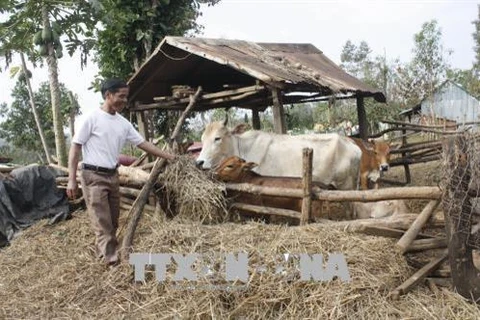
31.1 bln USD under Prog 135 for Central, Central Highlands regions ảnh 1Localities in the Central and Central Highlands regions have been allocated over 718 trillion VND (nearly 31.1 billion USD) under the Programme 135 in 2018 - Illustrative image (Source:VNA)

DakLak (VNA) - Localities in the Central and Central Highlands regions havebeen allocated over 718 trillion VND (nearly31.1 billion USD) under the Programme 135 in2018, according to Nguyen Xuan Duc, head of theDepartment of Locality II under the Committee for Ethnic Minority Affairs.

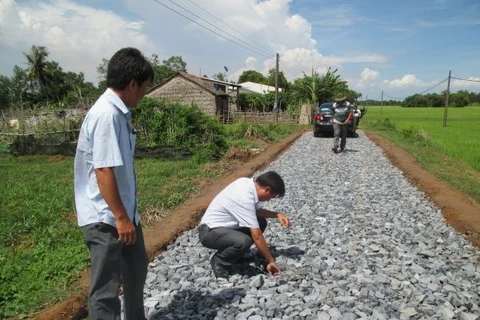
The regions’ localities are coordinating with relevant departments andsectors to approve a list of projects to be funded, while conducting the constructionof hundreds of infrastructure projects related to transport, electricity,irrigation, and schools in disadvantaged areas, Duc said.

Lam Dong province reported the highest rate of disbursement for building infrastructurefacilities in extremely disadvantaged communesand villages in the first half of 2018, reaching 62 percent of the set plan.

Poor households in the regions have also been provided with free seeds, animal breed and agricultural materials; offeredtraining courses on agriculture and forestry development; and supported withbuilding production development models, thus improving the income for regionalresidents and promoting poverty reduction.

Duc said the effort to reduce the poverty rate in ethnic minorities andmountainous areas has shown substantial results,with the average rate of poor households in these regions now down to 14.4percent.

The Programme 135 launched in 1999, aims toimprove living conditions for rural residents with a particular focus on ethnicminority communities.

A total of 2,139 extremely disadvantaged andborder communes in 46 provinces nationwide were listed as eligible for supportfrom the Programme 135 for the 2017-2020 period.

Tenprovinces in the Central and Central Highlands regions– Quang Nam, Quang Ngai,Binh Dinh, Phu Yen, Khanh Hoa, Kon Tum, Gia Lai, Dak Lak, Dak Nong, and LamDong report a total of 373 extremelydisadvantaged and border communes. -VNA
source

See more

Delegates and students pose for a commemorative photo. (Photo: baocantho.com.vn)

Four more Can Tho schools earn French education accreditation

The recognition of six schools under the Label FrancEducation programme is expected to create momentum for expanding education cooperation between French and Can Tho institutions, contributing to human resources development and friendship between the two countries.

A seminar at the programme (Photo: VNA)

Event promotes inclusion, empowerment for youth with disabilities

A key feature of the programme will be the dialogue “The Inspirers – Family Support on the Journey of Resilience”, where exemplary families and inspirational figures will share stories of overcoming adversity and spread messages of compassion, understanding and community responsibility in building an inclusive and humane society.

UN Resident Coordinator in Vietnam Pauline Tamesis (Photo: VNA)

South–South cooperation promotes rights, justice for women and girls

UN Resident Coordinator in Vietnam Pauline Tamesis commended Vietnam’s sustained commitment to gender equality, noting advances in budgeting, land use, social insurance and domestic violence prevention under the recent review of the Convention on the Elimination of All Forms of Discrimination against Women (CEDAW).

Party General Secretary To Lam presents Nhan Dan newspaper with the first-class Labour Order on March 11. (Photo: VNA)

Nhan Dan newspaper must act as ideological vanguard, shield, information sensor: Party chief

In a keynote address at a ceremony in Hanoi marking the 75th anniversary of the newspaper’s first issue on March 11, General Secretary Lam highlighted its more than seven decades of evolution while maintaining its role as the Party’s sharp ideological weapon, an effective information and communication channel for Party committees and authorities at all levels, and a trusted platform for Party members and people.

A poster celebrating the Election Day (Photo: VNA)

Final preparations underway for Election Day

In Hanoi, local authorities have increased the dissemination of election-related information through community loudspeaker systems, information boards, official websites and verified social media pages, helping officials, Party members and residents better understand their rights and responsibilities as voters.

NA Chairman Tran Thanh Man inspects a constituency in Dong Nai province. (Photo: VNA)

Dong Nai works to ensure workers cast vote on Election Day

With the utmost regard for citizens’ electoral rights and responsibilities, and in a spirit of creating optimal conditions for workers, especially those employed in industrial parks and non-state enterprises, the provincial leader has requested that no overtime be scheduled during voting hours.

Zambia's Minister of Agriculture Reuben Mtolo Phiri (first, left), learns about the OM19 rice variety grown at Tien Thuan cooperative in Thanh Quoi commune,, Can Tho city (Photo: VNA)

Can Tho shares agricultural transformation experience with Zambia

Rice production remains Can Tho’s key industry. Alongside maintaining production, Can Tho has encouraged value chain linkages among farmers, cooperatives and businesses, while accelerating the application of science and technology, mechanisation and digital transformation in farming.

Staff members of the Hanoi Public Administrative Service Centre handle administrative procedures for local residents. (Photo: VNA)

Hanoi: 95% of administrative procedures to be handled from home

The plan targets that at least 80% of administrative procedures under the city’s authority will be provided as fully online public services, while more than 95% of applications will be received and processed entirely online. By June 30, 2026, about 80% of administrative procedures are expected to be restructured based on integrated data systems, with the figure rising to 95% by the end of the year.