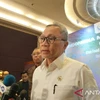
Mayor of Auckland Len Brown (Source: VNA)
 Hanoi (VNA) - Modern life is bringing about all sorts of pressures which keep cities’ officials awake late at night thinking about solutions to keep their cities livable and sustainable. Auckland, on this direction, is getting more and more of its cycleways.
On the sidelines of the World Cities Summit 2016 held in Singapore, Mayor of Auckland Mr. Len Brown proudly shared the story of his city in New Zealand.
Q: Good morning Mr. Brown. Can you tell us why and how the city came up with the idea of Auckland Urban Cycleways Programme?
A: Well, it was a big back to the future, we as a younger city used to do a lot of cycling but things changed and the whole city focused to cars. And now we recognise that environmentally, that doesn’t work. So, we’re taking our people back to public transport but also to cycling.
We’ve been building a thousand kilometres of new cycleways over thirty years and in the last two years we built 60 kilometres of new cycleways and in the next two years we are building another 50 kilometres of new cycleways. The government has contributed about 330 million dollars/year to urban cycleways nationally and we will contribute about 100 million dollars over the next five years. So it’s a big contribution.
About the public-private partnership (PPP), we have a harbour bridge crossing a beautiful habour. It was only for cars, trucks and vans and we are changing it and putting on what we call Skypath. This is a cycle way and a walk way across the habour bridge. And it will be 2 dollars every time you go on it so it uses a PPP charge. And we expect that we’ll build it in about 18 months to 2 years.
Because we’re a small nation with about 4.5 million people so it’s critical that the council and the government work closely together. Because the government actually put a lot of money in to our city and our Auckland citizens pay the rest so we need to work closely so we don’t waste any of that money coming from either the government or from our people.
Q: How do people respond to this programme?
A: They love it. We opened a new cycle way called light path which is pink and already have over 300,000 cycle trips on it a year. Now for our population about 1.6 million it’s not huge. But given the fact that we only used to have 1.2 percent of our traffic movements on bike before we started, it’s been a very significant shift.
Q: I’ve also heard that in Auckland, citizens are encouraged to engage the programme through education?
A: Oh, absolutely. But you don’t really need to because what people want is to have a connected cycleway and when they have a connected cycleway that is separate from cars and buses then they feel safe. And it’s good for exercises as well. We are very very sport-minded people, who try to keep healthy and fit in New Zealand and in Auckland. So, not too much education. We just try to encourage youngsters to do so.
Q: In what way people can benefit from this urban cycleways since nowadays when talking about cities, we often talk about cars in developed countries and too many motorbikes in developing countries?
A: Well, we don’t have problem with motorbikes, just problem with cars. And 85 percent of our transport movements, or 730,000 transport movements a day, are in car, 180,000 transport movements a day are in public transport. And we need to build a round bus, train network and ferry network plus some walking, cycling to get people much much more choice and encourage them to get out of their cars. That’s what we’re doing very successfully.
Q: Do you think cycling has become one of many things people talk about Auckland today?
A: Yes. The light path, the pink cycleway in particular, they can see it from the moon. It’s so bright and amazing. We’re delighted with it. It becomes cool to cycle again. And that is a big change for Auckland.
Besides, it’s also good for health. We have focused on reducing health costs through the nation and we are encouraging our people to be active. New Zealand does extremely well in sport internationally and we do keep fit but at the same time we also have quite level of obesity. So keeping our youngsters fit through walking and cycling and encouraging them to do so and building a network that enables them to do so is a key part of creating the world’s most livable city.
Q: With developing countries which are facing pressures in terms of building infrastructure, a cycleway might not be their priority right now. What would be your advice?
A: Building cycleway is a lot cheaper than building round and round network. It’s much much cheaper to do for developing countries. I can tell you there. We have to look at the place like China. There was a famous song which said there were 9 million bicycles in Beijing. And China now is going to cars away from bikes. It’s a hopeless step. Of course cars are the personal matter of choice. But the fact that is that it was such a strong cycling nation, it was great for its people.
Q: In Vietnam’s big cities, bicycles seem outnumbered by cars and motorbikes. Do you have any advice or anything to say at all to cities’ staff and to the local residents as well?
A: It’s not just about cycling even though I’m encouraging people to do so. I know Vietnam is a big bike cycling country. The most important thing is you need to invest in transport, give people choice. When they have a bus to get on, a train to get on or a bike cycleway to go on, they just don’t have to jump in their car. When you give them choice, they can get to work quicker, go to school quicker and they’ll earn more money, make the country wealthier.
Q: Do you ride a bicycle Mr. Brown?
A: Yes, I’ve got an electric bike. Despite getting old (laugh), I still try to put my time, I use the train and I use the bike. I’m the mayor who gets on his bike.
Thank you.-VNA