Accelerating breakthrough land reforms: Minister

Minister of Natural Resources and Environment (MoNRE) Do Duc Duy on September 5 called on provincial leaders to quickly implement the groundbreaking provisions of the 2024 Land Law, which was passed by the National Assembly earlier this year.

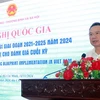
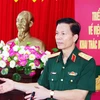
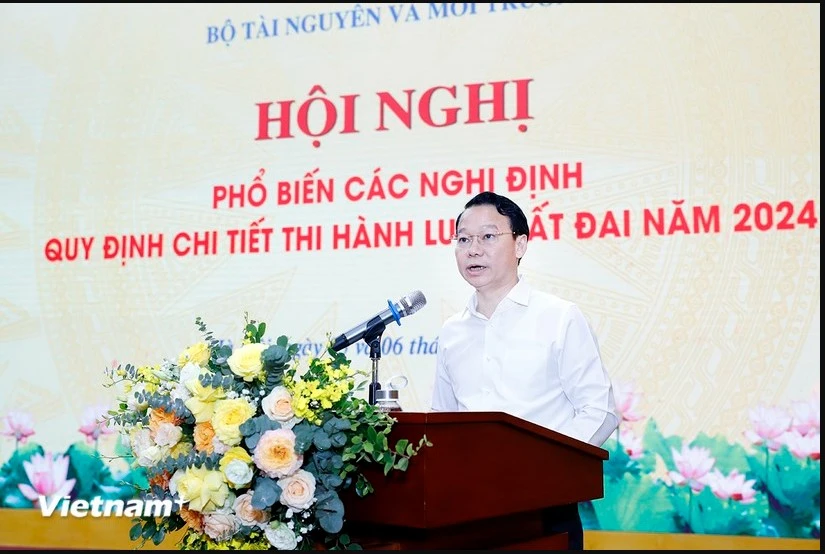
Minister of Natural Resources and Environment Do Duc Duy speaks at a conference on the dissemination of decrees detailing the implementation of the 2024 Land Law. (Photo: VietnamPlus)

Hanoi (VNA) - Minister of Natural Resources and Environment (MoNRE) Do Duc Duy on September 5 called on provincial leaders to quickly implement the groundbreaking provisions of the 2024 Land Law, which was passed by the National Assembly earlier this year.

Screenshot 2024-11-01 090641.jpg
Minister of Natural Resources and Environment Do Duc Duy speaks at a conference on the dissemination of decrees detailing the implementation of the 2024 Land Law. (Photo: VietnamPlus)

The law aims to improve land management and spur socio-economic development by addressing key areas such as land use planning, compensation for land recovery, and land pricing.

At a conference organised by the MoNRE, Duy emphasised the significance of the 2024 Land Law, which was passed by the National Assembly at its 5th extraordinary session on January 18, 2024, and will come into effect on August 1, 2024. The law includes 96 specific provisions, with 86 of them managed by the ministry. These provisions cover land investigation, planning, recovery, compensation, land pricing, and more.

The Minister highlighted the need for all officials to serve as spokespersons for the law, helping to ensure its smooth implementation nationwide.

Four key decrees were presented at the conference to guide the law’s implementation. These include Decree 71 on land pricing, Decree 88 on compensation and resettlement during land recovery, and Decree 101 on land investigation and registration. Decree 102 provides detailed guidelines on several aspects of land management. Additionally, four circulars were issued by the ministry to further support these decrees.

Screenshot 2024-11-01 090804.jpg
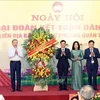
At the conference on the dissemination of decrees detailing the implementation of the 2024 Land Law. (Photo: VietnamPlus)

The minister praised the hard work and commitment of the ministry’s staff at both central and local levels, whose efforts contributed to drafting and enacting these regulations. He also stressed that effective land management is essential to unlocking land resources, supporting sustainable development, and achieving national industrialisation and modernisation goals.

At the conference, the ministry tasked local leaders with promoting and explaining the law’s new provisions in their communities. The goal is to ensure uniform understanding and application of the law across all provinces.

In particular, the Minister urged officials to focus on key areas, including land recovery for national defense, economic development, and compliance with land regulations.

Deeper discussions on Decree 102 were led by Doan Thi Thanh My, Director of the Land Department, and Pham Ngo Hieu, Deputy Director of the Land Registration and Information Data Department.

They provided details on the decree’s 10 chapters and 113 articles, which include new regulations on agricultural land, land classification, and support for ethnic minorities. Furthermore, the decree offers guidance on land recovery for national defence and public interest, violations of land laws, and situations posing threats to public safety.

My stated that the Decree provides guidelines for cases of land recovery for national defense and security, socioeconomic development, recovery due to violations, and recovery when land use is legally terminated or voluntarily returned, especially when there is a threat to human life. It also addresses the enforcement of mandatory surveying decisions, land recovery decisions, and appeals against these recovery decisions.

The Ministry also collected feedback from local officials through surveys to assess the implementation of the 2024 Land Law in different regions. This information will be compiled and reported to the government for further guidance on local enforcement. The ultimate objective is to ensure that the law’s groundbreaking provisions are effectively implemented, supporting Vietnam's path toward becoming a high-income, developed nation./.
VNA

See more

President Luong Cuong, his spouse, delegates and artists at the special Spring Homeland Art Programme 2026. (Photo: VNA)

Five major shifts chart overseas Vietnamese affairs in 2026 and beyond

In a world marked by intensifying strategic competition, emerging conflicts and intertwined economic, security and social challenges, nearly 6.5 million Vietnamese living in over 130 countries and territories have continued to look to the homeland as a firm spiritual anchor. The homeland remains a source of confidence, connection and aspiration for Vietnamese abroad.

Vietnamese Ambassador to Cuba Le Quang Long (right) symbolically hands over 250 tonnes of rice to Cuban Deputy Minister of Agriculture Telce Abdel González (Photo: VNA)

Vietnam supports Cuba in ensuring food security

Cuban Deputy Minister of Agriculture Telce Abdel González affirmed that Cuba will create all favourable conditions for AgriVMA’s rice production project in Los Palacios district, Pinar del Río province, with a view to expanding the model to other localities across the country.

The Binh Phuoc provincial Intelligent Operations Center (IOC), operational since September 2020, has played an important role in supporting the development of digital government. (Photo: VNA)

Breakthroughs under Resolution 57 drive local development

Following the Politburo’s Resolution No. 57-NQ/TW on advancing science, technology, innovation and national digital transformation, many localities across Vietnam are translating strategic guidelines into concrete action, laying the foundation for a new development model based on knowledge, technology and modern governance.

The spring flower market for the 2026 is brightly illuminated at night. (Photo: VNA)

Spring flower market opens in Ho Chi Minh City

The market features more than 500 booths selling a wide variety of flowers and ornamental plants. The space combines traditional and modern elements, recreating the distinctive river culture of southern Vietnam.

The Security Investigation Agency of Hung Yen province executes a search warrant. (Photo: congan.hungyen.gov.vn)

Man prosecuted for abusing democratic freedoms to infringe upon State interests

Anh, born in 1958, frequently filed complaints and denunciations with authorities at various levels. The contents mainly concerned the land management and use by officials of People’s Committee of Nghia Hiep commune over a long period. Many of the complaints and denunciations were found to be unfounded, lacking evidence, speculative, accusatory, defamatory, and prolonged.

Hanoi waives public transport fares during the Lunar New Year (Tet) holiday. (Photo: VNA)

Hanoi waives public transport fares during Tet holiday

During the same period, the Hanoi Traffic Operation Centre, in coordination with bus operators, will also waive fares on subsidised bus services. The programme will apply to 128 subsidised routes citywide over the nine days, with passengers granted tickets according to route pricing but paying no fare.