ADB: Asian growth remains steady in 2015, 2016

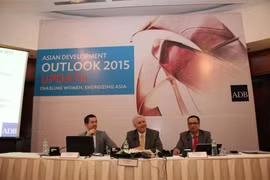
Asia’s developing economies remain on track to see a 5.8 percent growth this year and 6 percent in 2016 despite economic slowdown in the US, Japan and the Eurozone, reported the Asian Development Bank
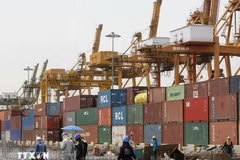
ADB: Asian growth remains steady in 2015, 2016 ảnh 1Construction in the Philippines (Source: business.inquirer.net)

Hanoi (VNA) - Asia’s developing economies remain on track to post a 5.8 percent growth this year and 6 percent in 2016 despite economic slowdown in the US, Japan and the Eurozone, reported the Asian Development Bank (ADB).

The Vietnamese economy is forecast to expand 6.5 percent this year and 6.6 percent next year, compared to nearly 6 percent last year.

According to ADB Chief Economist Shang-Jin Wei, the region’s growth is supported by vibrant private consumption in China whose population is over 1.4 billion and expanded industrial production in India where the population nears 1.3 billion and other countries.

East Asia’s growth forecast is maintained at 6 percent for 2015 and 2016, with China growing by 6.9 percent in 2015 and 6.7 percent in 2016.

Growth prospects for Southeast Asia also remain unchanged from the ADB’s September Update , with forecasts at 4.4 percent for 2015 and 4.9 percent for 2016.

South Asia’s outlook remains positive, with the sub-region on track to meet previous growth projections of 6.9 percent in 2015 and 7.3 percent in 2016. Continued strength in India is supported by growth in industrial production, public capital expenditure, and retail sales. This is helping to offset slowdowns seen for Bhutan, the Maldives, and Nepal.

Meanwhile, the growth outlook for Central Asia has been downgraded in both 2015 and 2016 to 3.2 percent and 3.7 percent from 3.3 percent and 4.2 percent, respectively, as continued low commodity prices remain a drag on economic performance.

Growth for the Asia-Pacific is now seen at 6.3 percent in 2015 from 6.7 percent in the September Update , and at 3.8 percent in 2016 from 3.9 percent previously./.

VNA

See more

Indonesia designates 31 mln ha of waters as conservation areas

Indonesia designates 31 mln ha of waters as conservation areas

Head of the Convention and Marine Resource Balance working team at the ministry’s Directorate of Ecosystem Conservation Ahmad Sofiullah said this week that it is a strategic effort to ensure the sustainability of Indonesia’s marine ecosystems.

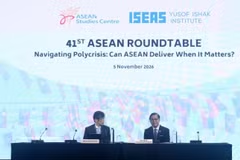
Thai Deputy Prime Minister and Minister of Foreign Affairs Sihasak Phuangketkeow (R) takes part in the Q&A session at the 41st ASEAN Roundtable. (Photo: VNA)

Thailand calls on ASEAN to proactively address polycrisis

Thai Deputy Prime Minister and Minister of Foreign Affairs Sihasak Phuangketkeow noted that no single member state could tackle challenges ranging from major-power competition and economic fragmentation to climate change and energy and food security on its own. Regional cooperation is therefore a strategic imperative, enabling ASEAN not only to overcome crises but also to sustain its development momentum.

Palm oil and palm oil-based products are among Indonesia’s promising export commodities. (Photo: VNA)

Indonesia to launch commodity export monitoring platform next year

DSI will draw on data from customs authorities, trade activities and the financial system, alongside contracts and documents uploaded by exporting companies. The platform will monitor the volume, quality, prices and destination markets of various commodities, as well as transactions between related parties.

Philippines increases rice imports from Cambodia

Philippines increases rice imports from Cambodia

Cambodia has contracted to supply a further 87,344 tonnes to the Philippines between September and December. If all orders are fulfilled, its rice exports to the market could reach around 209,000 tonnes in 2026.

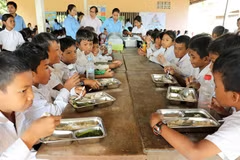
Students get free meals under the national school feeding programme at Hun Sen Svay Cek Primary School (Photo: khmertimeskh)

Cambodia expands school meal programme

Cambodian Prime Minister Hun Manet stressed that his Government would proactively allocate budget and strengthen management capacity, with the aim of expanding the school meal programme to more than 7,000 primary schools nationwide. The move is expected to improve students' nutrition and learning conditions.