Advanced technology applied in audit activities at SAV

In addition to promoting the application of information technology (IT) in its management and professional endeavours, the State Audit Office of Vietnam (SAV) has also installed new technologies to better conduct its activities.
Advanced technology applied in audit activities at SAV ảnh 1An IT training course for auditors (Photo: baokiemtoannhanuoc.vn)

Hanoi,  (VNA) - In addition to promoting the application of information technology (IT) in its management and professional endeavours, the State Audit Office of Vietnam (SAV) has also installed new technologies to better conduct its activities.

Initial results showed the application of information technology has brought about notable changes in audit activities, paving the way for turning technology into an important tool for the improvement of such tasks.

The efforts also demonstrate the firm commitment of the SAV, as Chair of the Asian Organisation of Supreme Audit Institutions (ASOSAI) for the 2018-21 tenure, to changing audit methods.

In the face of a surging wave of technology that is making its way into the audit sector, updating and staying abreast of new technology in order to apply them in audit activities is an essential action and core solution to improving the quality and efficiency of audit activities.

Aware of the role technology plays in the sector’s activities, the SAV has studied and integrated new technologies that yielded fruitful results compared to traditional methods.

Given the complexities of audit activities in urban land management, which deliver low effectiveness, a group of auditors at the Regional State Audit Office No 12 sought out software and apps on urban land management, compensation, and support for the re-settlement of residents. They include Global Mapper and Map Tiler, which are designed to help auditors scan and analyse digital data on land use plans, areas of land lots, and actual land use compared to plans.

The software has made the work much easier for auditors and help them save a great deal of time compared to previously. Regarding the audit of land use plans, for instance, auditors used to work on paper documents and maps provided by relevant units. But it was difficult to uncover faults when comparing paper maps. Audit efficiency remained low as a result and was time-consuming.

The use of software and apps, meanwhile, helps auditors cut time comparing maps and determining which parts do not match.

Those tools are also able to accurately join planning maps together into a mapping system with GPS. Auditors can therefore pinpoint the location of land lots and quickly detect any violations in land management.

In regard to bank auditing, software has helped auditors easily review accuracy in the classification of debts and budgets for risk management, thereby cutting risks caused by the manual editing of data on classifying bank debts and helping audit teams agree on common steps when handling a sole task for various branches of a bank.

Along with IT application, other advanced technologies have been applied over the recent past and posted positive results. Of particular note, the use of remote sensing in the auditing of mining operations in Thuy Nguyen district in northern Hai Phong city, conducted by Regional State Audit Office No 6, proved the technology’s effectiveness.

Thanks to technological application, the SAV has identified the foundations for determining the exact area for natural resources exploitation and the actual volume of exploited minerals, thus preventing the risk of illegal mining, which causes losses and environmental damage.

Results showed that remote sensing improved efficiency in State management over the exploitation of natural resources, thus raising the role of the SAV in public asset protection.

In addition to remote sensing, over time, the SAV has bolstered the use of modern apps in auditing, including ultrasonic testing (UT) detection technology and computer-assisted audit tools and techniques (CAATs).

As audit activities have significantly improved with the application of new technologies, the number of violations discovered through auditing has surged and all units have now installed and are using new software./.
VNA

See more

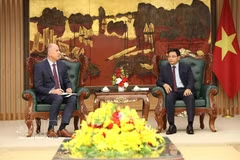
Deputy Prime Minister Nguyen Van Thang meets with Martin Sommer, head of the IMF’s Article IV consultation mission team to Vietnam, in Hanoi on November 13, 2026. (Photo: VNA)

IMF sees positive growth prospects for Vietnam, urges cautious monetary policy

Martin Sommer, head of the IMF’s Article IV consultation mission team to Vietnam, noted that inflation risks in Vietnam remain under control, but several factors could add to price pressures. He therefore called for cautious monetary policy management and readiness to respond promptly if inflationary pressures increased.

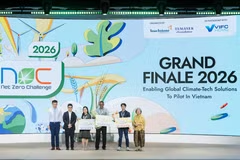
Representatives of the three first-prize-winning startups receive their awards at the event. (Photo: SGGP)

Seven green-tech startups secure 770,000 USD at Net Zero Challenge 2026

In its fourth year, the competition attracted more than 1,100 applications from 80 countries and territories, making it the most competitive edition since its launch in 2023. Nine finalists presented solutions in three categories, namely renewable energy and carbon removal; food systems and sustainable agriculture; and circular economy and waste management.

Vietnamese and Malaysian businesses connect at the event (Photo: VNA)

Vietnam, Malaysia connect businesses to boost bilateral trade cooperation

It centred on a business-to-business (B2B) matchmaking session, bringing Vietnamese and Malaysian companies together to discuss import-export needs, seek partners and explore cooperation. Vietnamese businesses aimed to connect with Malaysian importers, distributors and retailers, while expanding access for their products to Malaysia and other markets.

Visitors browse traditional Southern Vietnamese checked scarves on display at the Vietnam-Cambodia Trade Fair. (Photo: VNA)

Vietnam-Cambodia trade fair opens in An Giang

The fair features 150 booths representing 200 businesses, cooperatives, household businesses and production and trading establishments from both countries. The exhibition space is arranged into 10 zones showcasing products from Vietnamese localities and three zones featuring Cambodian products, creating opportunities for businesses from the two countries to promote their products, seek partners and expand markets.

An overview of the press conference to announce the organisation of the second Vietnam International Rice Festival - Can Tho 2026. (Photo: VNA)

Festival to chart new course for rice industry

The second Vietnam International Rice Festival - Can Tho 2026 will take place from November 22 to 25, showcasing the achievements and potential of Vietnam’s rice industry while promoting Can Tho’s image, cultural identity and people, as well as the distinctive river culture of the Mekong Delta.

Japanese business representatives review Ho Chi Minh City’s investment project portfolio at the conference. (Photo: VNA)

Vietnam remains attractive destination for Japanese businesses

Fukai Akihiko, President and Representative Director at Gunma Bank and head of a business delegation from Japan’s Gunma prefecture, said cooperation between Gunma and Vietnam has continued to expand in recent years. Around 15,000 Vietnamese people currently live in Gunma, forming the largest foreign community in the prefecture.

A panoramic view of the site designated for the Ninh Thuan 1 nuclear power plant in Phuoc Dinh commune, Khanh Hoa province. (Photo published by VNA)

Vietnam to access MBIR reactor research capabilities, gradually master nuclear technology

As Vietnam develops its nuclear science and technology and prepares the necessary conditions in terms of human resources, research capacity, safety systems and technical infrastructure, participation in international research programmes and access to MBIR will enable the country to conduct experiments supporting its programme for the peaceful use of atomic energy.