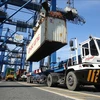
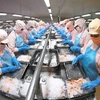
Agricultural exports gain strong early-year momentum
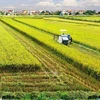
Since the beginning of the year, Vietnam’s agricultural exports have shown encouraging momentum, with a substantial volume of orders already secured.
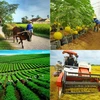
With a focus on production restructuring, market expansion, deep processing and the application of science and technology, the agriculture and environment sector is steadily building a solid foundation for a new growth phase.
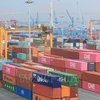
According to MB Securities’ Vietnam Outlook 2026 report, Vietnam's exports may grow by 15–16% in 2026, driven by market expansion and a shift towards higher-value products, led by electronics and high-tech industries amid rising global demand for AI and digital transformation.
With exports projected to reach 70 billion USD by the end of 2025, the year is set to be a breakthrough for the sector, highlighting its impressive progress driven by improved quality, standardisation, and sci-tech application.
The EU is among the world’s top three importers of farm produce, but Vietnam holds only a 2% share – still modest compared to its agricultural production capacity and potential, which indicates vast growth potential in the EU if backed by a proper strategy.
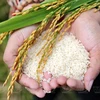
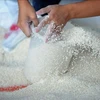
WAGO Group proposed building a biomass power plant in Vinh Long where rice husks would be burned to generate steam for turbines, and the remaining ash would be processed into silica.
By the end of the first eight months of this year, Vietnam’s agricultural exports had surpassed 45 billion USD, with the year’s total forecast to reach 65 billion USD. From a once poor, food-insecure country, Vietnam has risen to become one of the world’s leading suppliers of food and agricultural products.
Speaking at a conference in Ho Chi Minh City on August 12 to seek ways to promote the products’ exports in 2025, Deputy Minister of Agriculture and Environment Tran Thanh Nam noted that despite global political instability and a slowdown in economic growth, Vietnam’s agro-forestry-fishery export has shown notable resilience.
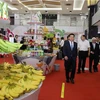
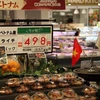
Vietnam is now Japan’s third-largest banana supplier, behind only the Philippines and Ecuador.
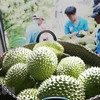
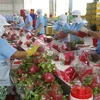
Fruit and vegetable export turnover in June was estimated at 750 million USD, marking a surge of more than 50% from the previous month. This brought the total in the first six months of the year to 3.05 billion USD, a promising rebound after a difficult period.
The Ministry of Agriculture and Environment (MAE) sketched out a roadmap for the remainder of the year, targeting 14–15 billion USD in Q3 and at least 16 billion USD in Q4, capitalising on the rising demand for agricultural products during the year-end holiday season.
The signing of multiple trade cooperation agreements between Vietnam and Middle Eastern countries in late 2024 has opened new opportunities for Vietnamese goods to enter the Halal market, creating strong momentum and prospects for Vietnamese businesses, particularly those operating in agriculture.
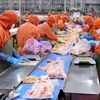
Vietnamese seafood processing and export enterprises are in the process of completing procedures and adopting necessary technologies to bring their products into the Halal market.
Gia Lai's agricultural products have been exported to more than 60 countries, including demanding markets such as the US, the European Union, and Japan.
At the event, both sides acknowledged the current state of agricultural trade cooperation while sharing information about business needs and collaboration potential. The discussions opened concrete pathways to promote high-quality agricultural exports from Iowa to Vietnam and vice versa.
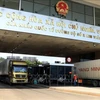
The two sides agreed to promote trade and open markets for Vietnamese agricultural, forestry, and aquatic exports to China, with focus on speeding up negotiations, and completing procedures to soon sign protocols on the export of these products.
Vietnam is ramping up efforts to expand market access for its agricultural, forestry, and fishery products through negotiations with potential partners, paving the way for a breakthrough in the country's agricultural products.
Vietnam’s agro-forestry-fishery sector has enjoyed steady growth over recent years, especially in food production. In 2024, the country achieved a record agro-forestry-fishery export value of 62.5 billion USD.
The completion of the report not only represents progress in market access negotiation but also demonstrates Vietnam’s improving capacity in crop cultivation and plant protection to meet stringent international biosecurity standards. Australia's recognition of Vietnam's biosecurity compliance capabilities will open opportunities for the staple.
A leader of the Vietnam Leather, Footwear and Handbag Association (Lefaso) highlighted that a 46% tariff would severely affect an industry employing over 1.2 million workers, 90% of whom are women.