Agricultural sector continues to be economy's pillar

Ecological agriculture, modern rural areas and smart farmers are expected to be the three key factors helping agriculture secure its role as a firm pillar of the economy in 2022 and following years.
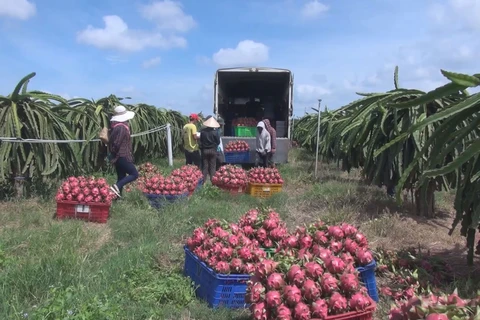
Agricultural sector continues to be economy's pillar ảnh 1Illustrative image (Source: nongnghiep.vn)
Hanoi (VNA) – Ecological agriculture, modern rural areas and smart farmers are expected to be the three key factors helping agriculture secure its role as a firm pillar of the economy in 2022 and following years.

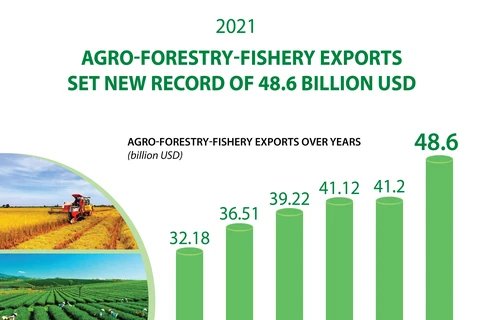
Despite COVID-19 impacts that caused the crackdown of the global supply chains in 2021, the agricultural sector still made a miracle with a trade surplus and a record export revenue at 48.6 billion USD, exceeding the target of 42 billion USD set by the Government for the year.

Last year, total food grain production hit nearly 44 million tonnes, meeting the demand of the 100-million-strong domestic market and for export, proving the sector's position as a prop of the economy even during unprecedented difficult situations.

During the fourth wave of the pandemic that hit Vietnam since last April, amid numerous difficulties in all 63 localities nationwide due to prolonged social distancing measures which led to disruption in selling chains, the Ministry of Agriculture and Rural Development (MARD) formed its taskforces in the north and the south to support the selling and circulation of farm produce in all localities.

MARD Deputy Minister Phung Duc Tien said that along with making best use of trade agreements between Vietnam and partners, the agricultural sector has focused on promoting digital transformation, considering it as a breakthrough measure to create a new motivation for agricultural growth and expansion.
Agricultural sector continues to be economy's pillar ảnh 2Agricultural sector has focused on promoting digital transformation (Photo: VNA)
However, MARD Minister Le Minh Hoan pointed out that despite the achievements, the agricultural sector has still seen many problems, including a lack of supply-demand connections. As part of the solutions to the issue, the ministry has set up the 970 Agricultural Connection Forum to synchronise production and sale information, heading to a transparent agricultural sector in 2022, he said.

The minister said the ministry is putting final touches to a draft sustainable agricultural development strategy in the 2021-2030 period with a vision to 2050 with three key pillars of ecological agriculture, modern rural areas and smart farmers.

It is necessary to integrate multiple values into agricultural products, Hoan said. 

In 2022, export is predicted to continue to be a driving force for the economy, with the agricultural sector to play a significant part. Promising products with export revenue above 3 billion USD include wooden products, shrimps, cashews, vegetables, rice and rubber.

Head of the General Statistics Office Nguyen Thi Huong was of the view that this year, Vietnam’s goal of 6-6.5 percent in GDP growth is feasible thanks to the country’s good preparations in input materials for production and export. She stressed that this year, the agricultural sector will further promote its strengths./.

VNA
See more

The trade policy review of Uruguay at the WTO headquarters. (Photo: VNA)

Vietnam participates in WTO review of Uruguay's trade policy

Vietnam also welcomed Uruguay's active engagement in the multilateral trading system as a founding member of the WTO. Uruguay has ratified the Agreement on Fisheries Subsidies, joined the Multi-Party Interim Appeal Arbitration Arrangement (MPIA), and contributed to Joint Statement Initiatives (JSIs) on e-commerce and micro, small and medium-sized enterprises (MSMEs).

Experts discuss cooperation opportunities in Vietnam-Germany manufacturing value chains at the forum. (Photo: VNA)

Vietnam-Germany cooperation creates new opportunities for sustainable manufacturing

Germany is an important partner of Vietnam and a global leader in green technology, smart manufacturing, automation and circular economy solutions. The combination of German technological expertise and Vietnam's manufacturing capabilities and strong commitment to transformation would create significant opportunities in green production, supporting industries, digital transformation, supply chain management and eco-industrial park development.

Businesses introduce Halal market products at the workshop. (Photo: VNA)

Da Nang businesses eye growth in booming global Halal market

Huynh Xuan Son, Deputy Director of the Da Nang Department of Industry and Trade, said the Halal market has emerged as a strategic destination for Vietnamese exporters amid persistent global economic uncertainties. Serving more than two billion consumers across over 110 countries and territories, the market offers significant opportunities for business expansion.

Vietnamese bananas are sold at an AEON supermarket in Japan. (Photo: VNA)

Vietnamese products promoted at AEON stores across Japan

Speaking at the opening ceremony, Deputy Minister of Industry and Trade Phan Thi Thang highlighted the significance of 2026, which marks a decade of cooperation between the ministry and AEON in organising Vietnam Week in Japan.

Growing demand for financing for infrastructure and green transition projects is driving Vietnam’s search for new sources of capital. In the photo: A section of Noi Bai – Lao Cai Expressway. (Photo: VNA)

Vietnam seeks to unlock capital for infrastructure, green transition

As Vietnam advances its sustainable growth agenda and commitment to achieving net-zero emissions by 2050, the need for long-term capital is rising rapidly. Experts say meeting these financing requirements will depend not only on expanding available resources but also on broadening funding sources and improving project financing models.

Private technology enterprises are increasingly viewed as a driving force at the heart of the innovation ecosystem. (Photo: VNA)

Vietnam pushes to develop world-class technology startups

Vietnam’s startup ecosystem now comprises roughly 4,000 startups, 208 investment funds, 84 incubators and more than 20 startup support centres. With an estimated valuation of 75 billion USD, the ecosystem has established most of the key foundations needed for long-term growth.