Ancestor worship ritual – a fine tradition of Vietnam

Ancestor worship, a longstanding belief and fine tradition of the Vietnamese people, is a ritual practice paying tribute to deceased family members that reminds people of their roots.
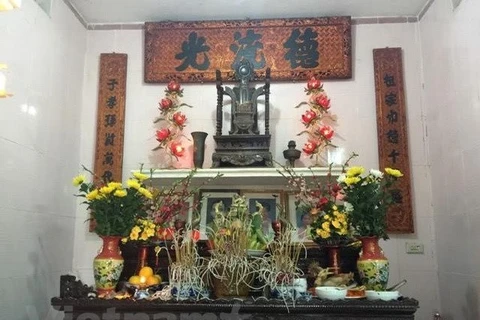
Ancestor worship ritual – a fine tradition of Vietnam ảnh 1Altar of a family on Tet holiday (Photo: VietnamPlus)

Hanoi (VNA) - Ancestor worship, a longstanding belief and fine tradition of the Vietnamese people, is a ritual practice paying tribute to deceased family members that reminds people of their roots.

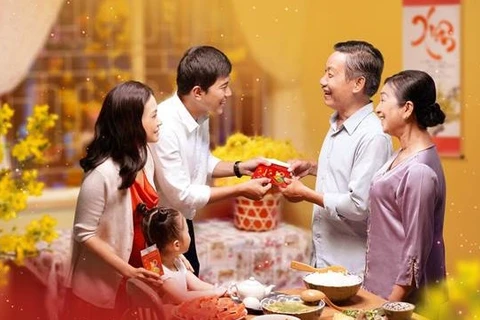
During the Lunar New Year festival, Vietnamese at home and abroad carefully cook traditional dishes to put on the home altar to worship their ancestors.

The practice also reflects the influence of patriarchy and Confucianism on the Vietnamese culture.

Since Confucianism was introduced to Vietnam during the Chinese domination, filial piety, the most fundamental of Confucian values, is very influential and important to Vietnamese families.

Accordingly, children are obliged to respect their parents in life and to remember them after they die. The practice of ancestor worship is thus an expression of filial piety toward deceased parents, relatives and ancestors.

Most Vietnamese families have an ancestral altar positioned in a prominent place of the house.

The ancestral altar is set with ancestral tablets and pictures, together with an incense urn in the centre as a symbol of the stars. Inside the urn usually stands a circular incense stick that represents the universe. Two candles are placed on the sides of the altar to embody the sun (left) and the moon (right).

On special occasions like ancestors’ death anniversaries or the Lunar New Year, special rites are performed to communicate with the dead. The rites consist of making offerings of fruits, foods and wine; lighting the candles; and burning incense before praying in front of the altar.

Tet, or Lunar New Year, is the most important festival of the year for Vietnamese people and a time for family reunion. It is an opportunity for descendants to invite the souls of their ancestors to join the family’s Tet celebration.

A tray of fruit is an indispensable item placed in the centre of the altar of every family during Tet. Depending on the customs of each region, residents choose different varieties of fruit. For example, northerners usually prefer bananas, apples, oranges, a pomelo, peaches, papayas, and chilies to display on the altar.

Ancestor worship ritual – a fine tradition of Vietnam ảnh 2A tray of fruit is an indispensable item placed in the centre of the altar of every family during Tet (Photo: VietnamPlus)

The fruit may include a bunch of bananas, pomelo, persimmon, pear and tangerine in different colours to represent the desire for “phu” (prosperity), “quy” (notability), “tho” (longevity), “khang” (health) and “ninh” (peace).

Elsewhere, people from the central region do not care about what kind of fruits are displayed on the altar as for them the most important aspect of the ritual is to respect their ancestors.

Moreover, it is the habit of many families to display artificial flowers made of paper, plastic, silk, or other materials on the altar, for economic reasons. However, followers of Feng Shui point out that displaying artificial flowers does not mean respecting ancestors.

The altar may also be decorated with a branch of peach blossoms in warm pink to drive away evil spirits and bad luck.

The ancestral altar occupies a prominent place in every Vietnamese home, no matter whether the family is rich or poor. It is a manifestation of the country’s culture that shows its respect for all the past, the present day, and the future./.
VNA

See more

Coaches and players of the national women's U20 team discus before their training. The team will compete in the AFC U20 Women’s Asian Cup 2026 next month in Thailand. (Photo: VNA)

Vietnam women chase U20 World Cup dream

The Vietnamese women squad will compete in the AFC U20 Women’s Asian Cup 2026, the crucial World Cup qualifying tournament, from April 1-18 in Thailand. Drawn in Group A, they will face stiff competition from China, Bangladesh and the host nation.

UBD students decorate traditional Vietnamese and Bruneian motifs during a cultural exchange (Photo: VNA)

Vietnamese embassy in Brunei promotes cultural diplomacy

The Vietnamese Embassy in Brunei has partnered with Universiti Brunei Darussalam (UBD) and the Veteran Association of the Royal Brunei Armed Forces (VARBAF) to host a series of events introducing Vietnam’s traditional Tet festivities, creating a lively platform for cultural exchange while spreading the Vietnamese language and traditional handicrafts to Bruneian friends and students.

Biwase Tour of Vietnam kicks off in Ho Chi Minh City on March 4. (Photo: VNA)

Int'l women’s cycling tournaments kick off in Ho Chi Minh City

The Biwase Tour of Vietnam 2026, from March 4 to 9, comprises five stages through Binh Duong, Dong Nai and Lam Dong provinces. Meanwhile, the Ho Chi Minh City International Women’s Cycling Race – Biwase Cup 2026 will take place from March 9 to 14 with six stages.

Midfielder Nguyen Thi Bich Thuy (second left) at Vietnam's friendly match during their training camp in Japan last week. Vietnam will play India in the AFC Women's Asian Cup 2026 on March 4 in Australia. (Photos courtesy of the Vietnam Football Federation)

Vietnam ready to take on India at Asian Cup

India will be the first challenge to overcome for Vietnam in Group C of the 2026 AFC Women's Asian Cup on March 4 in Australia, which takes place during the team's second World Cup campaign.

An “ao dai” (Vietnamese traditional long dress) show at the Lunar New Year parade in Paris. (Photo: VNA)

Vietnamese culture shines at France’s largest Lunar New Year parade

The Vietnamese delegation’s official presence at the parade helped promote national identity while offering French audiences a fuller understanding of Lunar New Year traditions shared across Asian cultures, united by the common values of family, reunion and new beginnings.

At the draw ceremony. (Photo: VFF)

Vietnam drawn with hosts Thailand at ASEAN Futsal Championship 2026

The ASEAN Futsal Championship 2026 is scheduled to take place from April 5 to 11 at the Nonthaburi Provincial Gymnasium in Thailand. The group stage matches will run from April 5 to 7, with the top two teams from each group advancing to the semi-finals on April 9. The final is set for April 11.

Authorities of northern Ninh Binh province on February 28 hold a ceremony to announce the Prime Minister’s decision recognising the Tam Chuc scenic and archaeological complex as a Special National Relic. (Photo: VNA)

Tam Chuc complex in Ninh Binh granted special national relic status

Ninh Binh will work closely with the Ministry of Culture, Sports and Tourism, experts, businesses and local communities to ensure sustainable preservation and restoration of the complex. The province also plans to gradually prepare a nomination dossier for “Tam Chuc Complex – Van Long Wetland Nature Reserve” to seek UNESCO World Heritage recognition.

A performance at the opening ceremony of the 2026 Tay Yen Tu Spring Festival on February 28 (Photo: VNA)

Tay Yen Tu Spring Festival promotes heritage, peace

Tay Yen Tu is not just a festival space, but a place where the fundamental values ​​that have shaped the character and enduring vitality of the Vietnamese people, especially patriotism and the aspiration for peace, converge and spread, a local official said.