Another Japanese retailer set to enter Vietnam

Japanese retailer Ryohin Keikaku has announced that it will establish MUJI Co., Ltd., Vietnam in August 2019 and open its first store in the southern economic hub of Ho Chi Minh City in 2020.
Another Japanese retailer set to enter Vietnam ảnh 1A Muji store in Japan (Photo: Reuters)

Hanoi (VNA) –
Japanese retailerRyohin Keikaku has announced that it will establish MUJI Co., Ltd., Vietnam inAugust 2019 and open its first store in the southern economic hub of Ho ChiMinh City in 2020.

MUJI is a global brand of retail stores, sellinga wide range of products with reasonable prices such as household items,furniture, and cosmetics.

With the third-largest population among ASEANcountries and strong economic growth, Vietnam has become a key market in theSoutheast Asian region.

This is part of the reasoning behind theJapanese retail company’s selection of Vietnam as its next destination toexpand business operations.

Many Japanese brands are already present in theVietnamese retail market, such as AEON, Takashimaya, 7-Eleven, and now Sumitomowith FujiMart.

AEON was the first to enter the country. AEONGroup has four shopping malls in Hanoi, Binh Duong, and Ho Chi Minh City. Itplans to build a new mall in Hanoi and another in Hai Phong in the near future,working towards a total of 20 malls across the country by 2020.

Japanese retailer Takashimaya decided to conquerthe Vietnamese market by setting up its first shopping mall in Ho Chi Minh Citywith the capital of over 25 million USD. 

In July 2017, the first 7-Eleven store waslaunched in Ho Chi Minh City via Seven System Vietnam (SSV) as the master franchiseeof the 7-Eleven convenience store system in Vietnam, making Vietnam the 19thcountry to host the world’s largest convenience store chain. –VNA 
VNA

See more

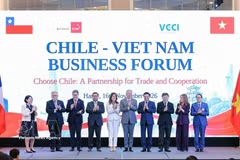
Delegates pose for a photo at the Chile-Vietnam Business Forum in Hanoi on November 16 (Photo: VNA)

Vietnam, Chile seek to expand trade ties

Chilean President José Antonio Kast pointed to potential for cooperation in agriculture and food, and called for stronger technical cooperation, better market access and closer links in innovation, technology, services and sustainable development.

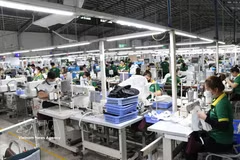
Production of footwear for export at Lefaso Tra Vinh Industrial Investment and Production Joint Stock Company, Tra Cu commune, Vinh Long province (Illustrative image. Source: VNA)

VEFTA implementation requires exporters to restructure supply chains: Experts

Under VEFTA, tariff reductions to zero will be meaningless for Vietnam’s key export sectors, including textiles and garments, footwear, and agricultural and aquatic products, if goods are found to contain banned chemicals, violate rules of origin or lack transparency regarding their carbon footprints.

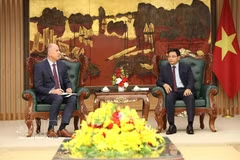
Deputy Prime Minister Nguyen Van Thang meets with Martin Sommer, head of the IMF’s Article IV consultation mission team to Vietnam, in Hanoi on November 13, 2026. (Photo: VNA)

IMF sees positive growth prospects for Vietnam, urges cautious monetary policy

Martin Sommer, head of the IMF’s Article IV consultation mission team to Vietnam, noted that inflation risks in Vietnam remain under control, but several factors could add to price pressures. He therefore called for cautious monetary policy management and readiness to respond promptly if inflationary pressures increased.

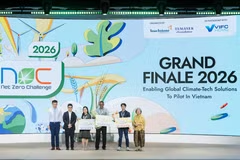
Representatives of the three first-prize-winning startups receive their awards at the event. (Photo: SGGP)

Seven green-tech startups secure 770,000 USD at Net Zero Challenge 2026

In its fourth year, the competition attracted more than 1,100 applications from 80 countries and territories, making it the most competitive edition since its launch in 2023. Nine finalists presented solutions in three categories, namely renewable energy and carbon removal; food systems and sustainable agriculture; and circular economy and waste management.

Vietnamese and Malaysian businesses connect at the event (Photo: VNA)

Vietnam, Malaysia connect businesses to boost bilateral trade cooperation

It centred on a business-to-business (B2B) matchmaking session, bringing Vietnamese and Malaysian companies together to discuss import-export needs, seek partners and explore cooperation. Vietnamese businesses aimed to connect with Malaysian importers, distributors and retailers, while expanding access for their products to Malaysia and other markets.