Appropriate foreign ownership limit at banks expected to attract investment

Foreign ownership limits at credit institutions were expected to be raised to an appropriate level to attract foreign investment, which plays an important role in improving operational efficiency and accelerating the banking sector's restructuring.
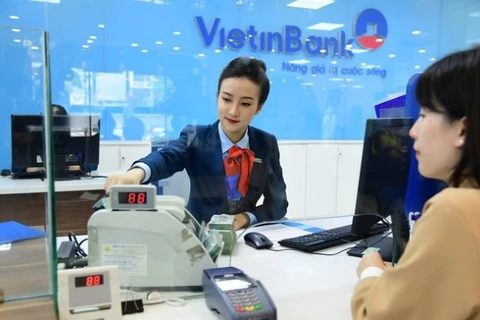
Appropriate foreign ownership limit at banks expected to attract investment ảnh 1Transactions at VPBank (Photo: VNA)
Hanoi (VNS/VNA) - Foreign ownership limits at credit institutionswere expected to be raised to an appropriate level to attract foreign investment,which plays an important role in improving operational efficiency andaccelerating the banking sector's restructuring.

The State Bank of Vietnam is drafting a decree to amend several points of theGovernment’s Decree No 01/2004/ND-CP dated January 3, 2014, about foreigninvestors purchasing stakes at Vietnam’s credit institutions.

An amendment proposal which attracted attention was that banks which receivedthe forced transfer of weak credit institutions could extend the foreignownership limit from 30% to 49%.

Nguyen The Minh from Yuanta Securities Vietnam said that to attract big foreigninvestors, the foreign ownership limit must be attractive enough to ensuretheir rights.

Increasing the foreign ownership limit to 49% might create a “magnet” forforeign investors, he said, adding that this would also help foreign investorsto have large enough stakes to participate in the governance and management toimprove operational efficiency and accelerate the restructuring process.

According to Yuanta, among banks which were participating in the process ofrestructuring weak credit institutions, except for Vietcombank, which has aState stake of more than 50%, the remaining three banks, including MBBank,HDBank and VPBank, would have the opportunity to increase the room for foreignownership.

The foreign stake at MBBank is currently at 23.24%, HDBank 18% and VPBank 17.6%,much lower than the proposed limit of 49%.

If the foreign ownership limit at credit institutions is raised to 49%, therewould be significant room for banks to raise capital from internationalfinancial institutions to restructure weak banks transferred to them.

Under the EU – Vietnam Free Trade Agreement, within five years of theagreement's effective date, Vietnam would consider allowing two European creditinstitutions to own up to 49% of the charter capital of two Vietnamese banks(except for the Big 4 group).

This meant that up to five banks could have a foreign ownership limit of 49%.

According to Vietnam Securities Depository, as of January 3, among 30 listedcommercial banks, 16 of them had at least 15% in foreign stakes.

Despite the proposal to increase foreign ownership limits, it is not easy toattract foreign investment.

While some banks are running out of room for more foreign ownership, othersfailed to attract foreign investments to the limit of 30%.

According to General Director of the Banking Association Nguyen Quoc Hung it isnecessary to improve the legal framework in a way that is more in line withinternational practices and ensures long-term stability and consistency.

Hung Hùng said that increasing the foreign ownership limit was necessary, butit must ensure the harmonisation of benefits between investors and Statemanagement requirements, stressing that clear and consistent policies from thebeginning would greatly support commercial banks in accelerating therestructuring and integration process.

With a cautious viewpoint, expert Vo Tri Thanh said that there should bedifferent foreign ownership limits for different groups of banks, depending onthe assessment of the State Bank of Vietnam.

For example, commercial joint stock banks which completed Basel II and wereunderway to implement Basel III could be allowed to increase their foreignownership limit to more than 30%.

However, Vietnam needed to study more carefully the benefits of increasing theforeign ownership limit, Tran Thi Hong Minh, Director of the Centre Institutefor Economic Management, said.

She added that the increase of foreign ownership limit should be consideredalong with other policies and proposals about developing internationalfinancial hubs, fintech and payment intermediaries.

Promote securities market

In June 2022, once again, Vietnam was not included in the list of MorganStanley Capital International (MSCI) for consideration of upgrading from afrontier market to an emerging market. Out of 17 ranking criteria, MSCIassessed that Vietnam did not meet nine criteria, one of which was “foreignownership limit”.

Financial expert Duong Anh Vu said it was necessary to increase the foreignownership limit at listed banks early.

Many other markets in the region with T transactions and similar securitiesmarket infrastructure and technical conditions were upgraded to emergingmarkets while Vietnam remained at frontier status. The only difference was thatforeign ownership in Vietnam was limited, Vu pointed out.

According to Minh, foreign ownership was the core factor in upgrading to anemerging market.

“We must create a fair playing ground for every investor,” he stressed.

In other words, if foreign ownership at banks was still limited at 30%, theroad to emerging markets was far away, Minh said, adding that banking stockswere the group with the highest market capitalisation on the stock market./.
VNA

See more

Vietnamese Ambassador to the RoK Vu Ho (first, left) and other participants in the conference in Seoul on July 14 (Photo: VNA)

Vietnam, RoK strengthen investment links at Seoul conference

Vietnamese Ambassador to the RoK Vu Ho said bilateral relations are currently enjoying the best conditions, underpinned by what he described as the three key factors of “favourable timing, geographical advantages, and strong public support”.

Electricity generation is monitored at the plant of the Hai Phong Thermal Power Joint Stock Company. (Photo: VNA)

Energy security “shield” must be built in layers: Expert

In an interview recently granted to the Vietnam News Agency, Dr Nguyen Van Tu, General Director of the Vietnam Petroleum Institute (VPI), said petroleum reserves are a critical line of defence, but a genuine energy security “shield” must be built in layers.

Reducing emissions is not only essential for tackling climate change but also brings tangible benefits to farmers and businesses. (Photo: VNA)

Vietnam steps up low-emission farming to support green growth

Vietnam is among the world's leading producers and exporters of agricultural products, including rice, coffee and a wide range of fruits. However, key export markets such as the US, the European Union (EU) and Japan are tightening sustainability requirements for agricultural products, making the transition to low-emission farming increasingly important.

Fresh fruit products of Vietnam are introduced to German customers. (Photo: VNA)

"Live data" paves way for Vietnamese farm exports

Achieving Vietnam's target of more than 74 billion USD in agricultural, forestry and fishery exports in 2026 will require stronger traceability systems, initially focusing on key export commodities, high-value products and major markets such as the EU, the US and China.

An enterprise in the southern province of Dong Thap invests in modern technologies and machinery for production. (Photo: VNA)

Broadening financing channels key to unlocking SME growth

As the private sector takes on a more central role under the Politburo's Resolution No. 68-NQ/TW, experts and business representatives say Vietnam needs a more comprehensive approach to supporting SMEs. This includes improving institutions, making financial support tools more effective and reshaping the financial system to better suit the characteristics of SMEs.

Phase 1 and Phase 2 of the Tan Thuan Wind Power Plant in Tan Thuan commune, Ca Mau province, have a combined installed capacity of 75 MW, comprising 18 wind turbines. (Photo: VNA)

Energy storage unlocks renewable power potential, cuts emissions

Energy transition is not simply about replacing fossil fuels with wind and solar power. It also requires building a sustainable energy ecosystem in which clean power generation, energy storage, smart grids and material recycling chains develop in parallel. Such an integrated approach will improve energy efficiency, further reduce greenhouse gas emissions and help Vietnam achieve green growth and net-zero emissions targets by 2050.

Vietnamese food is increasingly diverse in varieties and packaging, meeting domestic demand. (Photo: VNA)

Government urges vigilance as inflation pressures mount in H2

The Government's inflation target remains within reach despite mounting headwinds. Several forecasts suggest inflation can stay below 4.5% this year if international oil prices continue to retreat. Extending domestic fuel tax incentives through year-end, along with stable electricity prices, healthcare fees and exchange rates, would offer additional relief.

Construction is underway at the Tu Lien Bridge project in Hanoi. (Photo: nhandan.vn)

Public investment drives Hanoi’s growth momentum

In the first half of 2026, Hanoi disbursed 64 trillion VND (2.4 billion USD) in public investment, equivalent to more than 53% of the annual plan assigned by the Prime Minister – the highest mid-year disbursement rate recorded in many years.

Representatives of relevant parties at the sponsorship signing ceremony on July 13, 2026 (Photo: Vietjet)

Vietjet, Vikki Digital Bank named official partners of ASEAN United FC events

As the Official Airline Partner of the ASEAN United FC events, Vietjet connects fans and destinations across Southeast Asia through the region's leading football competitions, kicking off with the ASEAN Hyundai Cup™ 2026, the jewel in the crown of ASEAN football and the region's biggest sporting event.