A tra fish processing factory in Dong Thap province (Photo: VNA)
 Despite complicated developments of the COVID-19 pandemic, the country earned 4.88 billion USD from aquatic product exports in the first seven months of 2021, representing a year-on-year rise of 11 percent.
The increase was attributable to efforts by firms against the backdrop of COVID-19 which triggers labour shortages and difficulties in material purchase, as well as social distancing measures in 19 southern localities in a bid to curb the spread of the pandemic.
Of note, exports of tra (pangasius) fish reached 458,700 tonnes in the January-July period, raking in 931 million USD, up 13.54 percent in volume and 17.94 percent in value compared to the same period last year.
As of the end of July, revenues from aquatic product export to the US surpassed 1.14 billion USD, making up 22.9 percent of Vietnam total earnings and seeing a year-on-year expansion of 36 percent.
In addition, tuna shipments to the US grew by 1.5-fold in recent months against the same period last year. At present, the market is holding a lion’s share of 43 percent of Vietnam’s tuna exports.
Aquatic exports to other markets including Mexico, Brazil, the UK, Thailand and the Netherlands also enjoyed significant growth.
Exports to Africa reported a year-on-year surge of 32 percent in volume and 16.7 percent in value in the first seven months.
The target of 9 billion USD in export revenues is reachable this year if COVID-19 is promptly brought under control and the logistics system resumes normal operations, according to the Vietnam Association of Seafood Producers and Exporters (VASEP).
The Directorate of Fisheries advised firms to maintain shipments to traditional markets for sustainable growth, noting that from the start of 2022, China will apply new policies on the imports of Vietnam’s agro-forestry-aquatic products.
China is currently the largest market of Vietnam’s aquatic products, accounting for 26 percent.
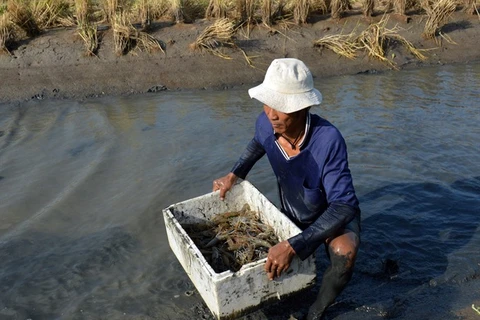
Shrimp exports also see a bright prospect as Vietnam’s major trade partners like the US, Japan, the Republic of Korea and Germany have bolstered imports of the products./.
The target of 9 billion USD in export revenues is reachable this year if COVID-19 is promptly brought under control and the logistics system resumes normal operations, according to the Vietnam Association of Seafood Producers and Exporters (VASEP).
The Directorate of Fisheries advised firms to maintain shipments to traditional markets for sustainable growth, noting that from the start of 2022, China will apply new policies on the imports of Vietnam’s agro-forestry-aquatic products.
China is currently the largest market of Vietnam’s aquatic products, accounting for 26 percent.
Shrimp exports also see a bright prospect as Vietnam’s major trade partners like the US, Japan, the Republic of Korea and Germany have bolstered imports of the products./.
VNA