Vietnamese firms have big opportunity to increase Halal product exports

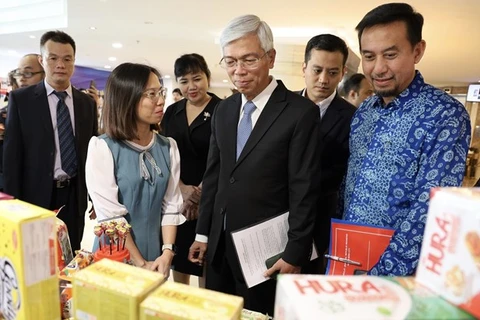
The market for Muslims in Malaysia in particular and the Halal market in general has a lot of development potential, offering a good opportunity for Vietnamese exporters, heard a seminar in Ho Chi Minh City on May 31.

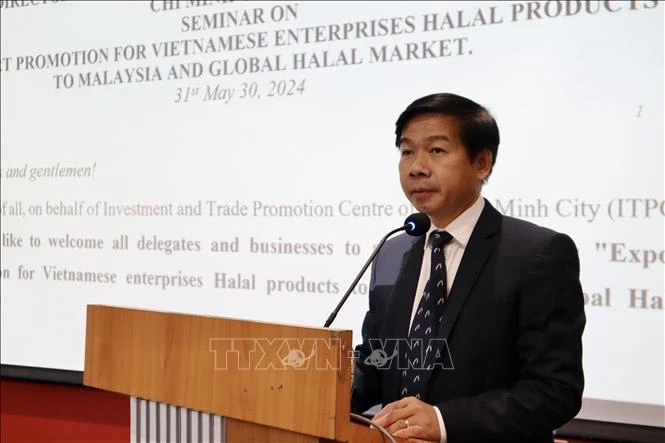
ITPC Deputy Director Dao Minh Chanh speaks at the event. (Photo: VNA)

HCM City (VNA) - The market for Muslims in Malaysia in particular and the Halal market in general has a lot of development potential, offering a good opportunity for Vietnamese exporters, heard a seminar in Ho Chi Minh City on May 31.

The seminar, jointly held by the Investment and Trade Promotion Centre of Ho Chi Minh City (ITPC), the Malaysian Consulate General in the city, and the National Trade Promotion Agency of Malaysia (MATRADE), aimed to seek ways to promote the export of Halal products of Vietnamese enterprises to Malaysia and other Islamic markets.

ITPC Deputy Director Dao Minh Chanh said that there remains ample room for economic, trade and investment cooperation between Vietnam and Malaysia. Two-way trade increased from 7.2 billion USD in 2011 to 12.67 billion USD last year, and the two countries are striving to raise the number to 25 billion USD by 2030.

Malaysian Consul General in Ho Chi Minh City Firdauz Othman said that the Muslim population is forecast to increase from 1.8 billion in 2017 to 3 billion in 2060. As for Halal food, the market is growing at a very fast pace, expected to reach a value of about 4.5 trillion USD by 2030.

Today, Halal standards have been accepted globally, especially in terms of hygiene and safety, he said, adding that this has brought great opportunities for many countries, including Vietnam, to proactively approach the Halal market.

To exploit this market’s potential, Vietnamese businesses need to proactively learn about and develop Halal-certified products, and participate in trade promotion programmes for Halal products, he recommended./.
VNA

See more

The launch of the Vietnam National Brand Week 2026 on April 16 (Photo: VNA)

Vietnam National Brand Week 2026 opens

Running from April 16 to 23 nationwide, the Vietnam National Brand Week 2026 marks the 18th anniversary of Vietnam Brand Day (April 20, 2008 – 2026).

Ca Mau is currently home to more than 5,200 fishing vessels, including nearly 1,900 boats measuring over 15 metres in length, and all have been equipped with vessel monitoring systems. (Illustrative photo: VNA)

Ca Mau drives changes among fishermen to tackle IUU fishing

Ca Mau is stepping up communication campaigns to disseminate legal regulations on IUU fishing, highlight recent enforcement results, and convey recommendations from the European Commission (EC)’s fifth inspection mission to fishing communities and relevant stakeholders.

The new infrastructure system will not only meet immediate needs but also create new growth poles, helping reshape the economic landscape. (Photo: VNA)

Construction sector striving for high-growth target

The construction sector faces mounting pressure to keep major projects on schedule while managing costs and stabilising markets. Yet, with gains from institutional reform, infrastructure investment, and growth model transformation, it remains well positioned to serve as a key growth engine.

Fuel taxes are slashed to 0% from April 16 under a National Assembly resolution. (Illustrative photo: VNA)

Fuel taxes cut to 0% from April 16

Accordingly, the environmental protection tax on petrol (excluding ethanol), diesel, kerosene, mazut, and aviation fuel has been cut to 0 VND per litre. These products are also exempt from VAT declaration and payment, while still eligible for input VAT credit.

Workers process seafood for export. (Photo: VNA)

Vietnam’s long-term investment appeal remains intact: EuroCham

Up to 93% of European enterprises said they would recommend Vietnam as an investment destination – one of the highest endorsement levels in the history of the BCI survey. This indicates that investors are clearly distinguishing between short-term operational challenges and their long-term strategic outlook.