ASEAN consumers’ love for fast food wanes

Consumers in the Association of Southeast Asian Nations (ASEAN) are tightening their belts during a sluggish economic time by cutting their spending on fast food.
ASEAN consumers’ love for fast food wanes ảnh 1Illustrative image (Source: ft.com)

Hanoi (VNA) – Consumers in the Association of Southeast Asian Nations (ASEAN) are tightening their belts during a sluggish economic time by cutting their spending on fast food.

ASEAN consumers love fried chicken, burgers and fries. Fast-food franchises are a common sight in popular shopping malls and many are open 24 hours a day.

However, Malaysian and Thai people are cutting back on their fast food intake as the consumers, especially Malaysians, have been pessimistic about the countries’ economic outlooks, according to data from FT Confidential Research, a research service at the UK’s Financial Times.

The findings are based on a survey tracking the consumption patterns of 3,000 respondents across Indonesia, Malaysia, the Philippines, Thailand and Vietnam over the past two years.

The survey also shows that KFC and McDonald’s — generally the top two brands in ASEAN markets — bore the brunt of the cutbacks.

In October, about 51 percent of Malaysian respondents said they visited McDonald’s in the past six month, down from 52.3 percent in April. The figure was 57.8 percent when the survey started two years ago.

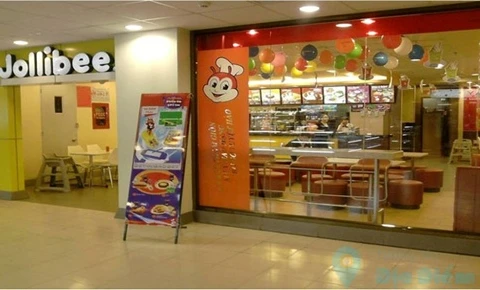
Meanwhile, only 17 percent of Philippine respondents visited KFC regularly in October, versus 30 percent two years ago. In contrast, 54 percent and 42 percent of Filipino respondents frequently visited Jollibee and McDonald’s respectively in October, and the figures have largely been stable over the same period.

But demand for fast food in Malaysia, the Philippines and Thailand is saturated and the top chains will have to look to new markets for growth, the survey said.

That market is Vietnam, which currently has the lowest proportion of people eating at fast-food chains among the five ASEAN economies.

McDonald’s sees Vietnam, with its rising, young middle class, as the next place to be.

It had five restaurants in Ho Chi Minh City in 2015, but within the next decade it hopes to have 100 more spots to sell its Big Macs and compete against KFC, Jollibee and Lotteria — a chain from the Republic of Korea — for a share of the market there.-VNA
VNA

See more

At the 19th Ho Chi Minh City International Travel Expo (ITE HCMC 2025) (Photo: VNA)

ITE HCMC 2026 to connect Vietnam's tourism with the world

From its early editions in 2005-2010, which attracted around 210 exhibitors and 120 international buyers from 18 countries, ITE HCMC has grown significantly. This year's event is expected to feature more than 520 exhibitors and brands, 260 international buyers from over 40 countries and territories, and more than 21,000 pre-arranged B2B appointments.

Checking tickets before passengers board the train at Hai Phong Station. (Photo: VNA)

Vietnam-China rail link prioritised to boost trade

The Ministry of Construction said it has tasked the Vietnam Railway Authority with working alongside relevant Chinese agencies to develop detailed plans for the Hai Phong–Ha Long–Mong Cai railway, which is slated for completion in 2026.

Australian Treasurer Jim Chalmers (right) and Vietnamese Minister of Finance Ngo Van Tuan at their meeting in Sydney on August 11 (Photo: Ministry of Finance)

Vietnam, Australia strengthen all-round financial cooperation

Minister of Finance Ngo Van Tuan called on the Australian Government to continue providing official development assistance (ODA), particularly for climate-resilient infrastructure projects, share experience, and provide technical assistance in public financial management reforms.

Delegates press the button to launch the project. (Photo: VNA)

Ca Mau launches 96 million USD wind power project

The project which has a designed capacity of 50MW, will cover around 600ha of sea and land areas, with total investment estimated at 2.5 trillion VND (96 million USD). It comprises a 13km 110kV transmission line, a 63MVA step-up substation, medium-voltage underground cable systems, and wind turbines and their foundations.

A Vietnam Airlines aircraft. (Photo: VNA)

Vietnam Airlines marks 35,000th flight to Australia

Over 35 years of operations, Vietnam Airlines has operated 35,000 flights and carried 7.5 million passengers between Vietnam and Australia, reflecting steady market growth and rising demand for connectivity between the two countries.

A view of the press conference. (Photo: VNA)

2026 Banking Sector Digital Transformation to open in Hanoi

The annual event, which will be held on August 18-19, 2026, at the ICE International Exhibition Centre, 91 Tran Hung Dao Street, Hanoi, is expected to attract around 324 delegates and feature 21 booths representing credit institutions, payment intermediary service providers, and technology companies.

SME products livestreamed on the digital platform of Ca Mau Radio and Television Station.( Photo: VNA)

Digital transformation key to unlocking SME growth in Vietnam

Science, technology, innovation and digital transformation have become strategic imperatives directly linked to labour productivity, competitiveness, growth quality and the economy's self-reliance, with sci-tech application and innovation by small and medium-sized enterprises (SMEs) playing an important role.

New Zealand apples on sale at a supermarket in Vietnam (Photo: VNA)

Vietnamese consumers develop taste for Australian, New Zealand fruit

According to statistics from the Department of Customs, in the first six months of 2026, Vietnam imported 102.8 million USD worth of fruit, vegetables and flowers from Australia, up 55.7% from the same period last year. Australia's share of total imports rose from 5.5% to 6.51%, highlighting the growing position of the market as a supplier. Imports from New Zealand reached 78.04 million USD, up 20.4% year-on-year.

Semiconductor products, chips and components displayed at a ceremony to launch a national centre for semiconductor chip pilot production support in Hanoi on June 26. (Photo: VNA)

US semiconductor push offers Vietnam opportunities, policy challenges

The Vietnam-US semiconductor partnership is therefore not simply a “golden opportunity” arising from geopolitical shifts, but also a long-term test of Vietnam’s institutional reform and implementation capacity. If domestic capacity cannot keep pace, adjusting targets toward quality and execution, rather than simply expanding the number of projects, will be essential.

Workers process fruit for export at the Chanh Thu factory in Cho Lach commune, Vinh Long province. (Photo: VNA)

Vietnam works to maintain edge in key agricultural market

According to Le Hang, Deputy Secretary-General of the Vietnam Association of Seafood Exporters and Producers (VASEP), China and Hong Kong (China) remained bright spots for Vietnam’s aquatic exports in July, with revenue exceeding 267 million USD, up 24.7% year-on-year.

An estimated 6,300 workers are needed by the semiconductor industry in Bac Giang province during the 2025-2030 period. (Photo: VNA)

India's semiconductor strategy complementary to Vietnam's chip sector: expert

Sudhanshu Mittal, Director of Engineering Solutions at the National Association of Software and Service Companies (Nasscom) of India, noted that during the state visit to India by General Secretary of the Communist Party of Vietnam Central Committee and President To Lam in May, the two countries signed a number of cooperation agreements, with semiconductors identified as a priority area alongside artificial intelligence (AI), cybersecurity, and advanced technologies.

At the working session between Vietnamese Minister of Finance Ngo Van Tuan (right) and RMIT University’s Vice-Chancellor and President Professor Alec Cameron in Sydney on August 10 (Photo: tapchikinhtetaichinh.vn)

Vietnam, Australia seek to expand investment in rice value chain

During General Secretary of the Communist Party of Vietnam Central Committee and President To Lam’s state visit to Australia from August 9-12, Vietnamese Minister of Finance Ngo Van Tuan, authorised by the General Secretary and President, held working sessions with SunRice Group CEO Paul Serra and RMIT University’s Vice-Chancellor and President Professor Alec Cameron in Sydney on August 10.