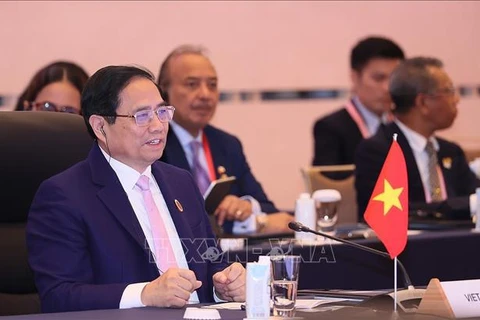
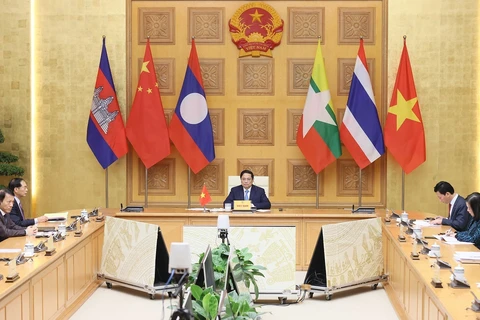
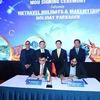
Delegates discuss at the workshop on ASEAN festival tourism. (Photo: Nhandan.vn)
 Hanoi (VNA) – The Vietnam National Authority of Tourism (VNAT) under the Ministry of Culture, Sports and Tourism on December 26 organised a workshop on ASEAN festival tourism.
At the workshop, experts and policymakers from ASEAN countries exchanged information and experiences to develop festival tourism and connect destinations in the region.
It was reported at the event that in 2022, ASEAN countries received 43 million international visitors, accounting for only 30% of the post-pandemic level in 2019.
Thus, ASEAN has been strengthening cooperation in tourism for post-pandemic sustainable development and recovery.
In the past two years, ASEAN issued new policies such as the ASEAN Tourism Marketing Strategy for the 2021-2025 period, the Post-COVID-19 Recovery Plan for ASEAN Tourism, and the ASEAN Framework on Sustainable Tourism Development in the Post-COVID-19 Era.
Building tourism products to improve ASEAN destination competitiveness is an important content to promote post-pandemic recovery. Particularly, a project on developing ASEAN festival tourism was launched to help diversify tourism products in the region and promote intra-bloc destination connectivity.
As a coordinator of the project, the VNAT proposed solutions to effectively develop festival tourism for ASEAN, including Vietnam.
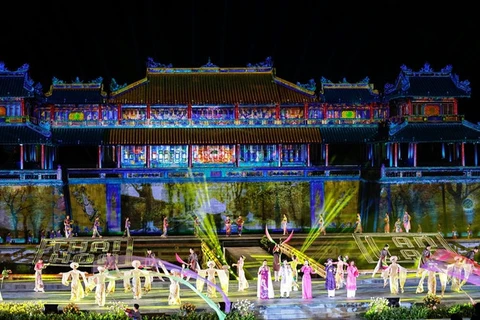
According to a report by the VNAT, ASEAN is considered a land of festivals that take place year round, throughout the region and with their own distinctive nuances.
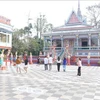
Festival tourism provides opportunities for tourists to explore local culture, and traditional cuisine and especially experience unique entertainment activities. Today, many festivals in Southeast Asia have become famous all around the world, attracting many tourists, including Cambodia’s New Year festival, the Thai Songkran water festival, and lantern festival or boat racing festival in Laos, the Bali art festival in Indonesia, and the Mid-Autumn festival in Vietnam.
At the workshop, participants agreed that it is necessary to promote ASEAN to become a festival destination which is capable of connecting destinations in the region, diversifying tours, and creating a unique attraction.
They also discussed international experiences and new trends for festival tourism. Recommendations were suggested for relevant parties to effectively manage and exploit festival tourism, ensuring tourism development in line with preserving and promoting cultural and heritage values./.