RoK urged to maintain support for ASEAN's efforts to ensure peace in East Sea - Illustrative image (Source: VNA)
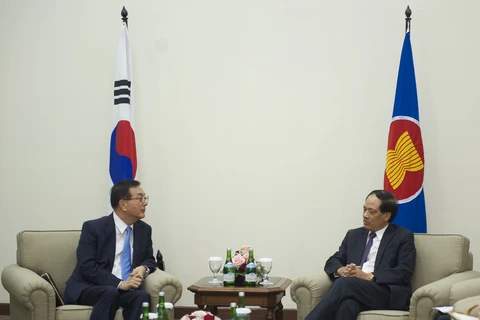
Jakarta (VNA) – Ambassador Nguyen Hoanh Nam, head of the Vietnam delegation to ASEAN, attended the third meeting of the ASEAN-Republic of Korea (RoK) Joint Cooperation Committee in Jakarta, Indonesia on March 13.
Nam confirmed ASEAN appreciates the RoK’s important and valuable support for the bloc.
He urged the two sides to further cooperation in strategic issues, including ensuring peace, security and stability in the region, on the basis of the established strategic partnership.
The Vietnamese Ambassador asked the RoK to continue specific assistance for ASEAN in building the ASEAN Community, developing sub-regions, and narrowing development gap, with the focus on information technology, education and vocational training, which are the strength of the East Asian nation. The assistance can be channeled through joint cooperation frameworks such as the Mekong-RoK cooperation.
The Vietnamese diplomatl also suggested the RoK maintain its support for ASEAN’s efforts to ensure peace, stability, security, maritime and navigation freedom and safety in the East Sea, fully and effectively implement the Declaration on the Conduct of Parties in the East Sea (DOC) and early reach a Code of Conduct in the East Sea (COC).
At the meeting, delegates said they are satisfied with positive progresses in the ASEAN-RoK relations.
The RoK continues to be ASEAN’s 5th largest trade partner and its 6 th biggest investor.
Collaboration in priority fields has been expanded, particularly in disaster response, development gap narrowing, cultural and people-to-people exchanges, gender equality, and women’s empowerment.
The two sides have also approved various specific programmes, initiatives and projects, including the ASEAN-RoK Forest Cooperation Agreement and a plan to establish an ASEAN Cultural House in Busan in 2017. In particular, foreign ministers of ASEAN member countries and the RoK signed an action plan to intensify bilateral strategic partnership for 2016 in 2015.
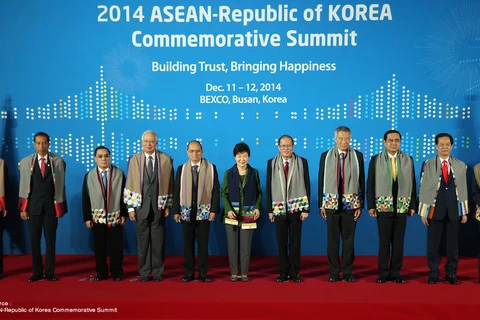
For future orientations, both sides agreed to closely follow the Declaration on the 2014 ASEAN-RoK Joint Vision and the 2025 ASEAN Community Vision.
ASEAN and the RoK should exert efforts to ensure the effective implementation of their action plan 2016-2020, and cooperate in carrying out the bloc’s blueprints.
The two sides will work together to increase two-way trade to 200 billion USD by 2020 through completing and enforcing the Regional Comprehensive Economic Partnership (RCEP), upgrading the ASEAN-RoK free trade area, facilitating bilateral business ties, and promoting the role of the ASEAN-RoK Centre and the ASEAN-RoK Business Council.
They also vowed to strengthen coordination in response to non-traditional challenges, connectivity, climate change, education and training.
On this occasion, the RoK committed further contribution to the ASEAN-RoK Cooperation Fund as well as more ODA provision for ASEAN countries.-VNA