Aviation authority proposes shortening Noi Bai airport closure

The Civil Aviation Administration of Vietnam (CAAV) has asked the Ministry of Transport to shorten the closur of Noi Bai International Airport in Hanoi for upgrading and repairing runways and taxiways.
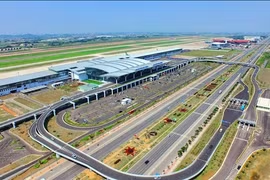
Aviation authority proposes shortening Noi Bai airport closure ảnh 1A corner of Noi Bai International Airport (Photo: VNA)

Hanoi (VNA) – The Civil Aviation Administrationof Vietnam (CAAV) has asked the Ministry of Transport to shorten the closure of Noi Bai International Airport in Hanoi for upgrading and repairing runways andtaxiways.

CAAV said the flight frequencyof airlines has increased in recent times, while the operating capacity of theairport can only ensure a maximum of 25 flights per hour, resulting in increasedflight delays at the airport, especially in peak hours.

Meanwhile, the concrete construction for the runway ismaintaining the schedule. Therefore, to be able to increase flights, the administrationpetitioned the Ministry of Transport to shorten the closure of the airport.

Specifically, instead of closing from 0:30amto 6:30 am, CAAV suggested opening half an hour earlier, only closing from 0:30amto 6:00am.

Previously, CAAV decided to adjust the time for suspending the operation of the airport from 0:30am to 6:30am from September 1, 2020 to January31, 2021 to serve the construction work.

The administration hasalso directed Noi Bai International Airport and the Vietnam Air Traffic ManagementCorporation to create the most favourable conditions for construction units

The project to upgradeand repair the runway at Noi Bai International Airport with totalinvestment of over 2 trillion VND started on June 26. The construction isexpected to be fully completed before the lunar New Year festival 2022./.
VNA


See more

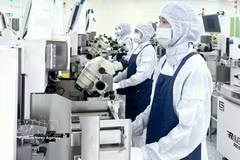
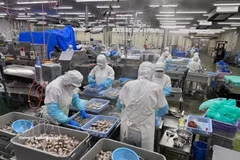
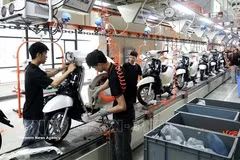
Production line at Hana Micron Vina Co., Ltd in Bac Ninh city (Photo: VNA)

Processing and manufacturing continue to drive industrial growth

The sector’s industrial production index (IIP) rose 13% year on year, contributing 10.2 percentage points to overall industrial growth. Mining increased 7.1%, adding 1.1 percentage points, while electricity generation and distribution grew 10.6%, contributing one percentage point. Water supply, waste and wastewater management and treatment expanded 9.2%.

Vietnamese workers at a Japanese oyster processing factory (Photo: VNA)

Vietnam-Japan trade machine has room to run

Economic, trade and investment cooperation remains the core pillar and the main engine of comprehensive, sustainable bilateral ties. General Secretary of the Communist Party of Vietnam Central Committee and President To Lam’s official visit to Japan is therefore a key moment to reinforce political trust, deepen the Comprehensive Strategic Partnership and open new cooperation opportunities in the next growth phase.

Prof. Kenichi Ohno from Japan’s National Graduate Institute for Policy Studies (GRIPS) (Photo: vietnamfinance.vn)

Vietnam, Japan poised to shape new economic partnership: Japanese expert

Vietnam's progress in income levels and technological capabilities has opened up a new phase in economic ties with Japan, with both countries shifting from a model centred on Japanese support for Vietnam to one of jointly developing and operating business activities, he said, noting that this shift reflected Vietnam's development achievement.

The forum provides a platform for businesses from both countries to exchange market information, seek partners and explore concrete trade and investment opportunities. (Photo: VNA)

Vietnamese goods eye greater access to Australian market

Participants at the Vietnam-Western Australia Business Forum 2026 in Perth city on November 6 highlighted strong prospects for Vietnamese rice, agricultural produce and food products in the Australian market as local businesses seek to diversify supply chains.

Ambassador Mai Phan Dung (centre), Permanent Representative of Vietnam to the United Nations, the WTO and other international organisations in Geneva at Vietnam’s third Trade Policy Review (Photo: VNA)

Vietnam highlights integration achievements at WTO

Vietnam views the Trade Policy Review not merely as a transparency obligation but also as an opportunity to objectively assess its achievements, listen to other members’ views and identify areas for improvement.

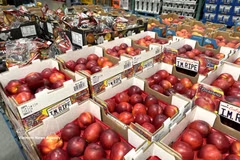
Nectarines from California are on sale at a supermarket in Washington, D.C (Photo: VNA)

US to send largest-ever agricultural trade mission to Vietnam

The USDA’s statistics show that Vietnam was the seventh-largest export market for American agricultural and related products in 2025, with import turnover of nearly 5.6 billion USD. The US’s 2025 agricultural exports to Vietnam increased 38% from 2024.

At the opening of the Food Expo Vietnam 2025 (Photo: VNA)

Vietnam Food Forum 2026 to take place soon

Vietnam Food Forum 2026 is scheduled for November 11 in Ho Chi Minh City as one of a series of specialised activities designed to help Vietnamese food businesses keep abreast of policy developments, improve their ability to meet international standards and expand opportunities to participate in global supply chains.

Many foreign-invested enterprises have chosen Yen Phong Industrial Park in Bac Ninh city as a destination for their manufacturing and business operations. (Photo: VNA)

Bac Ninh seeks to attract high-quality investment, create fresh appeal

Bac Ninh aims to attract projects that participate in global production and supply chains, apply advanced and green technologies, and support industries. Priority sectors include semiconductors, artificial intelligence, digital technology, robotics, new materials and renewable energy.

Col. Nguyen Ba Son, Deputy Director-General of the Ministry of Public Security’s Department of Cyber Security, speaks at the event. (Photo: thanhnien.vn)

Vietnam studies pilot system to trace cash flows in fraud cases

A representative of the Vietnam Banks Association said AI can help banks spot customer needs, detect unusual transactions and improve credit scoring. But poorly standardised input data or inadequately controlled AI models can create new risks in decision making and data protection.