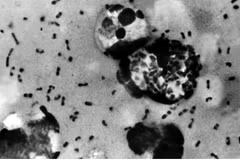
Aviation sector, localities take measures to prevent MERS-CoV

The Civil Aviation Authority of Vietnam (CAAV) has asked the aviation sector to closely supervise the development of Respiratory Syndrome Corona virus (MERS-CoV) to prevent the virus from entering Vietnam.
The Civil Aviation Authority of Vietnam (CAAV) has asked the aviationsector to closely supervise the development of Respiratory SyndromeCorona virus (MERS-CoV) to prevent the virus from entering Vietnam.

All aviation agencies have been requested to keep aclose eye on high-risk passengers, including tourists and those whowork in farms with camels from Middle Eastern countries, ensuring allsuspected MERS-CoV cases are detected in a timely fashion.

The sector should also increase communications among passengers andaviation staff on the virus and prevention methods, asked the CAAV,while coordinating with health quarantine agencies to observe all healthquarantine processes.

Foreign airlines were also informed of preventive measures against the virus.

In a meeting in Hanoi on June 2, Health Minister Nguyen Thi KimTien asked ministry bodies and other relevant ministries and sectors toimmediately implement preventive measures in line with directions fromthe ministry and the World Health Organisation (WHO).

Sheunderlined the need to launch communication campaigns calling on peopleto avoid travel to affected areas and raise public awareness of theimportance of regular hand-washing by soap and other hygiene practicesto prevent the spread of the disease.

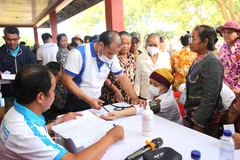
Head of theMinistry of Health’s Preventive Medicine Department Tran Dac Phu saidthe health sector should work with all-level authorities to intensifymedical monitoring at border gates to promptly detect infections andapply medical declarations in entrance and exit areas.

It is necessary to put in place plans on receiving and treatingpatients and supervising affected cases to prevent the spread of thedisease in communities in case the worst scenario happens, he stressed.
The sector is required to update instructions andprofessional documents in the field and provide medical staff withtraining courses on the diagnosis, prevention and treatment of MERS-CoV.

The same day, Hanoi’s Health Department had a meetingwith the municipal Steering Committee for preventing MERS-CoV to discussdisease prevention solutions.

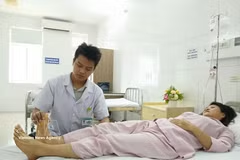
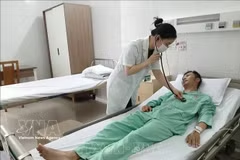
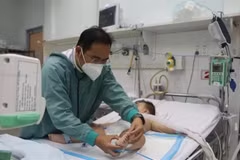
Healthcarefacilities in the city were requested to take measures to classifypatients with symptoms of MERS-CoV to be separated for timely treatment.

Ho Chi Minh City has also rolled out measuresto control the virus in all local border gates and airports with aspecial focus on passengers coming to Vietnam from the Middle East andthe Republic of Korea (RoK).

According to thecity’s International Quarantine Service, the Tan Son NhatInternational Airport in the city handles seven flights from the RoKevery day with up to 1,200 passengers. Health declarations have notbeen implemented for passengers yet, however, the agency has preparedabout 50,000 health declarations and sufficient personnel for the workwhen instituted.

In the northern mountainousprovince of Lang Son, bordering China - where the virus has beendetected, local border gates have also tightened health check proceduresto discover suspected cases.

Lang Son InternationalQuarantine Service has directed all functional bodies to preparemedicine to prevent the virus from spreading to the locality.

Accordingto the Health Ministry, MERS-CoV, which was first reported in SaudiArabia in 2012, has so far spread to 26 countries with 1,154 patients,434 of whom have died.

In Asia, there are four countries whohave recorded MERS-CoV cases: the Philippines  Malaysia, theRepublic of Korea and China.

The disease can bespread between people and causes fevers, breathing problems, pneumoniaand kidney failure.

The death rate of people confirmed to have the virus infection is about 51 percent. No vaccine is currently available.

The WHO said those with weak immune systems or chronic diseases such as diabetes are particularly vulnerable to MERS-CoV..

The organisation also urged countries to continue monitoring acute andabnormal respiratory cases associated with travelling from affectedcountries in the Middle East , while launching standard precautionarymeasures.

They were also asked to complete theevaluation of MERS-CoV infection and risk and raise public awareness ofthe epidemic and its risks.-VNA

See more

A speaker delivers presentations at the conference (Photo published by VNA)

Vietnam, Denmark expand cooperation in high-tech healthcare

Ambassador Nguyen Le Thanh called on Vietnamese and Danish partners to identify priority areas and promote research and training programmes, knowledge transfer and technology application in line with Politburo's Resolution No. 57-NQ/TW on breakthroughs in science – technology development, innovation and national digital transformation.

Ho Chi Minh City has favourable conditions for developing the ecosystem, including a large population, diverse healthcare needs and an extensive public and private medical network. (Illustrative photo: VNA)

Ho Chi Minh City develops multi-tier elderly care network amid population ageing

Dr. Huynh Minh Chin, Deputy Director of the department, said rising elderly care needs are putting pressure on traditional family-based care, as older people increasingly face multiple chronic illnesses, mobility problems, malnutrition, dementia and depression, requiring continuous support and closer coordination among hospitals, grassroots healthcare facilities, families and social support institutions.

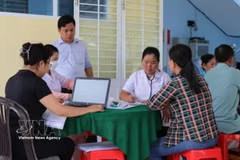
Local residents in Mondulkiri province, Cambodia, receive free medical check-ups and health consultation. (Photo: VNA)

Free medical examinations provided to remote communities in Cambodia

Vietnamese Ambassador Nguyen Minh Vu said the programme has been jointly organised by the embassy and the hospital annually in various Cambodian localities to provide healthcare support to disadvantaged households and contribute to the Cambodian Government’s efforts to improve public health. The initiative also reflects close cooperation in healthcare and the strong bonds between the people of Vietnam and Cambodia.

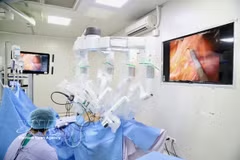
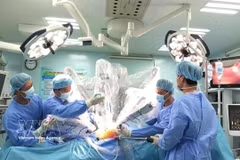
With the assistance of robotic-assisted laparoscopic surgery, doctors successfully perform a complex operation (Photo: VNA)

Vietnam advances towards high-quality, specialised healthcare

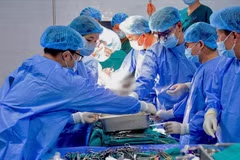
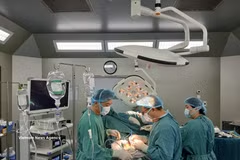
Recent developments in Hanoi and other localities highlight efforts to develop specialised treatment, standardise professional practices and apply artificial intelligence (AI) and advanced medical techniques, towards a more modern healthcare system.

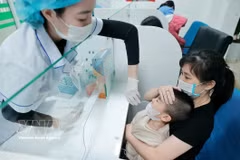
Collecting a sample from a pediatric patient for influenza testing (Photo: VNA)

Ho Chi Minh City acute respiratory infections surge over 64%

According to the Ho Chi Minh City Centre for Disease Control (HCDC), influenza viruses are are among the fastest-rising pathogens, with 151 positive samples in a single week. Influenza A is the dominant strain, with A/H1N1pdm09 in 116 samples, or nearly 77%.

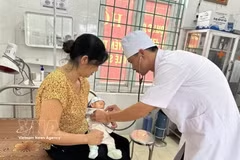
A doctor at Trung Nguyen Medical Station in Te Lo commune, Phu Tho province, examines a child patient. (Photo: VNA)

Phu Tho builds hospital culture to improve patient satisfaction

In recent years, alongside efforts to improve the quality of medical examinations and treatment, Phu Tho province’s health sector has focused on creating civilised, friendly hospital environments and strengthening healthcare workers’ sense of responsibility and service-oriented attitudes, with the aim of earning patients’ trust and satisfaction.

An overview of the meeting between Deputy Prime Minister Pham Thi Thanh Tra and César Louis-Philip Marseille, Managing Director of VAMED Engineering GmbH of Austria and member of the Board of Directors of VAMED+WWH Group of Germany,in Hanoi on October 7. (Photo: VNA)

Deputy PM suggests studying long-term development of hospital ship model

Vietnam is one of VAMED’s important partners in Southeast Asia. The group plans to invest 1.2 billion EUR in Vietnam over the next five years, creating jobs for thousands of workers and promoting knowledge and technology transfer. It also wishes to expand cooperation through preferential credit projects, public-private partnerships (PPPs) and partnerships with private enterprises; and supply medical products from Austria and Germany for Vietnamese partners.