Banking sector to focus credit on priority fields this year

This year, the banking sector will focus on providing maximum support for enterprises to resume production while pouring cash flow into priority fields in line with the Government’s direction, Dao Minh Tu, Deputy Governor of the State Bank of Vietnam (SBV) has said.
Banking sector to focus credit on priority fields this year ảnh 1Dao Minh Tu, Deputy Governor of the State Bank of Vietnam. (Photo: VNA)

Hanoi (VNA) – This year, the banking sector will focus on providing maximum support for enterprises to resume production while pouring cash flow into priority fields in line with the Government’s direction, Dao Minh Tu, Deputy Governor of the State Bank of Vietnam (SBV) has said.

The unpredictable development of the pandemic, with the appearance of the Omicron mutation, makes the global economic outlook and inflation in 2022 difficult to forecast, posing difficulties for Vietnam's banking sector.

With this in mind, the SBV will continue to carry out monetary policies in a flexible manner, creating favourable conditions in supporting liquidity across the economy, Deputy Governor Tu told Vietnam Plus.

It will efficiently execute solutions to control inflation at the target of 4% for this year and stabilise the macro-economy and the exchange rate, as well as manage foreign exchange and gold market.

Tu emphasised that the SBV will strictly control credit for risky areas such as real estate, securities trading and bond issuance for businesses that do not ensure safety.

Attention will be paid to promoting digital transformation in banking and non-cash payment activities. This will improve the legal framework to facilitate the digital transformation of the banking industry, meeting the requirements of new business models, products and services on the ground of information technology, digital banking, and payment. Safety in payment and digital transformation activities will be enhanced as well.

For credit activities, the SBV will continue to focus capital on businesses in prioritised fields, especially for those facing difficulties due to COVID-19, he said.

Favourable conditions will be created by exploiting all resources in the economy, contributing to the realisation of national targets and preferential credit programmes.

Tu said that the banking industry will continue restructuring repayment terms and keep the debt group unchanged, adding that this is an important solution that should prevent businesses from being transferred to a bad debt group, and allow access to capital to restore production.

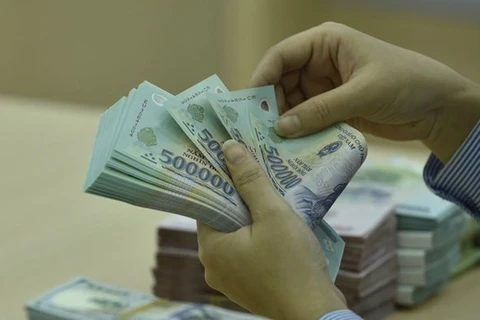
Banking sector to focus credit on priority fields this year ảnh 2Illustrative image. (Photo: VNA)

Credit growth is set at 14% for 2022, but it could be higher or lower, depending on the capital needs of the economy as well as inflation control requirements. Especially at year-end, this credit growth target will be adjusted to suit the actual situation.

The 12% figure was the target for 2021. However, the SBV had a policy of loosening credit at the end of the year to ensure capital for businesses. As a result, credit growth reached about 13.5% - 14% last year.

According to Tu, there are many challenges for the banking industry this year, including the risk of inflation due to objective and subjective factors both domestic and foreign, the impact of trade and monetary tightening policy and the shift of investment capital flows of some big countries, along with many pressures from the domestic economy. The economy is expected to recover in 2022, resulting in a rise in consumption and investment demand, putting pressure on prices. This will affect the objectives of monetary policy.

The issuance of policy on restructuring and extending debt payment is a temporary solution that is necessary for the short term to support businesses and people facing difficulties during the COVID-19 pandemic. However, it also poses potential risks to the banking system in the medium term.

Regarding measures to handle bad debt, Tu said that the SBV has determined the scale of bad debt in 2022 and in the coming years to come up with solutions to both control the existing bad debts and prevent new bad debts from arising.

The pandemic over the past two years has brought many consequences to the economy, including slow capital turnover, interrupted cash flow, a decline in corporate revenue and an inability to pay due debts. These difficulties will have a stronger impact on banking operations in 2022, he said.

The SBV also submitted to the Government and the National Assembly to consider building the Law on Bad Debt Settlement based on Resolution 42/2017/QH14 piloting the bad debt settlement of credit institutions./.

VNA

See more

The meeting between General Secretary of the Communist Party of Vietnam Central Committee and State President To Lam and Chairman and Chief Executive Officer of Hayleys PLC Mohan Pandithage in Colombo on May 8 (Photo: VNA)

Vietnamese leader hopes for stronger ties with Sri Lanka's Hayleys PLC

General Secretary and President To Lam said that given the complementarity of the two economies and their substantial room for growth, Vietnam wishes to enhance cooperation with major Sri Lankan enterprises, especially those with regional market networks and connectivity capabilities such as Hayleys.

The export of 1.1 million doses of vaccine lumpy skin disease (LSD) to the Republic of Korea marks an important milestone for Vietnam’s veterinary vaccine industry. (Photo: nongnghiepmoitruong.vn)

Vietnamese-made LSD vaccine enters demanding RoK market

The successful research and commercialisation of the LSD vaccine, which has been widely used in the domestic market and is gradually expanding internationally, helps affirm the position of Vietnamese veterinary vaccines globally.

General Secretary of the Communist Party of Vietnam (CPV) Central Committee and State President To Lam addresses the Vietnam – Sri Lanka Trade-Investment-Tourism Cooperation Forum in Colombo on May 8. (Photo: VNA)

Top leader urges stronger Vietnam-Sri Lanka economic connectivity

Vietnam – Sri Lanka cooperation should be viewed within the broader context of the Indian Ocean, South Asia and emerging global supply chains, and the key issue now is not potential, but swift, decisive and effective action, said Vietnam's top leader To Lam.

The meeting between Vietnamese Minister of Industry and Trade Le Manh Hung and representatives from Essar Group (Photo: VNA)

Vietnam, India step up cooperation in energy, biofuels

Vietnam encourages capable investors to participate in oil and gas, energy and energy infrastructure projects in line with the national energy development strategy, while ensuring investment efficiency and compliance with Vietnamese law.

In the first four months of 2026, total FDI inflows into Vietnam reaches 18.24 billion USD, up 32% year-on-year. (Illustrative photo: VNA)

Vietnam draws stronger foreign investment inflows despite global headwinds

In the first four months of 2026, total FDI inflows into Vietnam reached 18.24 billion USD, up 32% year-on-year. Disbursed capital was estimated at more than 7.4 billion USD, an increase of 9.8% and the highest four-month disbursement level recorded in the past five years, reflecting effective implementation of many registered projects.

A Boeing 787 aircraft of Vietnam’s national flag carrier, Vietnam Airlines, lands on its first flight at Long Thanh International Airport. (Photo: VNA)

Deputy PM stresses strategic, synchronous planning for airport system

The national airport system planning was approved by the Prime Minister under Decision No. 648/QD-TTg dated June 7, 2023. Under the planning, 30 airports (14 international and 16 domestic) are to be developed during the 2021–2030 period, with a vision to 2050 expanding the network to 33 airports (14 international and 19 domestic).

Modern machinery improves labour productivity. (Photo: VNA)

Upskilling becomes key lever for Vietnamese workforce in digital era

As the economy is pivoting to a growth model fueled by knowledge, technology and innovation, the working class, or the backbone of production, demands better professional qualifications, vocational skills, industrial discipline and work habits. Timely adaptation is the only shield against being undercut by accelerating automation, artificial intelligence and increasingly fiercer global competition.

A circular organic farming model in Khanh Hoa is delivering initial economic efficiency. (Photo: VNA)

New growth potential unlocked for Vietnamese economy

Prime Minister Le Minh Hung once stressed that cutting administrative procedures and business conditions remains one of the fastest and most effective ways to stimulate growth and strengthen confidence among citizens and enterprises. He underscored that the reform process must remain continuous and responsive to practical requirements.