Businesses advised to diversify capital sources in new context

Participants at a May 7 workshop in Hanoi recommended that Vietnamese businesses diversify capital sources funding their activities in the new context instead of being over-reliant on the banking system.
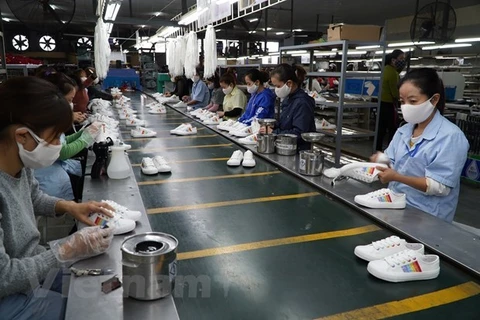
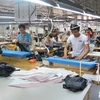
Businesses advised to diversify capital sources in new context ảnh 1Workers package products at the factory of the Vinh Yen Shoes JSC in Vinh Phuc province (Photo: VNA)
Hanoi (VNA) - Participants at a May 7 workshopin Hanoi recommended that Vietnamese businesses diversify capital sources fundingtheir activities in the new context instead of being over-reliant on thebanking system.

Addressing the workshop, Chairman of theEconomist Club Dang Duc Thanh said enterprises are operating in a volatile anduncertain environment amid global climate change, unpredictable epidemics andpandemics like SARS, Ebola, and COVID-19, and other challenges such as terrorism,lack of water resources and food, and cyber insecurity. Given this, they have significantdemand for medium- and long-term capital.

However, he pointed out, their own capitalaccounts for just 20-30 percent while the remainder comes from credit from commercialbanks, which are often unable to meet their demand for medium- and long-termcapital.

The enforcement of free trade agreements (FTAs),especially new-generation agreements like the EU-Vietnam FTA and the Comprehensiveand Progressive Agreement for Trans-Pacific Partnership (CPTPP), will createsubstantial opportunities for Vietnamese enterprises to boost exports andattract more foreign investment, both direct and indirect. COVID-19 has alsotriggered a shift in production and supply chains to developing countries likeVietnam.

Local companies therefore need ready capital to seizeinvestment and business opportunities, Thanh said.

Experts at the workshop noted that Vietnamese enterprisesare over-reliant on bank loans while the credit market is currently“overloaded” since it has to concurrently provide short-, medium-, andlong-term capital for businesses and the economy.

As the strength of Vietnamese banks remainsmodest, to ensure capital supply, they must borrow short-term capital, mostlyfrom individual clients, to issue medium- and long-term loans, which posesconsiderable risk to the banks themselves as well as to businesses and theeconomy, they added.

Nguyen Hoang Phuong, Director of Business Trainingand Support at the Ho Chi Minh City Securities Corporation, said that listingon the Unlisted Public Company Market (UPCoM) and raising finance from thestock market are considered effective measures for companies with capital ofless than 30 billion VND (1.3 million USD).

He also identified angel investors and venturecapital funds as capital sources.

Le Anh Tu, a senior advisor at PwC Vietnam, saidthat due to the pandemic, enterprises around the world are now tending to seekcapital from non-bank sources like the stock and bond markets or viacrowd-funding and crypto currencies.

To meet demand in the post-pandemic context, thefinancial services sector has been introducing swift changes. Many fintech companiesare also emerging and directly competing with banks. Traditional banksthemselves have also had to quickly adapt to new trends to stay competitive,the workshop heard./.
VNA

See more

Vietnam is strengthening its position in the technology value chain, becoming a major manufacturing hub for complete consumer electronics products. (Photo: VNA)

ESG standards offer opportunities to reposition Vietnam’s electronics firms

The 2025-2027 period will be a critical turning point, as exporters to the European market will be required to strictly comply with ESG standards, including net-zero emissions roadmaps, labour standards, corporate governance and transparency requirements. As a key export sector, the electronics industry is being directly and strongly affected by this shift.

A production line for camera modules and electronic components at the factory of MCNEX VINA Co. Ltd, a Republic of Korean-invested company in Phuc Son Industrial Park, Ninh Binh province. (Photo: VNA)

Science, technology, innovation as engines of economic growth

To ensure that science and technology truly act as a powerful growth engine, experts emphasised the need for the Government to put in place supportive mechanisms and policies that encourage enterprises to invest in research and development, while strengthening cooperation among the State, research institutions and the business sector.

The headquarters of the Ministry of Industry and Trade in Hanoi (Photo: VNA)

PM updates lead roles to drive UKVFTA forward

The Ministry of Industry and Trade (MoIT) is named the lead agency, with overall responsibility for the agreement’s general goals and definitions, trade remedies, non-tariff barriers to trade and investment in renewable energy, competition policies, State-owned enterprises, enterprises with special or exclusive rights and those with designated monopolies, as well as institutional, general and final terms.

Vietravel Airlines is taking measures to enhance service quality and optimise operations amid high travel demand during Tet. (Photo: VNA)

Vietravel Airlines to add new route serving Lunar New Year travel peak

During the peak period of the Lunar New Year (Tet) festival in 2026, Vietravel Airlines plans to operate six – eight flights daily on the Ho Chi Minh City – Hanoi route, three flights daily on the Ho Chi Minh City – Da Nang and Ho Chi Minh City – Vinh routes; and two flights daily on the Ho Chi Minh City – Quy Nhon route.

The completion of Can Tho - Ca Mau expressway has helped shorten travel time from Can Tho to Ca Mau to just one hour and a half (Photo: VNA)

Can Tho–Ca Mau expressway fully opens from January 19

The new section, together with the Can Tho–Hau Giang segment that has been operating smoothly since late December last year, has completed the entire 110.85-km route. With total investment exceeding 27.52 trillion VND (1.04 billion USD), the four-lane expressway is built to modern standards and serves as a key transport artery linking major economic and political centres, industrial zones and seaports in the southwestern region.

Vietnam aims to export 7 million tonnes of rice in 2026 (Photo: VNA)

Vietnam to proactively reduce rice exports from 2026

Do Ha Nam, Chairman of the Vietnam Food Association (VFA), said that 2026 presents numerous difficulties and challenges, and the global supply glut significantly impacts all exporters, including Vietnam.