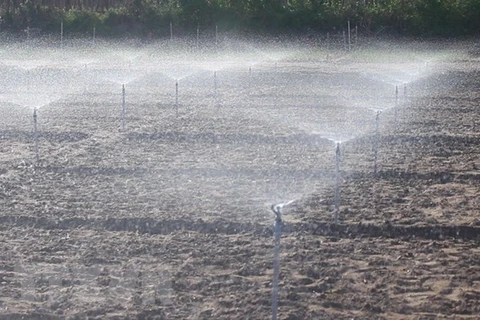
A rice field in Dong Thap province. Businesses are starting to develop a circular economic value chain for their products. (Photo: VNA)
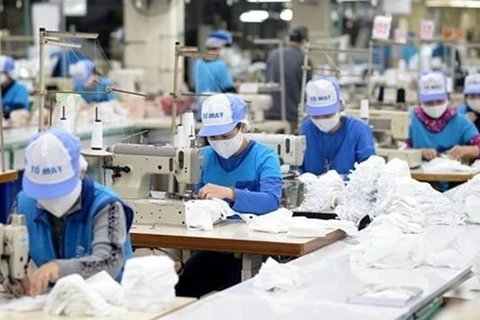
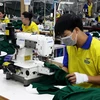
 The company has a sustainability programme based on the 4Rs (reduce water, energy and chemical; reuse water and energy; recycle raw material; and respect ethical labour practices), she said.
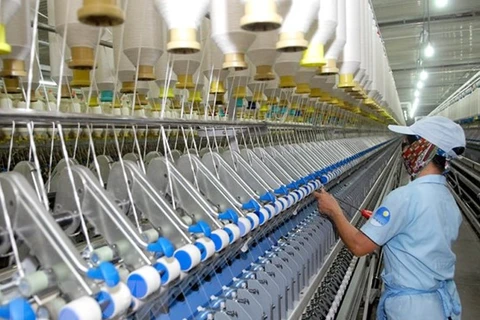
“By using the latest technological advances in the production chain, not using harmful chemicals, implementing energy saving programmes, and reducing emissions, we are able to make products that are sustainable and consumer- and environment-friendly.
“In the past the company had to use 40 litres of water to produce a pair of jeans. Today, with modern machinery and technology, we need only 4% of that to make a similar product.”
Sustainable production also enables her company to “create a better working environment for employees, meet the rising demand of and gain credibility with customers, especially high-end brands, improve competitiveness and get more orders,’’ she said.
In 2022, though the textile and garment industry was mired in difficulties due to a lack of export orders, PPJ achieved growth of 20%, she added.
Dairy giant Vinamilk has invested more than 3 trillion VND (128 million USD) in its three ecological dairy farm chain, Green Farm, which has embraced the circular economy, regenerative agriculture and technologies to minimise its environmental footprint and emissions.
Vinamilk has said it plans to make its 13 other farms also green in the near future.
Other businesses are starting to deploy circular economic value chains for their products.
Thanh Binh Co., Ltd. in Dong Thap province, for instance, uses the straw left after harvesting rice to grow straw mushrooms, rice husk to make pellets to be used as fuel for export and rice bran to make cooking oil and animal feed.
The fisheries sector too had seen many sustainable programmes, Trương Đình Hòe, general secretary of the Vietnam Association of Seafood Exporters and Producers, said.
Kien Giang province has approved a sustainable fisheries development project in Hon Dat district on an area of around 5,500ha to be implemented over the next three years.
Businesses in Ca Mau Province are promoting high-value aquaculture using the shrimp-forest farming model, which does not use drugs or chemicals, and helps protect forests.
The province has more than 27,500ha of shrimp-mangrove forests, of which 19,000ha meet international quality standards (Naturland, EU Organic, Canada Organic, Selva Shrimp, ASC, BAP...).
“Their products are popular in many markets,” Hoe said.
But certain issues are preventing many firms from going green.
Lien listed the high cost of investment in technology and equipment and need for qualified technical personnel hurdles to achieving sustainability.
But Hoe said: “The development of agricultural production towards green economy is an inevitable trend that must be followed sooner or later. Therefore, we must convince and mobilise farmers and enterprises to embrace the green economy.”
Inevitable trend
Speaking at the Vietnam Export Promotion Forum late last year, Minister of Industry and Trade Nguyen Hong Dien said green growth and circular economy were becoming global trends as part of efforts to reduce greenhouse gas emissions and achieve carbon neutrality.
Major import markets were imposing high taxes on products with large "carbon footprints" and many developed economies had set strict environmental regulations for imports, he said.
So exporting countries like Vietnam needed to change their mindset and pay more attention to the "greenness" of their supply chain and trade, he added.
Jean-Jacques Bouflet , vice chairman of the European Chamber of Commerce in Vietnam, said Vietnam had taken advantage of free trade agreements to diversify and increase exports.
The trade deals, especially the EU-Vietnam FTA, have commitments both in terms of trade and social responsibility for sustainability, including the creation of environment-friendly products, he said.
“Consumers around the world, particularly in Europe, are focusing more and more on values that go beyond product quality such as green and sustainable manufacturing processes,” he said.
Therefore, Vietnam’s exporters would have to restructure to meet the social responsibility and environmental standards, he said.
Bartosz Cieleszynski, deputy head of the trade section, EU Delegation to Vietnam, said: “The results of the EVFTA are already very significant. With widespread coverage of full dismantling of nearly all tariffs for 71% of Vietnamese exports to the EU and 65% of the EU’s exports to Vietnam, the advantage of market access is unquestionable.”
“On one hand, such tariff elimination promotes two-way trade. On the other, and more importantly, the full elimination of tariffs together with commitments in the chapter of Trade and Sustainable Development should enable stronger trade flows of green products.”
Assoc Prof Dr Nguyen Hong Quan, director of the Institute for Circular Economy Development at the Vietnam National University - HCM City, said a survey done by McKinsey found that 63% of consumers consider the sustainability of brands when making purchase decisions.
According to a Nielsen market report, the global market for “green” products is growing faster and more profitable than its “brown” counterparts, he said./.
VNA