Ca Mau Petroleum Fertiliser JSC sets sight on Australia, NZ

The Ca Mau Petroleum Fertiliser JSC (PVCFC) is preparing high-quality shipments to officially enter Australia and New Zealand, two of the world's most demanding fertiliser markets.
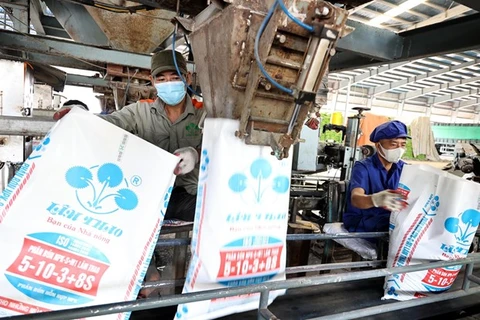
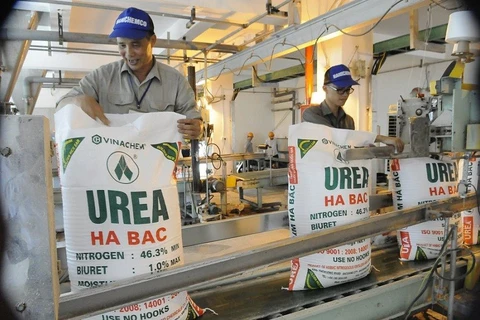
Ca Mau Petroleum Fertiliser JSC sets sight on Australia, NZ ảnh 1At Ca Mau fertiliser plant (Photo: VNA)
Hanoi (VNA) – The Ca Mau Petroleum Fertiliser JSC (PVCFC) is preparing high-quality shipments to officially enter Australia and New Zealand, two of the world's most demanding fertiliser markets.

According to a PVCFC representative, Australia and New Zealand are willing to pay premium prices for urea granular fertiliser, but they have stringent quality standards.

In response, PVCFC has gradually improved the quality of all stages from transportation to loading and unloading services since the onset of this year. The goal is to ensure that its urea shipments meet the highest quality standards and achieve superior loading and unloading speeds compared to the global average.

PVCFC also said it is completing the final procedures to get a license to export urea granular products to Australia.

In the first two months of this year, PVCFC’s urea equivalent production reached 165,220 tonnes, exceeding the plan by 8% and reflecting a 4% year-on-year increase. This strong production performance translated into impressive revenue figures, estimated at over 1.4 trillion VND (56.8 million USD) in the first two months of this year, surpassing the plan by 15%.

As of late 2023, the Ca Mau Fertiliser products were present in over 18 countries worldwide. Currently, PVCFC is preparing a shipment of 35,000 tonnes for export to Mexico.

Last year, the company exported 344,000 tonnes of fertilisers, making up about 26% of its total sale, with export value reaching 136 million USD, representing some 25% of the revenue from fertiliser products. Cambodia emerged as the largest export market, contributing over 60% of both export volume and value./.
VNA
See more

Thanks to digital transformation among local officials, Tam Dao commune of Phu Tho province has achieved an almost 100% on-time rate for processing administrative applications, helping improve public services for residents. (Photo: VNA)

Institutional reform fuels private sector's growth in Phu Tho province

The private sector is increasingly emerging as a key growth engine of the economy. To unleash its potential and ensure sustainable development, the northern province of Phu Tho is stepping up institutional and administrative reforms to cut costs, shorten procedures, and build a more transparent, business-friendly investment climate.

Hoa Phat Wharf inside the Dung Quat Economic Zone (Photo: VNA)

Dung Quat EZ, Quang Ngai IPs draw nearly 19.4 bln USD

The Dung Quat Economic Zone and Quang Ngai industrial parks have so far attracted 441 projects worth around 19.4 billion USD, according to the Dung Quat Economic Zone and Quang Ngai Industrial Parks Authority (DEZA).

The Kim Long Motor Hue factory (Photo: VNA)

Hue courts capital to turn industrial zones into growth engine

The economic and industrial zones in Hue city host more than 200 active investment projects worth over 152 trillion VND (5.84 billion USD), with 139 already operational. Since the start of 2026, they have generated about 32 trillion VND, contributed 4.2 trillion VND to the state budget and brought in 730 million USD in exports, while employing more than 46,000 workers.

Processing cashew nuts for export at Nguyen Thong Co., Ltd. in Dak Lak province. (Photo: VNA)

Vietnam’s exports to New Zealand post strong growth

According to the Customs Department, two-way trade reached 844 million USD in the first half of 2026, of which Vietnam’s exports to New Zealand totaled 399.7 million USD, up 18.8% year-on-year, while imports stood at 444 million USD.

Starting from September 2026, agricultural products from the Mekong Delta are expected to be transported directly from Cai Cui Port to Guangxi, China. (Photo: VNA)

Investing in logistics to boost agricultural production and exports

Logistics is increasingly becoming a major bottleneck for exports as transport costs rise and requirements for data management, low emissions and supply chain transparency become more stringent, requiring coordinated investment in logistics infrastructure, data infrastructure and transport capacity.

Harvesting rice in the Mekong Delta (Photo: VNA)

Vietnam seen as gateway for Canadian farm produce to ASEAN

As Canada steps up trade diversification and seeks to reduce its dependence on the North American market, Vietnam could serve both as a market for Canadian goods and a base for Canadian businesses to build production capacity and expand operations in the region.

Illustrative image (Photo: VNA)

Turkish cooperatives open sourcing channel for Vietnamese businesses

The Vietnam Trade Office recommended that Vietnamese businesses in agriculture and food actively study cooperative networks in different localities in Türkiye and consider them an additional channel for accessing raw materials, processing partners, and distribution networks.

Delegates at the signing ceremony (Photo: VNA)

VPI, Beicip-Franlab Asia deepen oil, gas cooperation

Under the MoU, VPI and Beicip-Franlab Asia will undertake advanced studies in geology, geophysics, and reservoir engineering to support exploration, field development, and oil and gas resource assessment.

A visitor explores Vietnamese coffee at the expo. (Photo: VNA)

Vietnam pushes coffee, farm produce at Hong Kong food expo

After nearly 200 years, especially since the Doi Moi (renewal) began in 1986, Vietnamese coffee is now exported to more than 100 countries and territories and supports about 2.6 million jobs. Vietnam remains the world’s second largest coffee exporter, holding roughly 19-21% of the global market, and is the top producer of Robusta coffee.

Delegates at the event (Photo: VNA)

Da Nang hosts 2026 International Logistics Forum

Co-hosted by the Ministry of Industry and Trade and the Da Nang People’s Committee, the forum put modern logistics, strategic infrastructure, digital transformation, green growth and international connectivity at the centre of discussions.