Capital market could be major financial source for private sector: WB

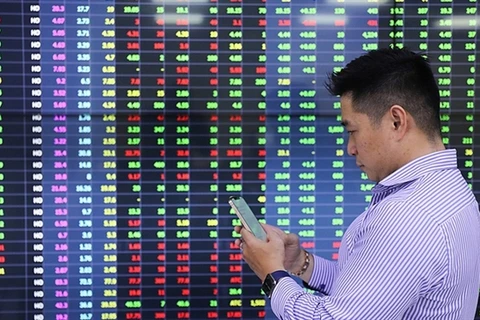
The Vietnamese equity market boasts strong potential to become a major source of financing for the private sector, according to specialists from the World Bank.

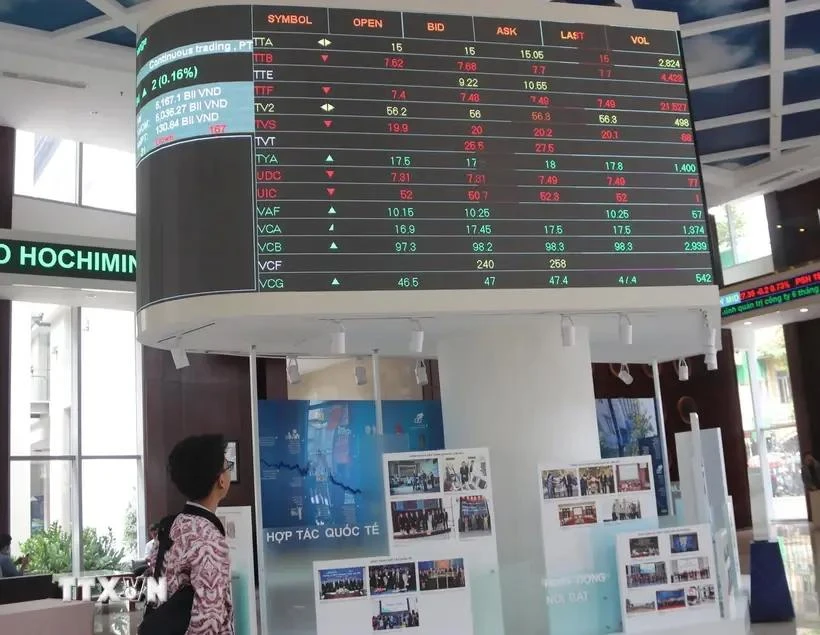
At the Ho Chi Minh Stock Exchange (Photo: VNA)

Hanoi (VNA) – The Vietnamese equity market boasts strong potential to become a major source of financing for the private sector, according to specialists from the World Bank.

In the Taking Stock August report “Reaching New Heights in Capital Markets”, WB experts reported that underpinned by robust macroeconomic conditions, Vietnam’s capital market has developed strongly over the past decade.

Healthy economic growth, a stable exchange rate, low inflation, and political stability have positioned the market to match with regional markets in terms of their relative size. The stock market reached over 90% of GDP in 2023, which is on par with Indonesia. Market capitalisation grew from 38% to 58% of GDP, and even hit a peak of 93% in 2021.

However, when evaluated through its success in intermediating finance, Vietnam’s capital market indicators reveal a unique opportunity for further growth.

Regarding funding, despite a high equity market capitalization, the amount of funds raised through the stock exchanges over the past five years has been relatively small.

The WB reported that without the large weight of institutional investors in the corporate securities market, individual investors tend to dominate, creating volatility from herd behavior. This has partly contributed to the accumulation of risk within the corporate bond market, and stunts the development of its financial role for the corporate sector.

They said not only is the average size of companies in the market smaller than in regional countries, the availability of shares is also adversely impacted by foreign ownership limits applied to certain industries.

A wider investor base, particularly an expanded presence of institutional investors, could help stabilise stock prices, they suggested.

Since the health of the equity market is seen as a barometer of the nation’s market economy, it is crucial to maintain the long-term growth trajectory with reduced volatility.

Vietnam needs to lure significant international investment to drive its long-term growth so as to deliver on its high-income nation target.

Vietnam is currently classified as a frontier market by MSCI, and FTSE Russell – two of the world’s largest index providers by amounts of funds following their indices. An upgrade to emerging market status would be a driver draw in foreign investors, and equity and liquidity of sufficient size.

With the elevation, the securities market could mobilise 5 billion USD, and inflows could reach 25 billion USD by 2030 if strong reforms are put in place, and the global investment climate remains healthy.

According to Barry Weisblatt David, Head of Research at VNDirect Securities JSC, bank credit will grow 14% this year, causing listed firms to increase 18%.

Relishing the prospect of a positive scenario, he said the VN-Index will close 2024 with over 1,400 points, making a Price-to-Earnings ratio of 14.8x feasible.

He suggested investors pay attention to the banking and steel sectors, saying they are the best sectors to invest in toward the remainder of the year./.

VNA

See more

Toy production at a Hong Kong-invested factory (Photo: VNA)

Vietnam targets deeper market penetration in Hong Kong in 2026

Vietnam-Hong Kong trade hit 62.3 billion USD in the first 11 months of 2025, soaring 73.1% annually. Vietnamese exports to Hong Kong amounted to 36.8 billion USD, a 90.6% hike, ranking fourth among Hong Kong’s import sources, while imports from Hong Kong stood at 25.5 billion USD, up 52.9% and ranking third.

Vietnam’s start-up market enters restructuring phase

Vietnam’s start-up market enters restructuring phase

In 2026, venture capital inflows into Vietnam’s start-up ecosystem are expected to recover gradually, though in a more selective manner. VinVentures forecasts that capital will focus on start-ups that have survived the rigorous screening of 2024–2025, possess clear business models, strong commercialisation capacity, and the ability to generate real cash flows.

Workers process tra (pangasius) for export (Photo: VNA)

Vietnam–Singapore trade continues to thrive

For the year as a whole, Vietnam retained its position as Singapore’s 10th largest trading partner. Bilateral trade reached a record high of nearly 40 billion SGD, up 26.2% from the previous peak of 31.67 billion SGD recorded in 2024.

Eric Van Vaerenbergh, an energy expert and lecturer at the Brussels Engineering School (ECAM) (Photo: VNA)

Belgian expert optimistic about Vietnam’s economic outlook

Vietnam should move from a growth model based mainly on expanding capital and labour to one driven by productivity improvements. He said that this requires enhancing the quality of the workforce, particularly engineers, technicians, and managers in industrial sectors.

Workers at the VSIP Hai Phong industrial and urban complex, which specialises in producing electronic components for office equipment. (Photo: VNA)

Roadmap aims to improve business climate and boost competitiveness

By the end of 2026, Vietnam aims to rank among the world’s top 50 performers in the United Nations Sustainable Development Goals, advance at least three places in the International Property Rights Index, and climb at least one position in the Global Innovation Index.

Vietnam is strengthening its position in the technology value chain, becoming a major manufacturing hub for complete consumer electronics products. (Photo: VNA)

ESG standards offer opportunities to reposition Vietnam’s electronics firms

The 2025-2027 period will be a critical turning point, as exporters to the European market will be required to strictly comply with ESG standards, including net-zero emissions roadmaps, labour standards, corporate governance and transparency requirements. As a key export sector, the electronics industry is being directly and strongly affected by this shift.

A production line for camera modules and electronic components at the factory of MCNEX VINA Co. Ltd, a Republic of Korean-invested company in Phuc Son Industrial Park, Ninh Binh province. (Photo: VNA)

Science, technology, innovation as engines of economic growth

To ensure that science and technology truly act as a powerful growth engine, experts emphasised the need for the Government to put in place supportive mechanisms and policies that encourage enterprises to invest in research and development, while strengthening cooperation among the State, research institutions and the business sector.