Central Highlands seeks sustainable water protection

Experts suggested measures to ensure water security and sustainable protection for socio-economic development in the Central Highlands during a workshop in Gia Lai province on July 22.
Central Highlands seeks sustainable water protection ảnh 1Scene of the workshop (Source: VTV)

Gia Lai (VNA) – Experts suggested measures to ensure water security and sustainable protection for socio-economic development in the Central Highlands during a workshop in Gia Lai province on July 22.

They recommended enhancing the capacity to provide sufficient water for agricultural production, industry and local daily activities.

Subsequently, it is essential to continue seeking groundwater and creating a fund to support water for residents, while making survey on and a planning scheme for water resources in the region and building a master plan for irrigation development until 2020 and with a vision to 2030.

Participants proposed prioritising investment in upgrading medium- and large-sized water reservoirs and supporting afforestation and forest protection projects as well as modernising irrigation systems, improving capacity to deal with inundation in flood-prone areas, and enhancing water resources management in accordance with the Law on Water Resources.

There are four big rivers running through the Central Highlands , namely Se San, Ba, Srepok and Dong Nai. Based on this natural advantage, the State injected money to build a hydropower and irrigation system to serve socio-economic development in the region.

Currently, the Central Highlands is home to 2,354 irrigation facilities, including 1,190 water reservoirs, 972 dams, and 130 water pumping stations, which could provide water for nearly 300,000 hectares of plants.

However, the ineffective and unreasonable use of water along with climate change has affected the sustainable water resources development in the region.

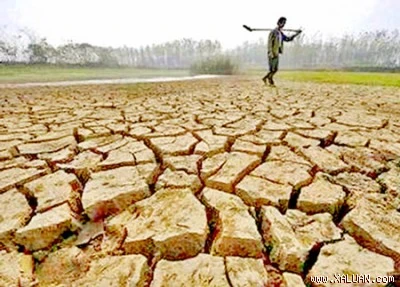
The serious drought in the first months of 2016 significantly affected local production and life activities. Over 35 percent of rivers and 40 percent of small lakes in the region ran out of water. By the end of June, 2016, the region had 180,000 hectares of withering crops. The total economic loss amounted to 5.5 trillion VND (247.5 million USD) while 70,000 households faced water shortages.

The workshop was jointly held by the Steering Committee for the Central Highlands, People and Nature Reconciliation (PanNature), and Vietnam Rivers Network under the Vietnam Union of Science and Technology Associations.-VNA
VNA

See more

The forum takes place in Hanoi on August 25, 2026. (Photo: VNA)

Vietnam, RoK promote cooperation to deliver on net-zero commitments

Sectors such as semiconductor manufacturing, nuclear power, science and advanced technologies are playing an increasingly important role in national competitiveness and economic development of each country. They also offer considerable room for Vietnam and the RoK to expand professional exchanges, share experience and promote cooperation, particularly among their energy experts.

Storm Narra's projected path as of 7:00 on August 22. (Photo: National Centre for Hydro-Meteorological Forecasting)

Storm brings heavy rains to northern Vietnam

Storm Narra, the fourth to hit the East Sea this year, brought strong winds and heavy rains to northern Vietnam on early August 22, with some areas forecast to receive more than 500mm of rain as the storm moves slowly over the northern waters of the East Sea.

A view of the meeting between Phu Tho authorities and a visiting delegation from Germany's KfW Development Bank in the province on August 20, 2026. (Photo: VNA)

Phu Tho, German bank discuss wastewater treatment plan for Da River's left bank

The project is being implemented in the former Hoa Binh city, now Hoa Binh ward. It has a total investment of 688.7 billion VND (26.38 million USD), including 507.3 billion VND in ODA and 181.4 billion VND in counterpart funding. Major components include a wastewater treatment plant, pumping stations, a collection network, and connection infrastructure.

Construction workers reinforce steel and pour concrete to cover the underground drainage channel, helping collect rainwater and tackle flooding in Da Nang. (Photo: VNA)

A new “shield” against climate change

Smart urban areas are no longer simply about technology; they are becoming a tool that enables authorities to forecast risks, adapt quickly and protect their residents.

Vietnam is exerting efforts to cope with climate change. (Illustrative photo: VNA)

Vietnam approves carbon credit pact with Singapore under Paris Agreement

Signed on September 16, 2025, the Implementation Agreement on carbon credits collaboration under Article 6 of the Paris Agreement on climate change affirms Vietnam and Singapore’s pioneering role and commitment to close cooperation in the international carbon market, making a substantive contribution to global climate response.

A view of Vo Cuong ward, Bac Ninh province (Photo: VNA)

Bac Ninh earmarks over 1.7 billion USD for environmental protection

By 2030, Bac Ninh aims to ensure that all operating industrial clusters and industrial parks have centralised wastewater treatment systems meeting standards, while at least 95% of wastewater in Grade-I urban areas and 70% in Grade-II urban areas is collected and treated to required standards.

Many inland canals in Can Tho city dries up following a prolonged period of extreme heat. (Photo: VNA)

Government adopts action programme on environmental protection, climate resilience

The programme aims to translate the Party's orientations into concrete actions while strengthening environmental governance, enhancing climate resilience, and promoting a green, circular and low-carbon economy. It will serve as the basis for ministries, sectors and localities to formulate implementation plans for the 2026–2030 period, with a vision to 2045.