Project launched to develop red-headed crane flock in Tram Chim National Park

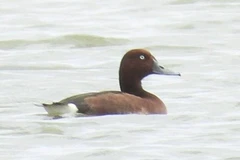
The Mekong Delta province of Dong Thap on December 12 launched a project to preserve and develop red-headed crane (scientifically known as Grus antigone sharpie) population in Tram Chim National Park.

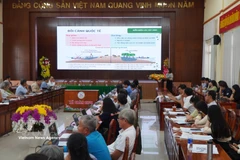
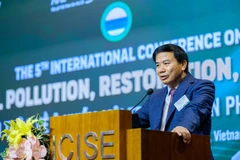
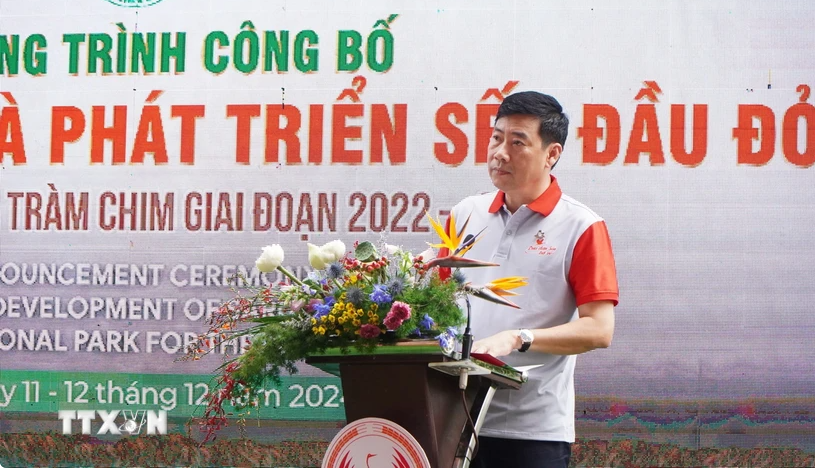
Chairman of the provincial People’s Committee Pham Thien Nghia speaks at the launching ceremony (Photo: VNA)

Dong Thap (VNA) – The Mekong Delta province of Dong Thap on December 12 launched a project to preserve and develop red-headed crane (scientifically known as Grus antigone sharpie) population in Tram Chim National Park.

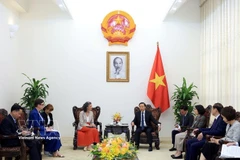
The launching ceremony drew the participations of officials from Vietnamese ministries and sectors, international organisations, the Thai Embassy in Vietnam, and domestic and foreign experts.

According to Chairman of the provincial People’s Committee Pham Thien Nghia, the Tram Chim National Park, covering over 7,313 hectares, is one of the last remaining wetland ecosystems of the historic Dong Thap Muoi region. The park is home to an impressive array of biodiversity, including 130 plant species, 130 freshwater fish species, and more than 230 bird species, among which the red-headed crane holds particular significance. In 2012, the Tram Chim National Park was recognised as the fourth Ramsar site in Vietnam and the 2,000th in the world.

Nghia said that red-headed crane is a rare species listed in the IUCN Red List of threatened species. In the past, thousands of these cranes migrated to Tram Chim each year. However, the population has steadily declined in the face of rapidly changing environmental factors. As a result, urgent measures are needed to study, nurture, and conserve the species. The red-headed crane holds significant cultural and spiritual value for local communities, symbolising both heritage and identity.

As part of efforts to bring the cranes back, Dong Thap has developed and approved the project to preserve and develop the red-headed crane population in the Tram Chim National Park in the 2022-2032 period. It aims to restore and grow the population of cranes in the park by breeding and reintroducing them into the wild. Over the next decade, the project aims to release 100 cranes, with at least 50 surviving in the wild. The ultimate goal is for the population to breed and thrive naturally in the park throughout the year.

The project includes various activities such as the reception and care of transferred cranes, research on breeding, and reintroducing the species to the park. Efforts will also focus on restoring the ecosystem and habitats that support the cranes, in line with the broader goal of preserving the biodiversity of the Dong Thap Muoi region. Additionally, the project will promote sustainable agricultural practices, including eco-friendly rice farming, that support both the livelihoods of local people and the natural environment where the cranes will be released.

Dong Thap has signed a memorandum of understanding among parties and a deal with Thai partners serving the work, while implementing several ecosystem restoration programmes within the Tram Chim National Park. The province has also launched an ecological rice farming model aimed at organic agriculture, alongside constructing facilities for crane care and providing technical training for staff involved in crane conservation./.

VNA

See more

Tram Chim National Park and the Mekong Conservancy Foundation (MCF) organise the workshop on sustainable restoration of wetland ecosystems in the Mekong Delta on March 24. (Photo: VNA)

Solutions sought to restore Mekong Delta wetland ecosystems

Experts at the workshop described wetlands as the “ecological heart” of the Mekong Delta, playing a vital role in water storage and regulation, climate moderation, carbon sequestration, biodiversity conservation, and livelihoods for millions of people through aquaculture, agriculture, and ecotourism. These ecosystems also help reduce disaster risks and enhance climate resilience.

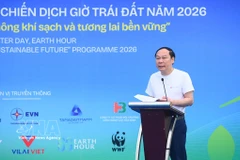
Deputy Minister of Agriculture and Environment Le Cong Thanh speaks at the ceremony to launch major environmental campaign. (Photo: VNA)

Vietnam calls for collective action on water, air, climate and sustainable future

Deputy Minister of Agriculture and Environment Le Cong Thanh underscored that water, climate, and energy are fundamental pillars of sustainable development. In Vietnam, water resources and weather patterns influence every aspect of life, from food and water security to livelihoods, ecosystem stability, and economic growth.

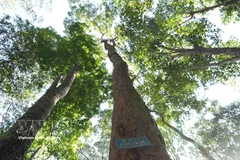
The population of trac (Dalbergia cochinchinensis) trees is strictly protected in the Dak Uy special-use forest. (Photo: VNA)

Vietnam highlights forests’ role in sustainable growth on International Day of Forests

According to Director of the Forestry and Forest Protection Department Tran Quang Bao, forests hold a strategic position in Vietnam’s development. They provide livelihoods for millions of people, particularly ethnic minorities and communities living in mountainous and forested areas, while contributing to environmental protection and disaster prevention.

The World Meteorological Day 2026 carries the theme “Observing Today, Protecting Tomorrow”. (Photo: VNA)

Ministry guides response to World Meteorological Day, World Water Day 2026

The Ministry of Agriculture and Environment urged ministries, agencies, local authorities, embassies, and international organisations to hold practical and effective activities aligned with the themes. Suggested activities include displaying eco-friendly banners, posters, and billboards in public spaces, streets, government offices, and other suitable venues to raise public awareness of the events’ importance.

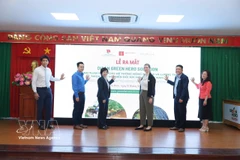
Delegates launch the Green Hero Solution project in Ho Chi Minh City on March 12, 2026. (Photo: VNA)

Vietnam, Denmark cooperate to pilot circular food model

Under the “Green Hero Solution” project, organic food waste will be collected from partner organisations and businesses and processed into compost. The compost will then be used at two Food Bank community gardens, where fresh vegetables will be grown to support disadvantaged households.

Deputy Prime Minister Tran Hong Ha meets with UNDP Resident Representative Ramla Khalidi and WHO Representative in Vietnam Angela Pratt in Hanoi on March 11. (Photo: VNA)

Vietnam steps up partnership with UNDP, WHO in tackling air pollution

Highlighting Vietnam’s close partnership with the two UN agencies, Deputy PM Ha highly appreciated their important contributions to the country’s development over the years, particularly in policy consultation, institutional reform and promoting sustainable development initiatives.

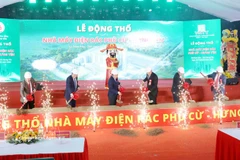
The groundbreaking ceremony for the Phu Cu waste-to-energy plant project in Doan Dao commune, Hung Yen province, on March 6 (Photo: VNA)

Hung Yen breaks ground on 4 trillion VND waste-to-energy plant

With a population of about 3.5 million, Hung Yen generates around 1,850 – 2,000 tonnes of household waste each day, along with about 1,000 tonnes of waste from production and business establishments, posing a major challenge for the locality.