Legal framework set up for domestic carbon exchange

The carbon credit exchange will operate under a centralised model subject to strict state supervision, with tradable assets including greenhouse gas emission quotas and eligible carbon credits.

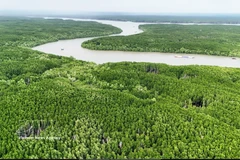
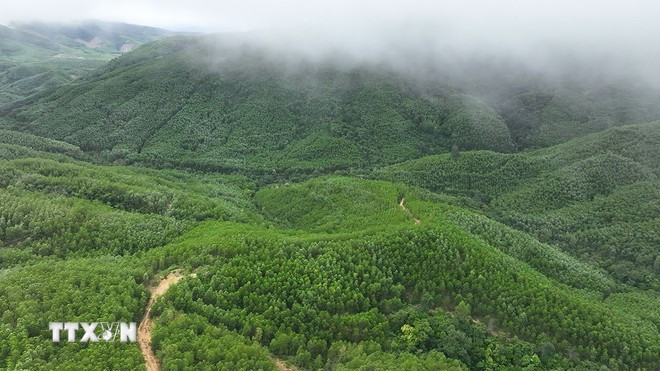
From 14.9 million hectares of forests, Vietnam’s potential is estimated at around 70 million tonnes of carbon credits (Photo: VNA)

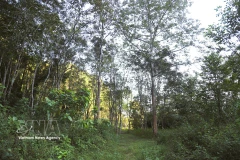
Hanoi (VNA) – As a key foundation for Vietnam to achieve net-zero emissions by 2050 lies in its substantial carbon absorption capacity from forests, seas and natural ecosystems, the Government has recently issued a decree aiming to deal with the measuring, converting and gradually establishing of a carbon credit trading market, which is seen as an essential solution to offset greenhouse gas emissions.

Establishing exchange model

Under Decree No. 29/2026/ND-CP dated January 19, 2026 on the domestic carbon exchange, which took effect upon issuance, the exchange will operate under a centralised model subject to strict state supervision.

According to the decree, the Hanoi Stock Exchange will organise and operate the trading system, the Vietnam Securities Depository and Clearing Corporation will provide custody and settlement services, and the Vietnam Stock Exchange will oversee overall market supervision. Tradable assets include greenhouse gas emission quotas and eligible carbon credits permitted under Decree No. 06/2022/ND-CP (amended). Trading, ownership transfer, custody and settlement processes are standardised to ensure transparency and effective risk control.

Exchange activities cover trading support services, operation of trading and settlement systems, quota deposits and transaction settlement, all conducted under principles of openness, transparency and fairness. Each participant may hold only one trading account, while carbon custody members must meet securities-law requirements, ensure adequate IT infrastructure and not be subject to operational warning or suspension.

The establishment of the exchange marks Vietnam’s first official domestic carbon trading mechanism, although the country has previously participated in emission trading projects with partners in Japan and Europe. According to the Ministry of Agriculture and Environment, Vietnam currently has more than 260 projects transferring tens of millions of carbon credits, generating trillions of VND annually.

The decree is expected to create opportunities for organisations and individuals managing carbon-generating resources, major emitters, and enterprises able to trade unused emission quotas.

Gradually addressing bottlenecks

Despite strong potential, the carbon market faces several challenges. Allocation of emission quotas must ensure objectivity and transparency to prevent misuse, while pricing mechanisms and payment frameworks for carbon source owners require clearer regulations.
cao-toc.jpg
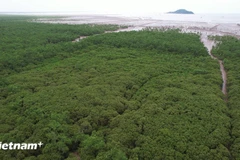
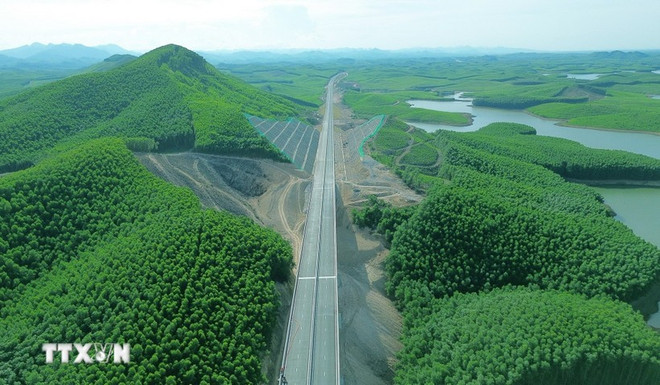
A key foundation for Vietnam to achieve net-zero emissions by 2050 lies in its substantial carbon absorption capacity from forests, seas and natural ecosystems (Photo: VNA)

Vietnam has yet to establish an independent organisation meeting international standards for carbon valuation, and to have legal retulations and detailed guidance for this “intangible” commodity. An incomplete legal framework may pose difficulties for credit institutions conducting related transactions such as trading, deposits and collateralisation.

According to economic expert Dr Pham Duc Anh from the Banking Academy, recognising carbon credits as collateral assets could create new opportunities for both businesses and financial institutions, provided credits are supported by a robust legal framework aligned with international standards.

State management agencies also need effective monitoring mechanisms to ensure credit quality and mitigate risks. International experience shows that carbon credit fraud has caused billions of EUR in losses, underscoring the importance of strict oversight. Many countries, including China, Australia and several European nations, already treat carbon credits as financial assets whose value depends on reliable verification systems and clear legal protections ensuring traceability and transaction legitimacy.

In Vietnam, Decree No. 29/2026/ND-CP introduces initial provisions through a national carbon credit registry system. However, its practical operation and acceptance as collateral, particularly in international transactions, will require further evaluation.

Another challenge is the limited domestic supply of tradable carbon credits. From 14.9 million hectares of forests, Vietnam’s potential is estimated at around 70 million tonnes of carbon credits, but economic utilisation remains modest.

Nguyen Ba Ngai, Vice Chairman and Secretary General of the Vietnam Forest Owners Association, noted that unclear ownership regulations continue to hinder forest-based carbon credit transactions. Meanwhile, marine ecosystems, spanning roughly 1 million square kilometres, also hold significant credit-generation potential, according to the Vietnam Administration of Seas and Islands.

Decree No. 29/2026/ND-CP is, therefore, expected to serve as an important starting point for developing Vietnam’s carbon market in the years ahead./.
VNA

See more

A cycling convoy from the former Binh Duong province (now part of Ho Chi Minh City) parades through the streets to raise awareness in support of Earth Hour 2025. (Photo: VNA)

Earth Hour 2026 launch event rescheduled

The launch ceremony of a nationwide campaign that calls on all citizens to use energy economically and efficiently in response to Earth Hour 2026 will be held on the morning of Saturday, March 21, instead of March 7 as initially planned.

Nghe An neutralises 350kg unexploded wartime bomb (Photo: VNA)

Nghe An authorities safely dispose of 350kg wartime bomb

After inspection, military engineers identified the object as an MK-82 high-explosive bomb, measuring 20cm in diameter and 155cm in length, weighing about 350kg and still fitted with an intact detonator. The bomb was believed to be left over from the war.

Vietnam expands coastal forests to bolster green growth

Vietnam expands coastal forests to bolster green growth

Restoring and developing forests as part of the 2026–2030 coastal forest protection and development project is still a big job. The plan aims to plant 5,088 hectares — including 3,236 hectares of mangroves and 1,852 hectares on soil and sandy land — and to enrich, restore, and improve 1,514 hectares of existing forests, with 683 hectares of mangroves and 831 hectares on soil and sand.

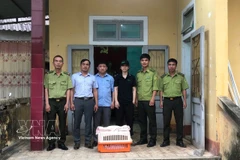
The People’s Committee of Dakrong commune in the central province of Quang Tri, in coordination with the Dakrong Forest Protection Station hand over a small-clawed otter to the Cuc Phuong National Park and the Wildlife Rescue Centre in Vietnam (Photo: VNA)

Quang Tri hands over rare otter to Cuc Phuong National Park

The People’s Committee of Dakrong commune in the central province of Quang Tri, in coordination with the Dakrong Forest Protection Station, on February 26 handed over a small-clawed otter to the Cuc Phuong National Park and the Wildlife Rescue Centre in Vietnam for further care and rehabilitation.

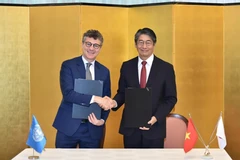
UNESCO Representative to Vietnam Jonathan Wallace Baker and Japanese Ambassador Ito Naoki at the signing ceremony (Photo: baoquocte.vn)

UNESCO, Japan sign deal to bolster Vietnam’s disaster early warning

Climate change adaptation remains a top priority in Vietnam’s development strategy and national security outlook through 2050. Vietnam will maintain close cooperation with Japan, UNESCO and other partners to guarantee the project’s effectiveness and advance common goals.

The German Agency for International Cooperation (GIZ)'s Managing Director Thorsten Schäfer-Gümbel speaks at the working session with the Vietnamese-German University. (Photo: VNA)

Vietnam, Germany step up collaboration on energy transition, green hydrogen

Schäfer-Gümbel praised the strong commitment of Vietnamese partners to sustainable energy goals. He noted that the long-standing development cooperation between Germany and Vietnam is evolving, with energy transition emerging as a strategic area of collaboration in addressing global challenges.

Cat Ba langur is an extremely rare primate species found exclusively in the humid tropical forests of Cat Ba island (Photo: VNA)

Belgian TV spotlight: Vietnam's wild nature reborn

Through the lens of “Le Jardin Extraordinaire”, Vietnam was portrayed not simply as a travel destination but as a still-emerging realm of discovery: a nation whose nature, though heavily wounded in the past, demonstrates extraordinary powers of recovery, quietly upholding its pristine essence against the pressures of time.

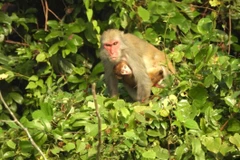
The macaque, scientifically known as Macaca arctoides. (Photo: VNA)

Quang Tri receives endangered stump-tailed macaque

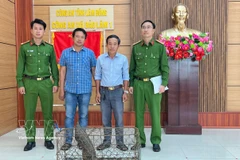
The Cam Lo-Dong Ha forest protection unit in the central province of Quang Tri has received a rare stump-tailed macaque, a species listed as endangered, precious and rare in the Vietnam Red Data Book.

At a ceremony to donate 100,000 trees to the Naval Region 4 (Photo: HANE)

Tree planting programme spreads green momentum in islands

The Ho Chi Minh City Association for Conservation of Nature and Environment (HANE) on January 11 announced 10 outstanding green programmes and activities carried out in 2025, including a programme to plant 1 million trees in Vietnam’s island areas.