Belgian TV spotlight: Vietnam's wild nature reborn

Through the lens of “Le Jardin Extraordinaire”, Vietnam was portrayed not simply as a travel destination but as a still-emerging realm of discovery: a nation whose nature, though heavily wounded in the past, demonstrates extraordinary powers of recovery, quietly upholding its pristine essence against the pressures of time.

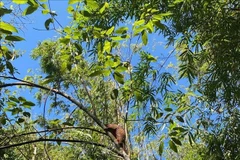
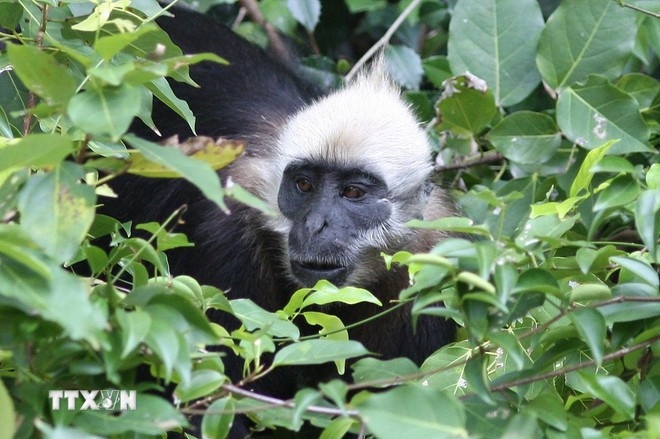
Cat Ba langur is an extremely rare primate species found exclusively in the humid tropical forests of Cat Ba island (Photo: VNA)

Brussels (VNA) – Belgium’s RTBF nature series “Le Jardin Extraordinaire” took viewers on a stunning journey to Vietnam’s remarkably resilient wilderness in its February 1 episode on its La Une, showcasing how the country’s untouched forests, mountains, and biodiversity have rebounded dramatically after decades of war.

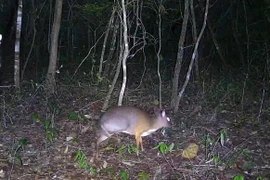
Titled “Wild Vietnam – Mysterious and Extraordinary Nature”, the journey began in isolated nature reserves virtually cut off from the modern world. Ironically, their inaccessibility has become a “shield” protecting some of the planet’s rarest wildlife species. In the tropical forests of Vietnam’s northwestern highlands, where human footprints remain minimal, the pangolin, the world’s most heavily poached mammal, continues its quiet struggle for survival. Higher in the canopy, civets move like shadows, while mossy frogs virtually disappear against the vibrant green backdrop of ancient jungle.

The expedition then shifted to the northeastern coast and the iconic Ha Long Bay, a UNESCO-listed seascape of limestone pillars rising from emerald waters. Here, the ultra-rare Cat Ba langur clings to existence. Endemic to the area and reduced to just a few dozen individuals, the primate has become an emblem of the enduring struggle between conservation gains and mounting human pressures.

yh.jpg
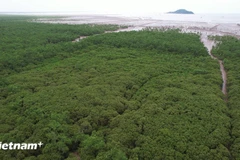
An aerial view of Cat Ba Archipelago (Photo: VNA)

With the arrival of spring, Vietnam’s primaeval forests take on an entirely new appearance. Millions of butterflies, in every imaginable colour and size, erupt into flight at once, creating an otherworldly, almost fragile spectacle. It is a moment when nature reveals its purest beauty, a vivid reminder of the extraordinary richness of the ecosystems found here.

Thanks to a strictly protected network of national parks and nature reserves, Vietnam continues to safeguard its biodiversity “treasures”. Among them is the binturong, or bearcat – a bear-monkey hybrid in appearance, nocturnal, seldom seen, and emblematic of the country's hidden natural wealth and enduring enigma.

Through the lens of “Le Jardin Extraordinaire”, Vietnam was portrayed not simply as a travel destination but as a still-emerging realm of discovery: a nation whose nature, though heavily wounded in the past, demonstrates extraordinary powers of recovery, quietly upholding its pristine essence against the pressures of time./.
VNA

See more

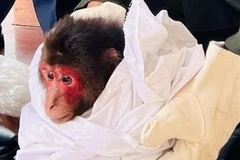
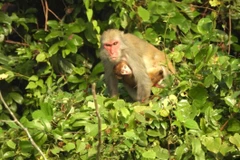
The macaque, scientifically known as Macaca arctoides. (Photo: VNA)

Quang Tri receives endangered stump-tailed macaque

The Cam Lo-Dong Ha forest protection unit in the central province of Quang Tri has received a rare stump-tailed macaque, a species listed as endangered, precious and rare in the Vietnam Red Data Book.

At a ceremony to donate 100,000 trees to the Naval Region 4 (Photo: HANE)

Tree planting programme spreads green momentum in islands

The Ho Chi Minh City Association for Conservation of Nature and Environment (HANE) on January 11 announced 10 outstanding green programmes and activities carried out in 2025, including a programme to plant 1 million trees in Vietnam’s island areas.

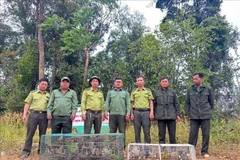
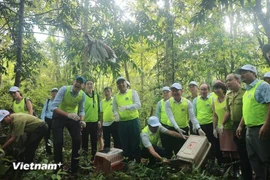
Lam Dong releases hundreds of wild animals into the wild. (Photo: VNA)

Lam Dong releases hundreds of wild animals back into the wild

According to the Ta Dung National Park Management Board, the park has for years served as a trusted destination for authorities and residents to hand over and release wildlife. Such actions not only contribute to biodiversity conservation but also help reduce illegal hunting and captivity of wild animals.

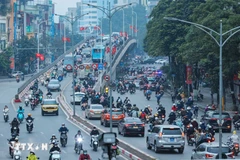
According to the Hanoi Department of Agriculture and Environment, air quality index (AQI) readings have at times reached poor and very poor levels. (Photo: VNA)

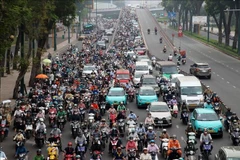
Hanoi targets 20% reduction in PM2.5 levels

Hanoi has affirmed its commitment not to trade environmental protection for economic growth. The city is moving to establish low-emission zones (LEZs) as a core measure to control emissions and promote green, sustainable urban development.

A waste collection area. (Photo: VNA)

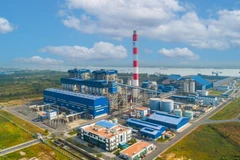
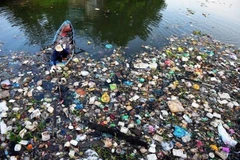
Ca Mau approves investment policy for waste-to-energy plant

The waste-to-energy plant is planned for construction in Dat Moi commune, covering a total area of about 20 hectares. It will have a waste treatment capacity of approximately 600 tonnes of household waste per day and a power generation capacity of 6MW.