Hanoi (VNA) - Vietnam has been urged to enhance control over the impacts on biodiversity, particularly those arising from development projects, in order to achieve sustainable green development in the future.
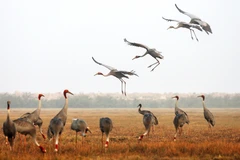
According to the Ministry of Agriculture and Environment, Vietnam is one of the world’s most biodiverse countries, ranking 16th globally. It is home to many endangered, rare, and valuable species, as well as wild genetic resources of national and international importance.
However, nature and biodiversity conservation is under significant pressure from economic development, climate change, environmental pollution, forest degradation, and the invasion of alien species. This is not only a national concern but also reflects a broader crisis - threatening key foundational elements of the economy, food security, and especially public health.
In an interview with the press regarding this issue, Dr. Hoang Thi Thanh Nhan, Deputy Director of the Nature and Biodiversity Conservation Agency under the Ministry of Agriculture and Environment, emphasised the need to strictly control the impacts on biodiversity, especially those arising from development projects.
Important financial resources for sustainable development
Reporter: Could you please share the status quo of biodiversity in Vietnam, as well as the importance of biodiversity conservation in the current context?
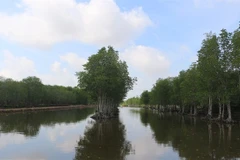
Dr. Hoang Thi Thanh Nhan: Vietnam is one of 16 countries with the highest biodiversity in the world, comprising three major ecosystem groups: terrestrial ecosystems, wetland ecosystems, and marine ecosystems.
According to the national biodiversity report, Vietnam has recorded over 62,600 species of organisms, with new plant and animal species being continuously discovered each year. Among them, 106 species are endemic to Vietnam.
Our country is also one of the world’s centres of genetic resources for crops and livestock, with over 6,000 rice varieties, around 800 plant species, and the origin of approximately 887 livestock breeds.
Vietnam’s natural ecosystems are rich and diverse. They are considered vital natural capital for the sustainable development of many economic sectors, especially agriculture, forestry, fisheries, tourism, and medicinal resources.
Biodiversity also helps shape natural landscapes; it is the root of many of Vietnam’s valuable customs and traditions, and provides a foundation for the country’s sustainable development. Biodiversity conservation is also an important solution to enhance society’s resilience and adaptation to global climate change.
Vietnam's unique and diverse biodiversity is a natural advantage and an essential form of natural capital for national development. It holds significance not only for the current generation but also for future generations. Therefore, the Constitution, the Party’s guidelines, and the State’s policies and laws have all emphasised the importance of biodiversity conservation in achieving the nation’s sustainable development goals.
Reporter: In recent years, what efforts has Vietnam made to fulfill the global biodiversity goals?
Dr. Hoang Thi Thanh Nhan: For many years, Vietnam has been a responsible member of the international community in the field of global biodiversity conservation by participating in and implementing international treaties on biodiversity. We have also incorporated the provisions and guidelines of these treaties into national law through various important legal documents directly related to biodiversity conservation.
A clear example is that the Vietnamese Government approved Resolution 05/NQ-CP dated January 15, 2021, endorsing Vietnam’s support for the Leaders’ Pledge for Nature on the occasion of the UN Summit on Biodiversity held during the 75th session of the UN General Assembly. Vietnam also adopted the Kunming-Montreal Global Biodiversity Framework at the 15th Conference of the Parties to the Convention on Biological Diversity in 2022.
Thanks to the collective efforts of various levels of administration, sectors, organisations, and the community, Vietnam has successfully preserved, invested in, and expanded its forest cover. Despite facing numerous challenges, the current forest coverage has reached 42.02%, which is equivalent to 13,927,122 hectares.
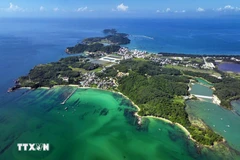
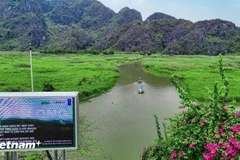
The country has established 178 nature reserves; 11 UNESCO World Biosphere Reserves; three World Natural Heritage Sites; 12 ASEAN Heritage Parks; four UNESCO Global Geoparks; and nine internationally important wetlands (Ramsar Sites) recognised globally.

The conservation of species and genetic resources has also been a priority and has achieved significant progress. As a result, biodiversity provides tangible value in supporting livelihoods and the sustainable development of various economic sectors.
The key objective of biodiversity conservation has been clearly defined in the National Biodiversity Strategy to 2050, aligning with the requirements of the Kunming-Montreal Global Biodiversity Framework. These contents have also been mainstreamed and reflected in strategies across various sectors, and have been translated into specific plans for implementation. Successful implementation of these policies will make a positive contribution to achieving global biodiversity goals.
Strict control of impacts on biodiversity
Reporter: In your opinion, what solutions should Vietnam prioritise in the coming period to promote biodiversity conservation efforts?
Dr. Hoang Thi Thanh Nhan: In the coming period, the Nature and Biodiversity Conservation Agency, as the national focal point for the Convention on Biological Diversity, will continue to promote the establishment of partnerships, mobilise the participation of relevant stakeholders, and strengthen international cooperation. The aim is to implement the goal of biodiversity conservation in accordance with the Convention on Biological Diversity and the National Biodiversity Strategy to 2030, with a vision to 2050.
In addition, solutions that should be implemented in the near future, in my opinion, include the need to improve mechanisms and laws and the institutional framework for biodiversity management. This will ensure unified biodiversity governance, aligned with international commitments and suited to the practical context of the new development phase. It is also necessary to strengthen law enforcement capacity related to biodiversity.
At the same time, we need to mainstream biodiversity conservation into the planning, strategies, and development plans of economic sectors, especially agriculture, forestry, fisheries, tourism, transportation, energy, and land use. Resources should be mobilised to implement the National Biodiversity Strategy and integrate biodiversity conservation targets into relevant planning and policy frameworks.
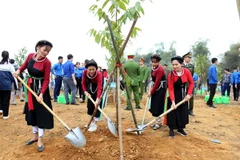
We also need to further promote communication and public awareness to enhance the responsibility for achieving conservation goals in terms of biodiversity. Community participation, along with private sector and stakeholder engagement, should be encouraged in conservation, restoration, and the sustainable use of biodiversity.
It is essential to strictly control the impacts on biodiversity, especially those arising from development projects - by effectively implementing strategic environmental assessments and environmental impact assessments. We must expand international cooperation and technology transfer, and promote scientific research to reach those goals. It is also important to establish and strengthen biodiversity information systems and databases to accelerate digital transformation in the management of natural heritage and biodiversity.
With these solutions, I hope that in the near future, Vietnam will be able to address its greatest current challenge: harmonising the relationship between socio-economic development, environmental protection and the conservation of biodiversity.
Reporter: Thank you very much!