Tree-planting programme exceeds one-billion-tree goal

The total comprises 573.9 million scattered trees and 865.2 million trees grown in concentrated plantations, equivalent to 429,125 hectares of forest. Provinces posting the strongest results include Phu Tho with 177.9 million trees, Lao Cai with 108.8 million, and An Giang with 98.5 million.

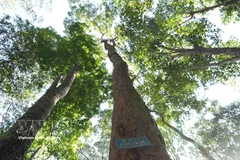
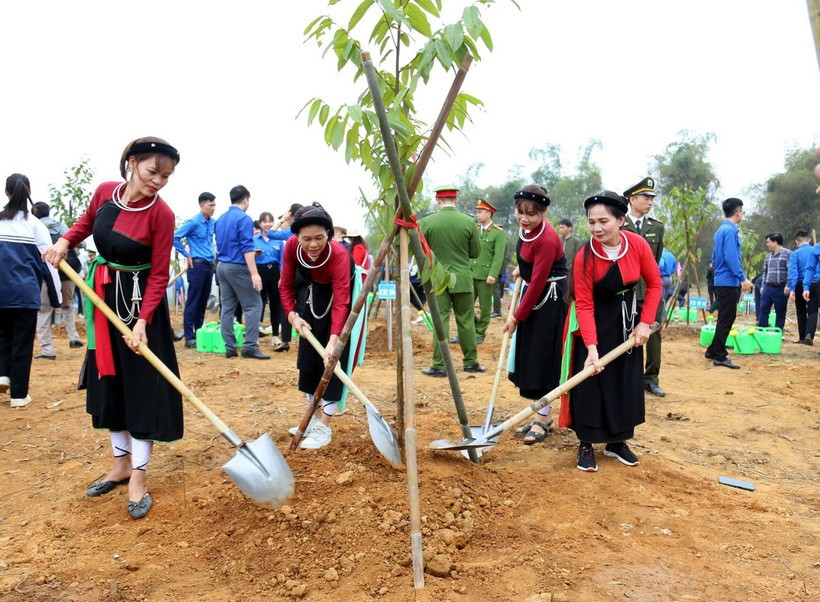
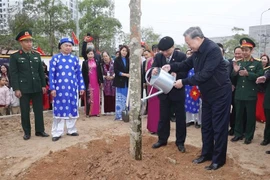
Residents of Tuyen Quang province take part in the One Billion Trees Programme. (Photo: VNA)

Da Nang (VNA) – Vietnam has planted more than 1.43 billion trees over five years of implementing the 2021–2030 one-billion-tree programme, surpassing its original target by 43.9%, reported the Forestry and Forest Protection Department under the Ministry of Agriculture and Environment.

The total comprises 573.9 million scattered trees and 865.2 million trees grown in concentrated plantations, equivalent to 429,125 hectares of forest. Provinces posting the strongest results include Phu Tho with 177.9 million trees, Lao Cai with 108.8 million, and An Giang with 98.5 million.

Beyond native and rare species planted in special-use forests, localities have expanded the cultivation of timber and perennial species in protective forests to reinforce watershed protection, curb soil erosion, retain water, prevent desertification and preserve ecosystems.

Production forests have been developed to supply large timber, fruit trees, and multipurpose non-timber forest products, alongside urban greenery in parks, pavements and public squares. Offices, schools, hospitals, industrial zones, religious sites and residential areas have also incorporated more green spaces to improve the environment, enhance public health and support new-style rural development.

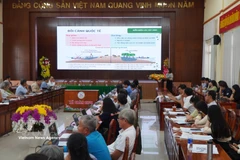
Speaking at the review conference held in Da Nang on December 5, Nguyen Nam Son of the Forestry and Forest Protection Department said funding for the programme in the 2021–2025 period totalled 15.29 trillion VND (580 million USD). State budget resources accounted for 3.17 trillion VND (20.8%), ODA for 350.3 billion VND (2.3%) and other sources for 4.75 trillion VND (31.1%). Social contributions made up the largest share at over 7.01 trillion VND, or 45.9%, demonstrating strong nationwide participation in tree planting and afforestation.

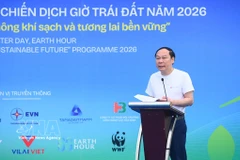
According to Hoang Xuan Huy, External Relations Director at WWF–Vietnam, the results highlight a collective effort involving government agencies, businesses, civil society organisations and millions of Vietnamese citizens. The programme has delivered significant benefits for climate-change mitigation and nature restoration, supporting Vietnam’s implementation of major international commitments, including the Global Biodiversity Framework, the Paris Agreement, the Net Zero target, the 30x30 initiative, the Sustainable Development Goals, and the UN Convention to Combat Desertification.

Huy pointed out that only a few countries have managed a tree-planting project of this scale with such impressive results. Vietnam’s success has been highlighted by the WWF as a standout example of impactful climate and environmental action. The carbon captured by these new forests plays a direct role in Vietnam’s Nationally Determined Contribution and its long-term path toward Net Zero.

At the local level, Tran Ut, Deputy Director of Da Nang’s Department of Agriculture and Environment, said the city has actively embraced the programme through activities such as the annual Tet tree-planting festival in honour of President Ho Chi Minh, Green Sundays, Vietnam Forestry Day and regular planting initiatives in schools, residential areas, parks and along urban roads. These efforts have supported the city’s vision of sustainable development and a greener, more liveable urban environment, he noted

Da Nang has planted more than 53 million trees, equivalent to 95% of its target, and mobilised nearly 200 billion VND for the initiative. The city aims to complete and exceed its target by the end of 2025, Ut added.

Trieu Van Luc, Deputy Director of the Forestry and Forest Protection Department, emphasised that tree-planting and afforestation have become firmly rooted as a cultural tradition, helping maintain Vietnam’s forest coverage rate at about 42%. This demonstrates the forestry sector’s growing role in socio-economic development and environmental protection, particularly as climate impacts, natural disasters and extreme weather become increasingly severe.

The department urged localities and organisations to continue raising public awareness and sustaining the movement, calling on citizens and institutions nationwide to contribute to planting, protecting and nurturing forests and green spaces. Priority should be given to large-timber forests and high-value native species to enhance forest quality, strengthen ecosystem protection, and improve carbon absorption and greenhouse-gas reduction./.

VNA

See more

Construction activity is one of the causes of air pollution in Hanoi. (Photo: VNA)

Hanoi takes urgent measures to curb air pollution

The city requires the enhanced application of advanced technologies and remote monitoring systems, including satellite remote sensing, drones, and AI-integrated traffic cameras, to monitor, detect, and strictly address the illegal burning of garbage, straw, and agricultural by-products.

The World Bank delegation holds working session with Can Tho city People's Committee and relevant units (Photo: VNA)

World Bank delegation surveys Can Tho urban resilience project

The project is jointly financed by the WB with up to 250 million USD and a 10-million-USD non-refundable grant from the Swiss State Secretariat for Economic Affairs (SECO), along with counterpart funding from the Vietnamese Government. Its goal is to build a climate-resilient and sustainable city that can drive socio-economic growth across the Mekong Delta, mitigate flood vulnerability in central Can Tho, and improve inter- and intra-regional transport connectivity.

The direction of Storm Koto as of 04:00 on November 27. (Photo: VNA)

Lam Dong province’s coastal localities brace for Storm Koto

Local authorities have activated round-the-clock duty operations, continuously updated storm warnings and flood information and intensified inspections of riverside and seaside areas, low-lying zones, and locations at high risk of landslides and deep flooding.

Border guard officers at Ky Ha Port Border Gate are assisting residents in securing their boats. (Photo: VNA)

VPA General Staff directs urgent response to Storm Koto

Military Regions 4, 5 and 7 were tasked with directing provincial military commands to advise local authorities, review response plans, and coordinate with relevant departments and sectors to identify disaster-prone areas, including locations at risk of flash floods, landslides, major dykes, embankments and reservoirs, and flood-prone zones, particularly those heavily affected by recent rains.

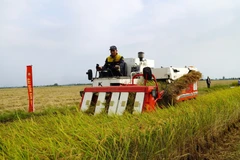
In 2024–2025, the project has implement seven pilot models in Can Tho city and the provinces of Vinh Long, Dong Thap, and An Giang. (Photo: VNA)

One-million-hectare high-quality, low-emission rice project changes mindset of producers

A project on sustainable development of one million hectares of high-quality, low-emission rice cultivation associated with green growth in the Mekong Delta by 2030 has so far helped shift the awareness and mindset of rice producers toward greater responsibility and toward adopting production trends aligned with global orientations for “green development.”

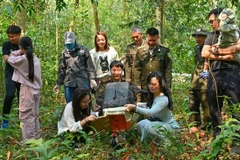
Two rangers check a camera trap in jungle of the Saola Nature Reserve in Hue city. (Photo: VNA)

Vietnam’s forests show signs of wildlife recovery

Vietnam’s forests are among the world’s most biodiverse, yet wildlife remains threatened by habitat loss and snaring. A new WWF-Vietnam survey, using 350,000 camera-trap days across 21 forests, reveals urgent conservation needs and signs of recovery.

A thin layer of frost covered the wooden deck atop Fansipan, where tourists often gather to admire the clouds. (Photo published by VNA)

Fansipan sees first frost of winter season

Visitors and local residents reported that the frost formed shortly before dawn, leaving a light white coating on pathways, stone steps and wooden platforms used for cloud viewing. The cold spell influencing Lao Cai has continued to strengthen and then stabilise, and forecasts suggest temperatures on Fansipan will remain low from late night to early morning on November 22, meaning frost may reoccur.

The north and north-central regions are forecast to turn cold while the northern mountainous and midland areas will see severe cold on November 19. (Illustrative photo: VNA)

Enhanced cold spell hits northern, central Vietnam

Due to the intensified cold spell, the northern region, and the north-central provinces of Thanh Hoa and Nghe An are predicted to experience showers, with some areas likely to record thunderstorms.